Montenegro is under pressure to implement a new plan for managing animal byproducts that are not intended for human consumption. The European Commission has set a deadline of December 31, 2025, for the submission of an updated management strategy, with a requirement for local animal cemeteries or burial pits to be constructed by May 1, 2026. Failure to meet these deadlines may lead to the temporary suspension of Chapter 12, which pertains to food safety, veterinary, and phytosanitary affairs, according to the Ministry of Agriculture, Forestry, and Water Management.
Animal byproducts arise from various sources, including slaughterhouses, meat and dairy processing facilities, and retail establishments where products may spoil or reach their expiration dates. Additionally, these byproducts can result from the culling of animals infected with contagious diseases.
The current management of these byproducts in Montenegro does not comply with established regulations, as municipalities have been improperly disposing of waste directly into unmarked and unsecured areas at municipal landfills. This poses significant risks, particularly in the event of outbreaks of highly infectious animal diseases or zoonoses, which can have serious implications for public health and safety.
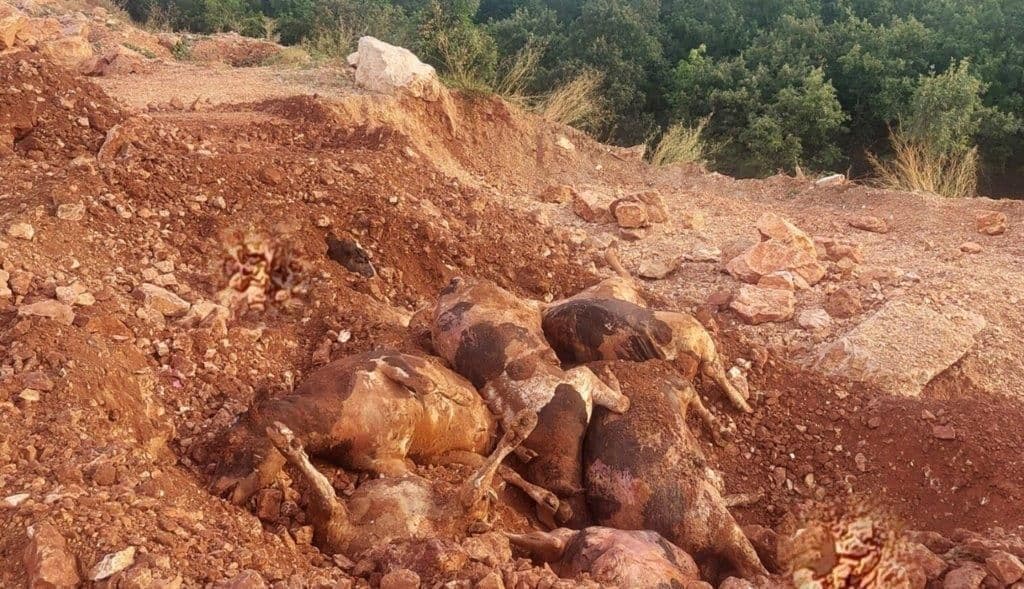
Last year, the situation became critical when hundreds of cattle infected with Q fever were euthanized in Danilovgrad and Niksic. These municipalities lacked designated sites for disposing of carcasses, resulting in dead animals remaining on farms for extended periods.
In 2018, the Montenegrin government initiated a plan to manage animal byproducts through the adoption of a comprehensive strategy. This included an action plan aimed at establishing a facility capable of processing between 8,000 and 10,000 tons annually. The estimated total cost for this project, which includes design, environmental impact assessments, and construction oversight, is projected at €6.9 million. Additionally, the plan encompasses the development of two collection centers in Niksic and Podgorica, along with the procurement of necessary vehicles and equipment, amounting to an additional €3 million.
Funding for this initiative has been sourced from a loan from the World Bank, which approved an extension of the MIDAS 2 project until the end of June 2025 to facilitate the construction of the processing facility. The estimated timeframe for design and construction is approximately 36 months, prompting a request for a 24-month extension to the World Bank in April 2023.
A delay in the project has arisen due to the absence of a finalized location for the facility. The government indicated in December 2021 that the site would be established in Bijelo Polje at the Čelinska Kosa location by the end of 2024, as part of a planned regional solid waste management center. However, in January 2022, residents of the local community in Ravna Rijeka petitioned the Ministry of Ecology, Spatial Planning, and Urbanism to reconsider the proposed site for the regional waste management center.
In light of uncertainties surrounding the construction timeline and the limited deadline for the MIDAS 2 project, the establishment of the processing facility for animal byproducts is at risk. Consequently, in February 2023, the Ministry of Agriculture reached out to nine municipalities—Podgorica, Niksic, Danilovgrad, Tuzi, Kolasin, Mojkovac, Berane, Pljevlja, and Bijelo Polje—requesting possible locations for the facility. Niksic responded positively, and in March 2024, the municipal assembly approved the transfer of management rights over a parcel in the Gračanica industrial zone to the state.
Despite this progress, the community in Niksic expressed opposition to the facility’s construction in December 2024, threatening to take drastic measures if their concerns are not addressed.
The Ministry of Agriculture has emphasized that the revised plan to be submitted to the European Commission must include a temporary solution for managing animal byproducts until the processing facility is operational. According to the Veterinary Law, local governments are required to designate spaces for animal cemeteries, a measure that has yet to be fulfilled.
The immediate alternative for safe disposal of animal waste involves the establishment of local animal cemeteries or burial pits, which local authorities must construct in accordance with hygiene and veterinary health regulations. Once established, these facilities will be registered with the Food Safety, Veterinary, and Phytosanitary Administration, ensuring compliance with regulatory standards.