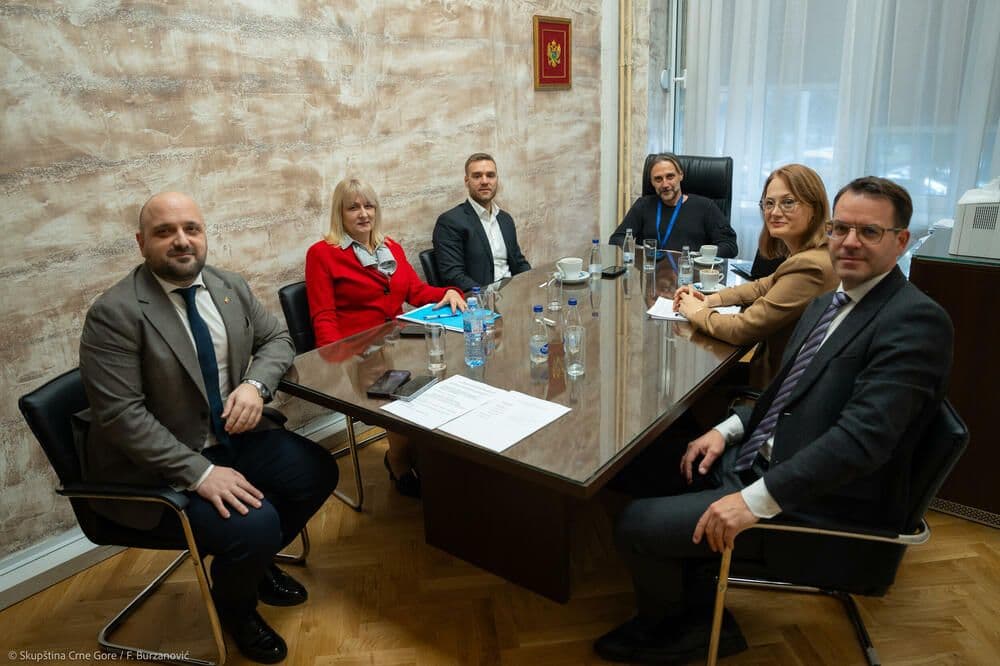
The process to select the president and members of the Central Electoral Commission (CIK) in Montenegro has hit a significant roadblock. The second public competition for these positions was declared void on February 10, 2024, as none of the candidates met the established criteria for the presidency. This failure raises further concerns regarding the much-anticipated electoral reform process in the country.
The commission clarified that while some candidates qualified for membership on the CIK, the legal framework required a presidential nominee to proceed. Consequently, a new public competition will be announced. The commission is headed by Minister of Justice Bojan Bozovic, with members Nikola Rakocevic, Srdjan Vujovic, Rajka Djokovic, and Dragan Koprivica.
Implications of the Failed Selection Process
Commenting on the situation, Professor Nikoleta Djukovic from the University of Donja Gorica noted that the failure cannot solely be attributed to formal legal standards. She emphasized that the limited pool of legal experts in Montenegro, particularly in the electoral and party systems, constrains the number of candidates who both meet strict criteria and possess substantial knowledge of electoral processes.
Djukovic stated, “The political dimensions of selecting CIK members are inevitable, regardless of legal guarantees. Attempts by political actors to influence the selection of ‘preferred’ candidates persist.” She pointed out that this politicization can deter qualified individuals from applying for these crucial roles. Moreover, she raised concerns about the broader political context, suggesting that some political entities may not favor entering an electoral cycle, which complicates the situation.
She concluded that the issues lie not only within the normative framework but also in its selective application. “Any potential changes to the law will only be meaningful if accompanied by a clear political will to treat the CIK as an independent institution,” Djukovic asserted.
Future Steps and Potential for Reform
In response to the failed competition, Nikola Rakocevic, a member of the Democratic Party of Socialists (DPS) and co-chair of the Comprehensive Electoral Reform Committee, expressed optimism. He acknowledged that while the standards set by law are high, there is no immediate need to modify these criteria. “This does not imply that the candidates who applied for the CIK member positions did not meet the requirements,” he clarified.
Rakocevic indicated that the third public call for candidates will adhere strictly to professional and legal standards, with the aim of achieving a depoliticized and expert CIK. He remains confident that Montenegro possesses sufficient human resources to establish independent and professional institutions, despite a lack of trust in the processes led by the Assembly.
“This situation reflects the commission’s determination to uphold principles of expertise and depoliticization,” he added. Rakocevic believes that the third call will attract an even larger pool of qualified candidates than the second, which had already seen an improvement compared to the first call.
The commission has committed to issuing a new public competition following the announcement of the voided selection. They invite all eligible candidates to apply, aiming to make the process more competitive. In a statement, the commission expressed that their ongoing commitment to transparency and adherence to legal procedures serves as motivation for those previously hesitant to participate in similar elections.
As Montenegro navigates these challenges, the future of its electoral process remains under scrutiny, with calls for a robust and independent electoral body becoming increasingly pressing.