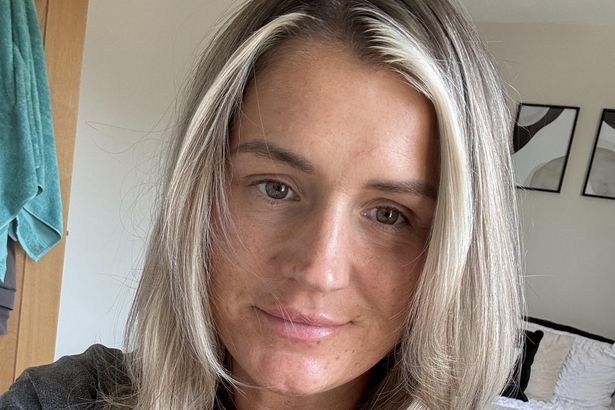
Emily McAllister, a mother from Chicago, experienced a devastating reaction to the medication lamotrigine, prescribed for epilepsy and bipolar disorder. This severe drug side effect led to the loss of nearly 90 percent of her skin and resulted in permanent blindness in both eyes due to a rare condition known as Stevens-Johnson Syndrome (SJS).
SJS is an extremely rare but serious disorder that affects approximately 1 to 2 people per million annually in the United States. It can occur when the immune system mistakenly attacks the skin and mucous membranes, often triggered by certain medications, including antibiotics and anticonvulsants like lamotrigine. In 2023 alone, nearly 11 million prescriptions for lamotrigine were filled in the U.S., affecting around 2 million Americans.
McAllister began her treatment with lamotrigine in September 2022. About 16 days after starting the drug, she noticed alarming symptoms, including red, dry eyes and swelling in her lips and face. These symptoms escalated into a painful rash that spread rapidly. “I thought I wasn’t sure what it was, I just knew something didn’t feel right,” she recalled. As her condition deteriorated, she struggled to breathe and became disoriented, prompting her to seek emergency medical help.
Upon her arrival at the hospital, McAllister was diagnosed with SJS and admitted to the burn unit for seven weeks. During this time, she underwent numerous medical procedures, including eyelid reconstruction and a stem cell transplant, in addition to surgeries targeting severe scarring resulting from the syndrome. Despite these interventions, she lost her vision entirely within two months after her hospital stay.
Understanding Stevens-Johnson Syndrome
SJS manifests with flu-like symptoms, followed by a spreading red and purple rash that can lead to severe blistering and skin detachment. The condition can escalate to Toxic Epidermal Necrolysis (TEN), which is even more severe and can be life-threatening. The symptoms and impacts of SJS are devastating; many individuals face ongoing medical challenges long after the initial reaction.
The U.S. Food and Drug Administration (FDA) has placed a Black Box Warning on lamotrigine, signifying the need for careful monitoring of patients, especially when they first begin treatment. This warning highlights the potential for serious skin reactions, including SJS and TEN, which can result in significant morbidity and mortality.
McAllister’s experience has highlighted a critical need for increased awareness about SJS. Although her doctor warned her about the possibility of a severe rash, the rarity of the condition left her unprepared for the life-altering consequences she would face. “There’s not enough awareness about SJS. You trust your doctor, then something like this happens,” she stated, reflecting on her ordeal.
The Ongoing Battle for Recovery
As McAllister navigates life with permanent vision loss, she remains hopeful about future treatments. Currently, she is legally blind in both eyes, with the right eye offering limited vision through a special contact lens. Despite her circumstances, she expressed gratitude for her life and her role as a mother. “I do feel lucky to be alive because SJS can be fatal,” she noted. “My life is unfortunately never going to be what it was prior to SJS, but at the end of the day, I am lucky to continue to live life and be there while my daughter grows up.”
McAllister has undergone a total of six eye surgeries since her initial reaction in 2022, and she is scheduled for more procedures in the hopes of restoring some degree of sight. The journey has been fraught with challenges, but her resilience shines through as she advocates for awareness and understanding of this dangerous condition.
Her story serves as a stark reminder of the potential risks associated with medications that many people take without a second thought. As the medical community continues to address the implications of drug reactions like SJS, patients and healthcare providers must work together to ensure safety and awareness.