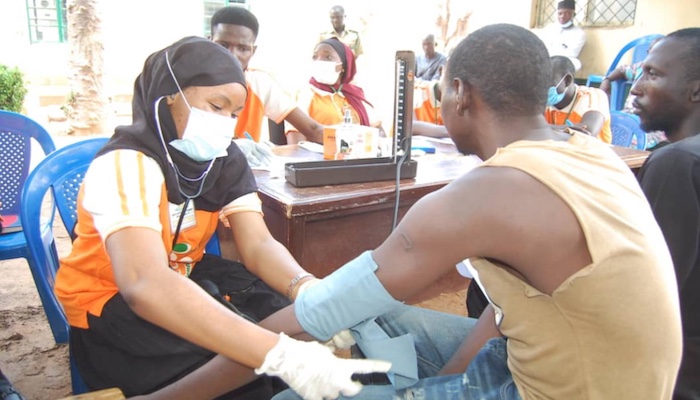
The Kano State Government has identified a critical shortage of healthcare personnel, revealing that the state currently faces a deficit of approximately 4,000 health professionals. This shortage poses significant challenges as the population continues to grow, particularly with projections indicating that Kano will experience between 600,000 and 700,000 births in 2026. The announcement was made by the Director General of the Kano State Primary Healthcare Management Board, Prof. Salisu Ahmad Ibrahim, during the inaugural convocation ceremony of the Sardauna College of Health Sciences and Technology.
Prof. Ibrahim highlighted the alarming state of healthcare facilities in Kano, noting that both hospitals and primary healthcare centers are struggling with severe manpower shortages. This situation is exacerbated by the rapid population increase, which will further strain the already overwhelmed health infrastructure. The urgency of the issue has prompted calls for immediate action to address the workforce gap.
Urgent Need for Training and Deployment
In his address, Prof. Ibrahim emphasized the importance of equipping training institutions with the necessary resources to focus on practical and community-based learning. He urged these institutions to ensure that graduates are thoroughly prepared for real-world challenges in frontline service. The state government has also outlined plans to absorb newly trained health workers and deploy them to underserved areas, specifically targeting regions such as Doguwa, Rogo, and Sumaila Local Government Areas.
This initiative reflects an effort to enhance healthcare access in areas most in need. The anticipated influx of births in the coming years highlights the necessity for a well-prepared healthcare workforce to meet the demands of the growing population.
At the convocation ceremony, the Chairman of the Arewa Consultative Forum, Alhaji Bashir Dalhatu, remarked on the significance of having a substantial number of female graduates from the college. He noted that this development could help address cultural sensitivities in the region, where many families prefer female healthcare workers to attend to women. Despite this positive development, Dalhatu pointed out that the North still lags in the production of female healthcare professionals, underscoring the need for sustained investments in girls’ education and health-sector training.
A Call to Service
Community leader and former public official, Dr. Goni Faruk Umar, also spoke at the event, encouraging the graduating students to view their qualifications as a call to service rather than a mere pursuit of personal comfort. This perspective is vital in fostering a sense of responsibility among new healthcare workers, particularly in a region facing significant health challenges.
As Kano prepares for an unprecedented number of births in the coming years, the government and educational institutions must prioritize solutions to the health worker shortage. By addressing the critical need for skilled personnel, the state can improve healthcare access and outcomes for its growing population, ensuring that future generations receive the care they require.