The intricate relationship between technology and warfare is examined through the lens of ancient historian Thucydides in a recent discussion led by Bret C. Devereaux, a teaching assistant professor at North Carolina State University. Devereaux highlights Thucydides’ account of the Peloponnesian War as a crucial reference for understanding the evolving dynamics of warfare amid technological advancements.
Thucydides, often regarded as a foundational figure in history, sought to explain events through a lens of cause and effect rather than attributing them to divine intervention or myth. His historical analysis raises questions about the role of technology in shaping military events during his time. The primary inquiry revolves around whether Thucydides viewed technological change as a key factor in the causes of historical events or merely as a backdrop to the political and moral narratives he chronicled.
Debates among scholars reveal differing interpretations of Thucydides’ perspectives on warfare. Traditionally, the Peloponnesian War has been characterized as the decline of a long-standing military system that had emerged in the 700s and 600s BCE, focusing primarily on heavy infantry hoplites. This view suggests that the war unveiled the first signs of more sophisticated military strategies, which later historians like Xenophon would further explore.
However, contemporary scholars challenge this interpretation. Figures such as Peter Krentz, Hans van Wees, and Fernando Echeverría argue that the systems of hoplite warfare did not fully materialize until the Persian Wars, indicating a longer evolutionary process. If accepted, this perspective implies that many of the tactical changes documented by Thucydides were not entirely new but rather adaptations of existing elements of Greek military tradition.
While acknowledging that Thucydides recorded a period of significant change, these scholars contend that the transformations in warfare were not sudden but rather an acceleration of ongoing developments in tactics and military equipment. Thucydides captures the human impact of this evolving warfare, noting the increasing scale and brutality of conflicts, such as the catastrophic defeat of the Athenian expedition to Sicily.
The historian emphasizes a fundamental distinction between technological advancements in warfare and the changes in human behavior and strategy. Thucydides opens his narrative with a deep history, known as the Archaeology, where he touches upon the emergence of early technologies like navies and walled cities. Nevertheless, by the time of the Peloponnesian War, these technologies were already established and not indicative of a burgeoning battlefield innovation.
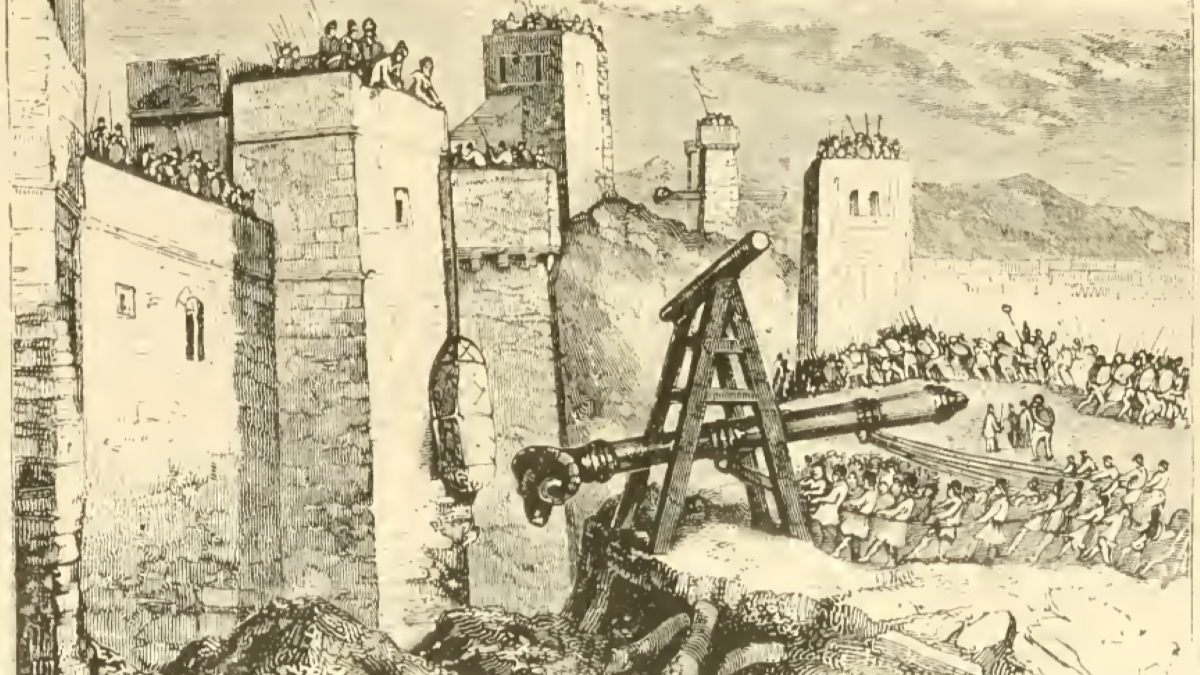
Thucydides records few significant technological changes in weaponry, focusing instead on the human elements of warfare. His detailed accounts of sieges and military strategies underscore a shift in political and strategic considerations rather than technological advancements. For instance, while ancient siege operations in Greece were largely rudimentary compared to those employed by the Assyrians, the increasing willingness of Greek states to commit resources to prolonged sieges marked a notable change in warfare dynamics.
The historian’s detailed descriptions of sieges reflect human determination and morale more than technological superiority. Thucydides illustrates how human tenacity influenced the outcomes of military engagements, such as the long blockade of Plataea and the Athenian defeat at Syracuse. His observations suggest that the will and resolve of soldiers were often more decisive than the material conditions of warfare.
As the conflict escalated, Thucydides recognized the political pressures that would eventually lead to more rapid military innovations in subsequent centuries. Yet, he primarily documents the early stages of these changes rather than their culmination. His work captures the essence of a transformative period, where traditional warfare began to evolve, and the scale of conflict expanded, leading to greater violence and destruction.
Thucydides’ economic perspective on warfare further enriches the discussion. He viewed war as a financial endeavor, where resources and funding played critical roles. The historian meticulously accounted for Athens’ revenues and expenditures during the war, illustrating how financial capacity directly influenced military capabilities. His observations reveal a complex relationship between warfare and economics, where the pursuit of profit often intertwined with military ambition.
In contrast to Thucydides, later historians like Polybius documented periods of more advanced military technology and asymmetrical warfare. Polybius’ accounts highlight the significance of specific weapon designs and the adoption of foreign technologies, showcasing a marked evolution from the relatively stable military structures observed by Thucydides.
As the discourse around Thucydides’ insights on technology and warfare continues, his historical narrative remains a vital resource for understanding the interplay of human factors and technological advancements in military history. The ongoing exploration of these themes invites scholars and strategists alike to reflect on the lessons of the past as they navigate the complexities of modern warfare.