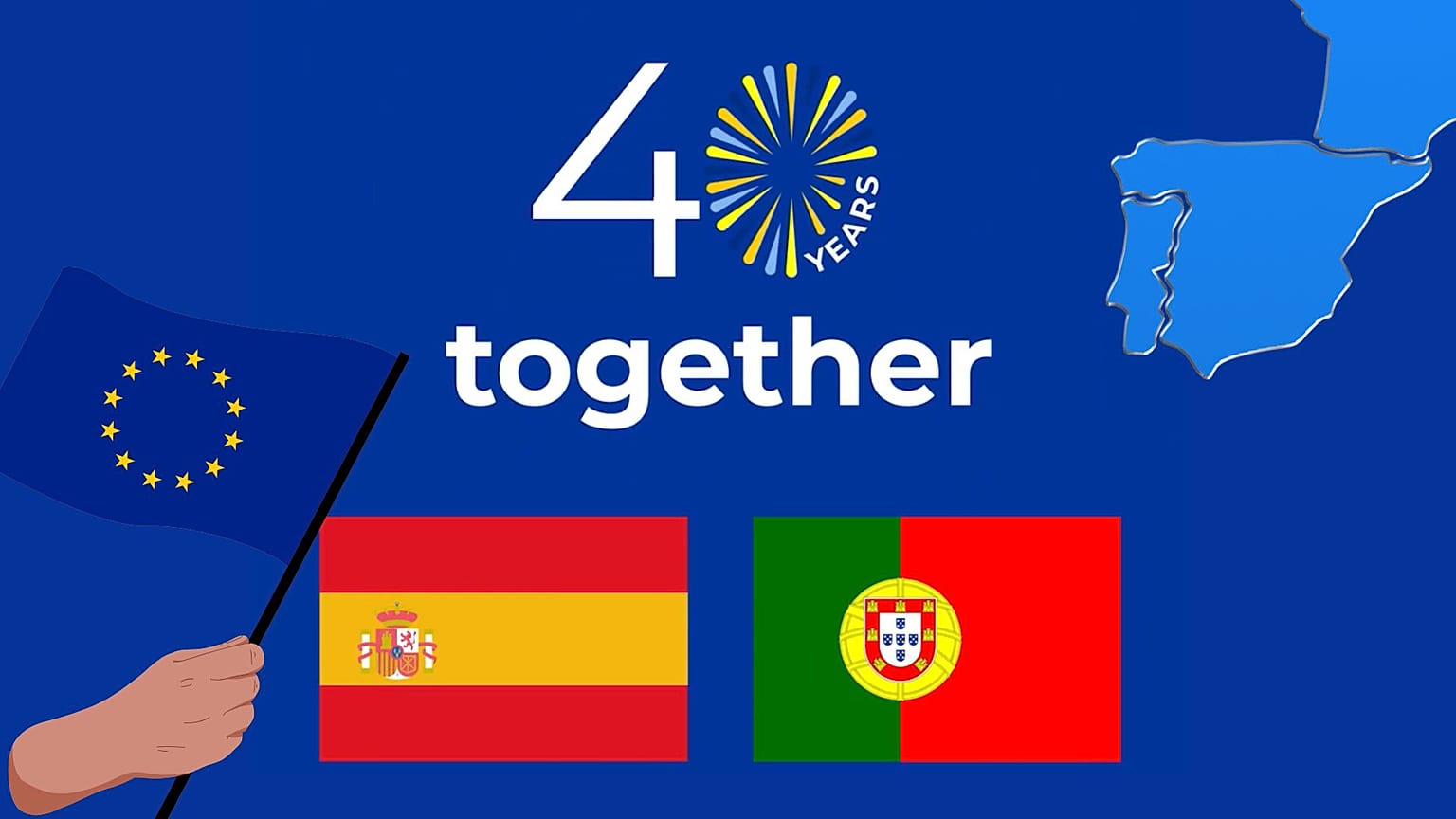
Spain and Portugal commemorate four decades since their accession to the European Economic Community (EEC) on January 1, 1986. Initially, both countries were recovering from decades of dictatorship and economic instability. The transition to democracy allowed them to embrace European integration, which has significantly transformed their political, economic, and social landscapes.
Transformative Economic Growth
In 1986, Spain’s economy was struggling with a gross domestic product (GDP) of around €226 billion. Unemployment stood at approximately 21%, and inflation had reached 20% due to the lingering effects of the 1973 oil crisis. Similarly, Portugal’s economy was underdeveloped, achieving only about 60% of the average GDP of Western Europe. The end of colonial dominance had stripped Portugal of protected markets, hindering its economic recovery.
Fast forward to today, and both nations have made remarkable strides. Spain’s GDP has surged to nearly €1.5 trillion, making it the fourth-largest economy in the European Union. This sixfold increase is attributed to significant European funding, with Spain receiving over €185 billion since 1986. These funds have financed infrastructure projects, innovation initiatives, and employment programmes, facilitating a smoother convergence with European standards.
Portugal has also seen substantial growth, with its GDP doubling in real terms during the initial two decades of EU membership. The average Portuguese citizen’s purchasing power improved from 50% of the EEC average in 1986 to nearly 75% of the current EU average. The investment of more than €100 billion in EU funds has enabled Portugal to modernize its infrastructure, including roads, railways, and sanitation systems.
Social and Cultural Impacts
The consequences of EU membership extend beyond economic metrics. The Schengen Agreement has allowed free movement, transforming the lives of millions. Since the inception of the Erasmus programme, approximately 1.6 million Spanish citizens have participated in educational exchanges. In Portugal, over 55,000 university students have studied abroad through this initiative in recent years. Travelling, studying, or working in another EU country has become commonplace rather than a privilege.
The adoption of the euro in 1999, officially implemented in 2002, further solidified both nations’ integration into the European framework. Despite these advancements, challenges remain. The 2008 financial crisis severely impacted Spain and Portugal, with Spain’s unemployment peaking at 27% in 2013 and Portugal requiring a financial bailout.
Both countries continue to grapple with structural issues. Spain’s productivity lags behind that of Germany and France, while Portugal faces one of the lowest birth rates globally, posing potential long-term economic challenges. Public support for the EU remains robust, with 73% of Spaniards and 91% of Portuguese citizens expressing positive views toward EU membership.
As part of the 40th-anniversary celebrations, Portuguese Prime Minister Luís Montenegro emphasized the profound changes brought about by European integration. He noted that it has facilitated economic, social, and democratic transformation, representing a strategic commitment to growth and cohesion within the EU. On the same occasion, he and the President of Portugal signed the Lisbon Declaration, reaffirming the nation’s dedication to a secure, fair, and prosperous European Union.
This historic milestone underscores the transformative power of European integration, highlighting both the achievements and ongoing challenges faced by Spain and Portugal as they continue to navigate their roles within the EU framework.