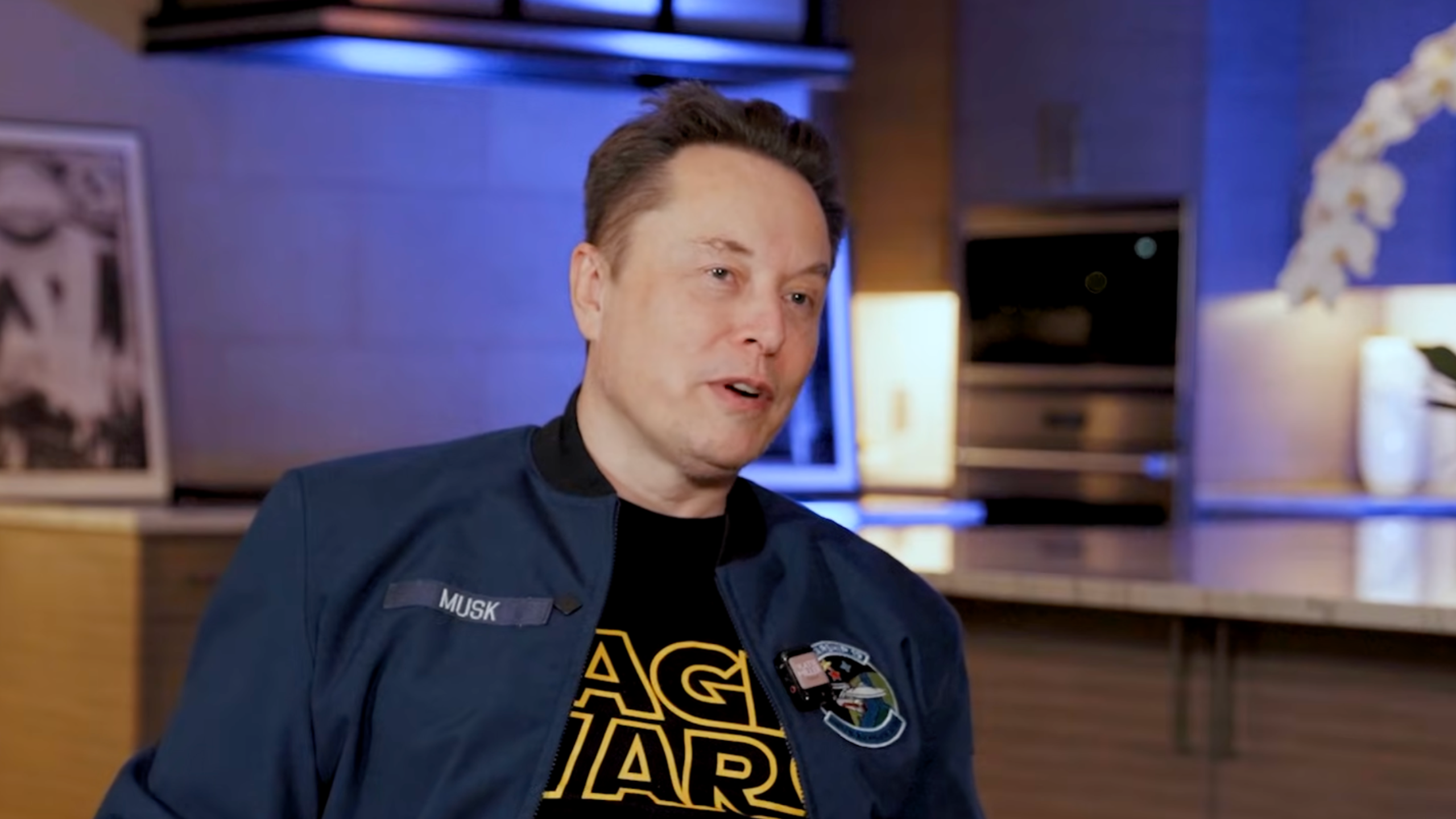
Elon Musk, the world’s richest person, has made headlines with his controversial statement regarding the future of money. The Tesla CEO suggested that saving money could soon be unnecessary due to the anticipated rise of a universal high income. This assertion follows billionaire investor Ray Dalio‘s endorsement of the new “Trump Accounts” initiative, aimed at providing financial assistance to newborns and young Americans.
In a post on the social media platform X, Musk responded to Dalio’s support for the initiative by stating, “It is certainly a nice gesture of the Dells, but there will be no poverty in the future, and so no need to save money. There will be universal high income.” His comments reflect a vision of a future where advancements in artificial intelligence (AI) and robotics eliminate poverty and reduce the necessity for traditional work. Musk believes this shift would allow individuals to work on an optional basis, fostering a society characterized by financial stability and widespread wealth.
As Musk’s statements gained traction, public reaction ranged from disbelief to skepticism. Critics highlighted the apparent contradiction between Musk’s immense wealth—estimated at approximately £450 billion (around $600 billion)—and his claims about the diminishing relevance of money. Some users on X questioned the practicality of his vision, asking why production would continue if goods could be obtained for free. One user remarked, “Eliminating poverty is a technological issue at its core. However, the human mind becomes accustomed to things very quickly.”
Concerns were also raised about the shifting definitions of poverty. A user pointed out that the standards for what constitutes a “poor” quality of life have evolved significantly in the past century, suggesting that Musk’s predictions might oversimplify complex social issues. Others criticized Musk’s call for substantial financial backing for his ventures if he truly believes money will soon lose its significance.
Musk’s net worth has been propelled by various ventures, including his role in SpaceX, which is expected to go public soon. Analysts suggest that this could elevate his wealth to as much as £475.8 billion (approximately $638 billion), potentially making him the first trillionaire in history.
The “Trump Accounts” initiative, introduced by the Trump administration, is designed to provide American newborns with a financial head start. The program aims to encourage long-term savings and investment habits from infancy, allowing young adults to access a financial cushion once they reach legal age. Proponents of the initiative argue that it could help cover significant life expenses, such as education and home purchases.
While supporters express optimism about the potential benefits of the program, Musk’s vision diverges sharply. He contends that in a future dominated by AI and robotics, traditional notions of savings and financial planning may become obsolete.
In summary, Musk’s comments about the future of money and the implications of the “Trump Accounts” initiative highlight a complex intersection of wealth, technology, and societal values. As discussions around these topics continue, the impact of technological advancements on economic structures remains a point of contention, with varying opinions on the feasibility of Musk’s predictions.