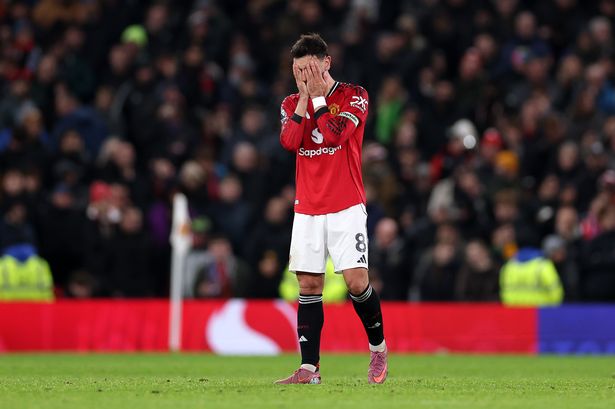
Manchester United’s recent performance against West Ham has brought to light significant issues within their squad, particularly regarding their attacking options. Despite a promising start with an opening goal from Diogo Dalot, United’s inability to maintain pressure ultimately resulted in a 1-1 draw. Manager Ruben Amorim faced scrutiny for his substitutions, particularly as the team struggled to regain momentum after conceding a corner goal to West Ham.
During the match, United initially showed potential but became increasingly defensive after securing their lead. Amorim’s choice to replace forward Joshua Zirkzee with Mason Mount, the only attacking substitution, raised eyebrows. The lack of offensive depth became glaringly apparent when United failed to capitalize on their early advantage. Instead of pushing for a second goal to secure a win, the team opted for a more conservative approach, which allowed West Ham to equalize.
Amorim’s post-match comments suggested a deeper concern regarding the team’s attacking capabilities. He indicated that there were limited options to bolster the offensive play, stating, “We had more men to put in the offense. Who would be more offensive?” This remark highlights the urgency for Manchester United to reassess their squad depth, particularly as they approach the January transfer window.
Since the international break, United has been without key player Benjamin Sesko, further straining their options. In recent fixtures, the squad has had only two players with attacking prowess available on the bench. During the match against Crystal Palace, Shea Lacey was the sole offensive substitute, underlining the team’s reliance on a limited pool of talent. The current situation leaves Amorim with few viable options to turn to, which could hinder the team’s performance as the season progresses.
Amorim’s reluctance to utilize Kobbie Mainoo, who has shown potential as a more attack-minded player than Manuel Ugarte, also raises questions about the manager’s strategy. While Lacey is a promising young talent, introducing him into high-pressure situations may not be the best approach for his development. The expectation for young players to deliver immediate results can place undue pressure on their growth.
As the 2026 season approaches, it is imperative for Manchester United to prioritize strengthening their forward line. With the impending departure of players like Bryan Mbeumo and Amad for the Africa Cup of Nations (AFCON), the urgency for reinforcements becomes even more critical. Should Sesko remain unavailable, United’s attacking options could become alarmingly thin.
In light of these challenges, it is clear that Amorim faces a pivotal moment in his managerial tenure. Addressing the lack of attacking depth should be at the forefront of Manchester United’s agenda as they navigate the remainder of the season. Without adequate reinforcements, the team may find it increasingly difficult to secure goals and maintain competitive performances in the Premier League.
The pressure is mounting on United’s boardroom to take decisive action before the transfer window closes, ensuring that Amorim has the necessary tools to enhance the team’s attacking capabilities and avoid further setbacks in their campaign.