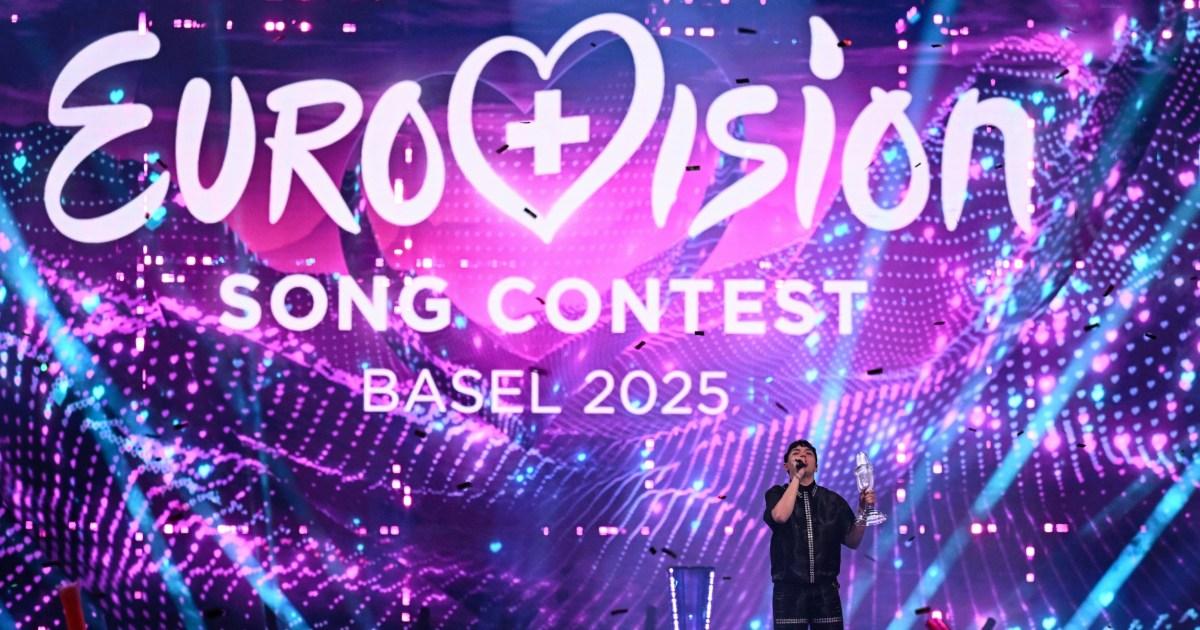
The European Broadcasting Union (EBU) has confirmed that Israel will participate in the 2026 Eurovision Song Contest in Vienna, despite significant opposition from several member countries. This decision has led to immediate backlash, with Spain, Ireland, the Netherlands, and Slovenia announcing their intention to boycott the competition.
As a long-time fan of Eurovision, the decision has left many feeling disheartened. The contest, which has been a cultural staple for nearly seventy years, promotes unity and peace through music. It has historically served as a vital platform for fostering relationships across Europe, particularly in the wake of conflict. The inclusion of Israel, however, has raised questions about the integrity of the event and its founding values.
Eurovision’s history as a peace project is now overshadowed by concerns regarding political implications. The decision to allow Israel to compete is perceived by some as granting legitimacy to a nation engaged in ongoing conflict, especially when juxtaposed with the swift ban imposed on Russia following its invasion of Ukraine in 2022. Critics argue that the lack of a vote among EBU members regarding Israel’s participation indicates a troubling inconsistency in the organization’s stance on political matters.
The Spanish broadcaster RTVE expressed strong disapproval of the EBU’s decision, stating that it conflicts with their core values. The chair of RTVE emphasized that while Eurovision is a contest, it should not disregard human rights issues. Similarly, the Dutch broadcaster Avrotros noted that Israel’s participation is incompatible with its responsibilities as a public entity, while Ireland’s national broadcaster RTÉ referred to the decision as “unconscionable.” These statements reflect a growing divide among public broadcasters, who are grappling with the political dimensions of the competition.
Despite the backlash from these countries, some prominent broadcasters, including the BBC, have voiced support for the EBU’s decision to maintain inclusivity in the contest. Former BBC director-general Tim Davie previously stated that Eurovision was “never about politics,” a view that many find simplistic given the contest’s historical context.
The current situation presents a dilemma for fans who cherish the spirit of Eurovision. Some may feel compelled to boycott the event, while others are hopeful for a resolution that balances accountability with the celebration of cultural unity. The tension highlights a fracture within the Eurovision community, where the notion of consensus is increasingly challenged.
Many fans view Eurovision as a space for joy and inclusivity, particularly for marginalized communities, including LGBTQ+ individuals. The competition has provided a safe haven for these groups, fostering a sense of belonging. However, the political implications of Israel’s participation complicate this narrative, prompting fans to reconsider their engagement with the event.
Polling data from the UK indicates that a significant majority—82% of respondents—believe Israel should not be allowed to compete in Eurovision next year. Furthermore, 69% of those surveyed indicated that the UK should withdraw from the competition if Israel participates. This sentiment suggests a strong public desire for the contest to align with ethical considerations.
While the EBU has made its decision clear, there remains hope for a shift in circumstances before the event in May. Suggestions for potential compromises have included providing contextual information during broadcasts or incorporating diverse perspectives in the traditional presentation of participating nations. Such initiatives could help restore some sense of unity within the competition.
As fans navigate this complex landscape, many are left reflecting on the fundamental values that make Eurovision meaningful. The contest is not merely a spectacle; it represents a vision of cultural exchange that has the potential to transcend political divisions. The future of Eurovision hangs in the balance, and its ability to uphold its founding ideals will ultimately determine its relevance in an increasingly polarized world.