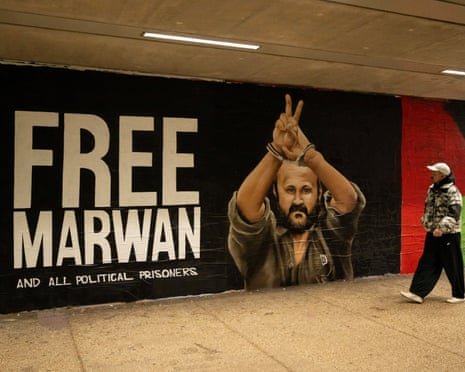
More than 200 prominent cultural figures have issued a collective call for the release of Palestinian leader Marwan Barghouti, who has been imprisoned for 23 years following what many legal experts deem a flawed trial. The open letter, signed by notable personalities including writers Margaret Atwood, Philip Pullman, Zadie Smith, and actors Sir Ian McKellen and Benedict Cumberbatch, highlights Barghouti’s potential to unify Palestinian factions and revitalize the stalled efforts towards establishing a Palestinian state.
The group’s appeal encompasses a diverse range of cultural influencers, from musicians Sting and Brian Eno to actor and presenter Stephen Fry and chef Delia Smith. Barghouti, now 66, is viewed as the most popular Palestinian leader, consistently garnering support in public polls. His continued imprisonment is linked not to any threat to Israel’s security but rather to the political influence he may wield in fostering unity among Palestinians.
Israel’s government has repeatedly refused to release Barghouti, including during a recent prisoner swap that followed a ceasefire in the Gaza conflict. Concerns have also arisen regarding potential new laws that would allow Israel to impose the death penalty on Palestinian prisoners, a measure that could affect Barghouti.
Cultural Voices Echo Historical Movements
The campaign for Barghouti’s release draws parallels with the cultural movement that aided in the liberation of Nelson Mandela and the fight against apartheid in South Africa. Brian Eno remarked, “History shows us that cultural voices can shift the course of politics. Just as global solidarity helped free Nelson Mandela, we all have the power to accelerate the day that Marwan Barghouti walks free.”
British-Palestinian novelist Selma Dabbagh emphasized that Barghouti’s trial is widely recognized as a sham, supported by the findings of the Inter-Parliamentary Union, which concluded that the trial process was deeply flawed. The statement from the cultural figures expresses grave concern over Barghouti’s ongoing imprisonment, mistreatment, and denial of legal rights, urging the United Nations and governments worldwide to advocate for his release.
The recent passage of a United Nations resolution supporting the establishment of an international stabilization force in Gaza has not prompted a significant response from nations willing to contribute troops. This hesitance stems from fears that such a force could become embroiled in conflict with Hamas regarding the decommissioning of its weapons, a precondition for Israel’s withdrawal from the region.
Political Implications and Future Prospects
The Israeli Prime Minister Benjamin Netanyahu is expected to resist calls for Barghouti’s release unless faced with substantial pressure from the United States. In a related development, former President Donald Trump has extended an invitation to Netanyahu for a visit to the White House in the near future, marking what could be the Israeli leader’s fifth such trip since Trump’s return to office in January.
Barghouti’s potential release would represent a significant turning point in the long-standing struggle for Palestinian self-determination, fostering hope among many for a renewed dialogue and peace process. As the world watches, the actions taken by cultural leaders and political figures alike will shape the future of this complex and contentious issue.