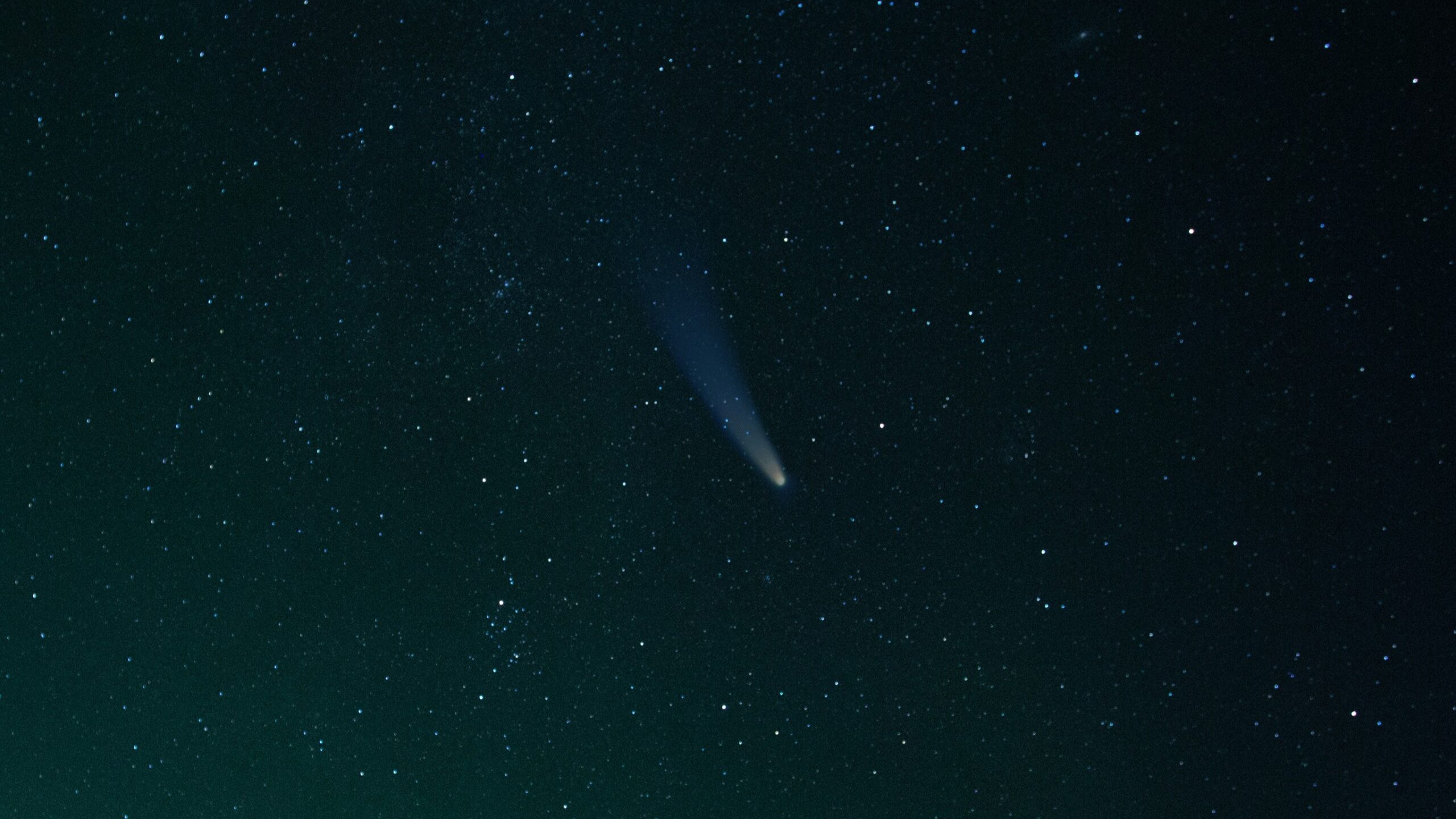
Astronomers have made significant discoveries regarding the interstellar comet 3I/ATLAS, revealing that it carries a unique chemical signature and physical properties that could reshape our understanding of cosmic bodies. As only the second confirmed interstellar comet to enter our solar system, 3I/ATLAS is described as a “pristine” object, offering a rare glimpse into the conditions of its formation billions of years ago.
Research indicates that 3I/ATLAS is not merely a typical comet but rather a complex body enriched with metals and exhibiting signs of aqueous alteration and cryovolcanism. These features suggest that it may have originated in a metal-rich environment, possibly from a protoplanetary disk. By conducting detailed photometric observations of the comet’s light, scientists have identified spectral similarities between 3I/ATLAS and carbonaceous chondrites, ancient meteorites known for their carbon content.
Unique Chemical Composition and Behavior
The comet’s unusual characteristics are further highlighted by the presence of metals actively influencing its behavior. The fine-grained metal particles within 3I/ATLAS can initiate energetic Fischer-Tropsch reactions, a chemical process similar to how synthetic fuels are produced on Earth. This activity generates chemical compounds within the comet’s coma that are not typically observed in comets formed in our solar system, as most local comets lack such a significant metal fraction.
Moreover, the detection of cyanide radicals (CN) around 3I/ATLAS confirms that, much like its solar system counterparts, its nucleus contains common cometary volatiles. The presence of CN suggests that the comet likely formed in the cold outer regions of its original star system, where conditions allowed nitrogen-rich ice to condense and endure for millions of years.
Spectroscopic observations have also revealed nickel-bearing species in the comet’s coma, a feature reminiscent of the earlier interstellar comet 2I/Borisov. The volatilisation of nickel at low temperatures implies that 3I/ATLAS formed in an environment rich in metals, incorporating both silicate and metallic grains into its icy nucleus.
Implications for Understanding Interstellar Bodies
One of the most intriguing findings about 3I/ATLAS is its depletion of carbon-chain molecules, particularly C2 and C3. This pattern mirrors observations from 2I/Borisov and several carbon-depleted Solar System comets. Such depletion raises questions about the comet’s origins—it may have either formed in a region lacking carbon-rich organics or undergone long-term exposure to interstellar radiation that chemically eroded these compounds.
Given that comets traverse the vastness of space for billions of years, the consistent bombardment by cosmic rays can disrupt long organic chains, resulting in a lower abundance of complex molecules. The chemical composition of 3I/ATLAS suggests it has spent considerable time in the interstellar medium, far from the protective influence of stellar bodies.
The findings surrounding 3I/ATLAS not only enhance our understanding of interstellar objects but also indicate potential commonalities in the formation and chemical evolution of comets from different star systems. As researchers continue to study this celestial visitor, they hope to unlock further secrets about the early conditions that shaped our universe.
With the ongoing analysis of 3I/ATLAS, astronomers are poised to gain invaluable insights into the nature of comets and their role in the broader cosmic landscape.