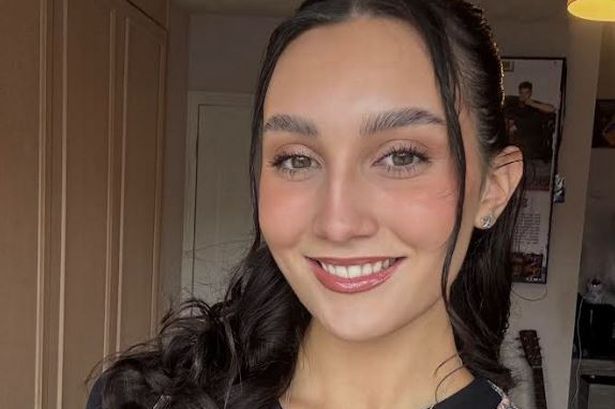
Sassy Smith, a therapist from Bournemouth, has lived with a condition known as aphantasia, which prevents her from visualizing images in her mind. This cognitive difference means she cannot picture her childhood or even the faces of loved ones when they are not present. At 56 years old, Sassy has come to understand her unique mental experience, but it was only at age 50 that she discovered the name for her condition.
Sassy’s struggle with memory is further complicated by a related condition called severely deficient autobiographical memory (SDAM). As a result, she not only lacks visual memories but also finds it difficult to recall specific experiences that others easily remember. “I know my friends and I made camps on a road near my house, but I don’t remember doing that,” she explains. Such experiences have led to a lifetime of confusion and misunderstanding about her own memory capabilities.
Many individuals with aphantasia experience similar challenges, with estimates suggesting that it affects approximately one to five percent of the population. Research has shown that around half of those with aphantasia also experience SDAM. Both conditions were formally identified only in recent years, with the term aphantasia first coined by Professor Adam Zeman, a neurologist at Exeter University, in 2015.
Recent studies have begun to unravel the complexities of aphantasia. A notable research project at the Paris Brain Institute utilized ultra-high-field functional MRI scans to analyze the brain activity of individuals with aphantasia. During these scans, participants were asked to visualize familiar objects, faces, and places. Although key brain areas related to memory and visual processing were activated, the communication between these regions was significantly reduced. According to Jianghao Liu, a cognitive neuroscientist involved in the study, this could explain why individuals with aphantasia have accurate knowledge about objects but struggle to visualize them mentally.
For Sassy, this disconnect feels like navigating life without a map. She recalls a moment during her birthday celebration when an unfamiliar man approached her, believing they shared a past. “He was an ex-boyfriend from my 20s, but I had no recollection of him,” she says. Such experiences highlight her ongoing struggle to form connections based on memory.
The emotional impact of aphantasia and SDAM can be profound. Sassy recounts her grief over the loss of her stepfather, Derek, who passed away from cancer in 2011. Despite their close relationship, she finds it painful that she cannot visualize his face or the moments they shared. “People have said I seemed to have moved on quickly, which I found a bit hurtful,” she reflects, emphasizing the isolation her conditions can create.
In 2019, Sassy sought therapy to address her mental health challenges stemming from work-related stress. This journey led her to explore her cognitive differences more deeply. During therapy, when asked to visualize her childhood, Sassy realized that traditional memory techniques did not work for her. It reminded her of a previous encounter in 2015, when she first learned about aphantasia. “That sounds like me,” she thought at the time.
Through her research, Sassy discovered that people with aphantasia may have a genetic predisposition to the condition. Additionally, there have been instances where individuals lost the ability to visualize after experiencing strokes or head injuries. For Sassy, understanding these cognitive differences has been enlightening. She describes reading Professor Zeman’s work as a “lightbulb moment,” helping her diagnose herself in a world where official diagnostic criteria for aphantasia do not exist.
The Vividness of Visual Imagery Questionnaire (VVIQ) serves as a tool for identifying individuals with aphantasia. Developed in 1973 by British psychologist David Marks, the VVIQ asks participants to assess how vividly they can visualize various scenarios. A score of 16-19 across all 18 items indicates aphantasia. The questionnaire has been instrumental in understanding the range of visualization abilities among individuals.
Sassy emphasizes the importance of sharing her experiences to raise awareness about cognitive differences. She notes that not everyone can visualize memories or hear an inner voice, which can create feelings of loneliness. “When you have no memories or sound in your head, it sometimes feels as though there’s just a gaping hole,” she says. This realization motivated her to retrain as a therapist in 2019, aiming to help others who may feel similarly isolated.
As Sassy navigates her relationships, she often finds herself documenting moments through photos and videos to preserve her memories. “I’m terrified knowing I won’t be able to picture them or relive memories of our time together after they die,” she admits, expressing her deep-seated fears about her memory limitations.
Understanding aphantasia and SDAM is still evolving, with ongoing research likely to shed further light on these conditions in the future. Sassy’s journey illustrates the complexities of human memory and perception, reminding us that cognitive differences can shape our experiences in profound ways.