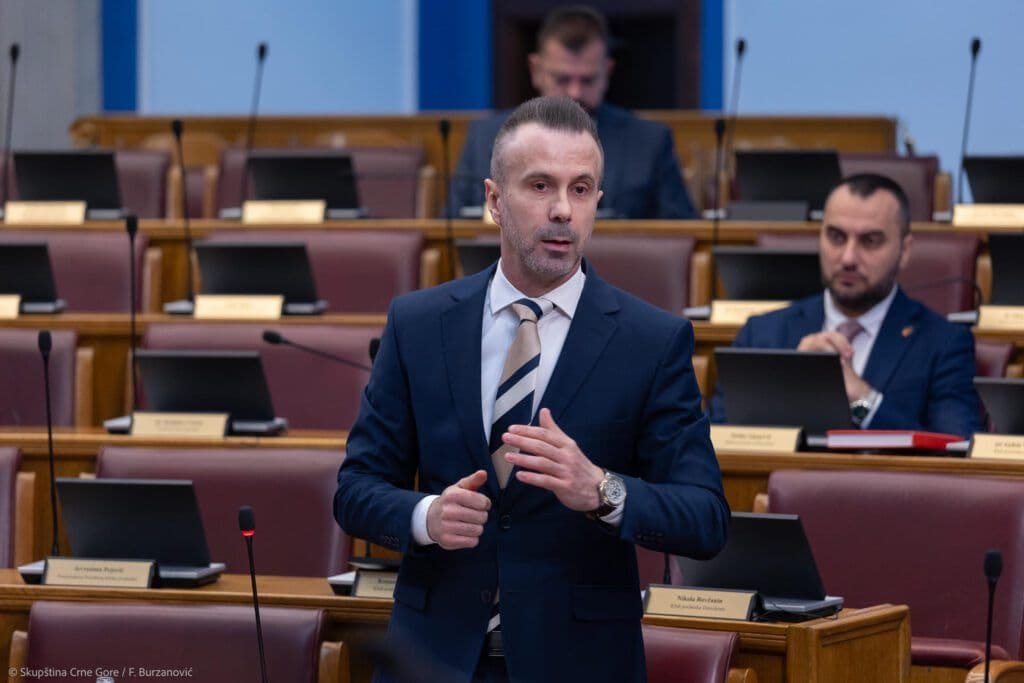
In a stern condemnation of escalating political violence, Boris Bogdanović, the President of the Democratic Party’s parliamentary group in Montenegro, has spoken out against threats directed at fellow party members. Following a series of alarming incidents, including threats against colleagues Anđela Vojinović and Zdenka Popović, Bogdanović highlighted the severity of the situation, which he characterized as a manifestation of political terror.
According to Bogdanović, the threats have intensified with warnings aimed at Momčilo Leković, further illustrating a disturbing trend of intimidation within the political landscape. He asserted that the current climate is not merely a political debate or a smear campaign by the ruling Democratic Party of Socialists (DPS), but rather an overt display of hatred and extremist ideologies that threaten democratic values.
Alarming Trends in Political Discourse
Bogdanović described the messages being circulated as “open outbursts of hate” and “calls for violence,” which he believes are orchestrated attempts to instill fear in Montenegro. He stated, “When you threaten someone with death and invoke bloodshed against political opponents, you have crossed into the realm of the most dangerous extremism.” The Democratic Party’s leadership is particularly concerned about the broader implications of such threats on public discourse and political engagement.
The leader expressed his belief that these threats are not isolated incidents, but rather indicative of a larger, organized effort to manipulate public opinion through systemic intimidation. Bogdanović called for transparency, urging authorities to investigate the funding and management of these threatening online campaigns. He posited that if links were confirmed between these threats and figures associated with the DPS, it would reveal a disturbing continuity of violence and suppression masked under a façade of political legitimacy.
A Call for Action and Accountability
In his statement, Bogdanović urged governmental institutions to swiftly identify and prosecute those responsible for these threats. “Any delay in action would send a message that political terror is permissible,” he warned, reinforcing that in a democratic and free Montenegro, no one should face death threats due to their beliefs or political affiliations. He emphasized that this struggle is not only political but also a fundamental fight for civil rights and the ability to speak freely.
Bogdanović remains resolute, asserting that the Democratic Party will not be silenced by threats or intimidation. He remarked, “The more monstrous their threats become, the clearer it is how much they fear the truth and the fight against the injustices they have perpetuated for years.” This ongoing struggle is one for both political integrity and basic human rights, and Bogdanović pledged that they would not yield even an inch in this fight.
As the situation unfolds, the eyes of Montenegro and the international community remain focused on the actions taken by authorities in response to these threats and the broader implications for political discourse in the country.