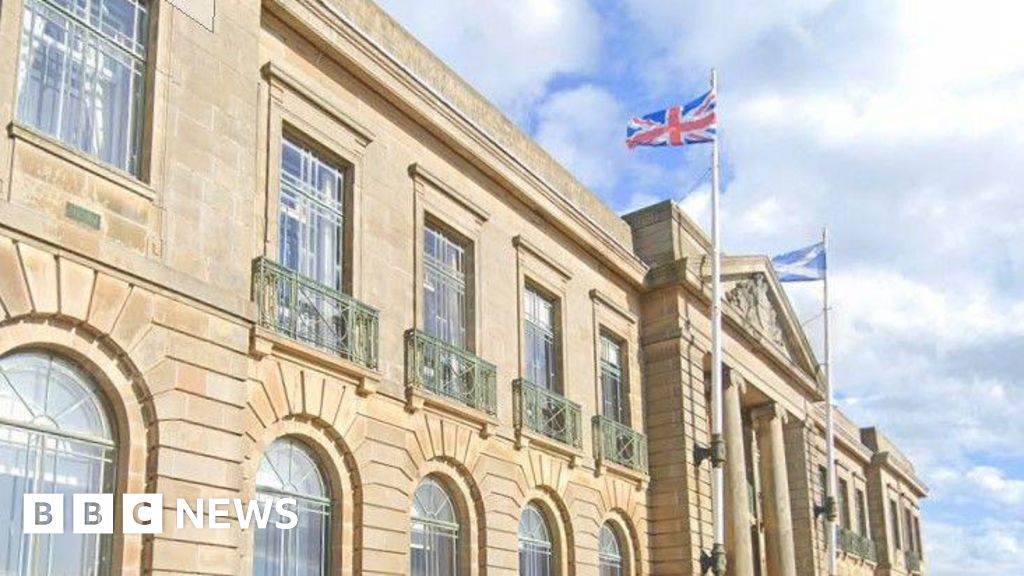
The leader of West Dunbartonshire Council, Martin Rooney, has warned that the local authority may face bankruptcy in the coming years. This statement follows the council’s decision to implement a 7.8% increase in council tax, aimed at addressing a significant deficit of £9.2 million. Rooney emphasized the necessity for political parties and independent members to collaborate in order to develop sustainable financial solutions.
Rooney outlined the potential measures available to the council for generating revenue. These include raising council tax, increasing fees, utilizing reserves, and making management adjustments and savings. He urged for a shift away from divisive politics, stating, “It will go bankrupt in the next administration, and I am talking about 2027 to 2032. That administration will not survive in the way that we do politics in West Dunbartonshire.”
As the council navigates its financial challenges, other councils in the region are also grappling with similar issues. South Ayrshire Council, for instance, approved an 8% council tax increase to address an £8.463 million funding gap anticipated for the 2026–27 fiscal year. This increase is expected to generate approximately £5.96 million in revenue.
In the case of South Ayrshire, the council debated three proposals from different political factions, ultimately adopting the plan put forth by the Conservative minority administration. This budget includes £2.728 million in savings and £1.365 million drawn from uncommitted reserves to help bridge the funding shortfall. Various cost-cutting measures have been implemented, including reductions in early years centre capacities, education absence cover budgets, and corporate service redesign.
Despite these financial maneuvers, Brian Connolly, the council leader of South Ayrshire, cautioned that significant financial pressures would continue to loom in upcoming years. He highlighted that the council’s medium-term financial plan still indicates a funding gap for 2027–28.
Both West Dunbartonshire and South Ayrshire councils are working to balance the needs of their communities with the realities of fiscal constraints. Rooney’s call for cooperation among political parties indicates a growing recognition that collaborative efforts may be essential to navigate the financial difficulties ahead. As councils across Scotland grapple with similar challenges, the need for innovative revenue-generating strategies and prudent financial management has never been more critical.