Elvis Presley’s struggles during his final years have been brought to light by his former girlfriend, Linda Thompson, who described watching his last performances as “horrifying.” Once a vibrant icon, Presley faced numerous health issues and personal challenges in the months leading up to his untimely death on August 16, 1977, at the age of 42.
After a successful career highlighted by his 1973 Aloha From Hawaii special, the years that followed saw Presley’s health decline dramatically. Between 1974 and 1976, he performed nearly 400 concerts, but by the time of his last tour, he was suffering from severe health conditions, including liver damage, glaucoma, and high blood pressure. This deterioration was particularly evident during a concert tour in 1977, which would ultimately serve as his final performances.
Thompson, who dated Presley for four years, made the decision to end their relationship around Christmas of 1976. She sought a more stable life, away from the pressures of his celebrity status. Reflecting on the CBS special titled Elvis in Concert, filmed just weeks before his death, she noted the stark difference in his appearance and performance.
Health Decline and Final Performances
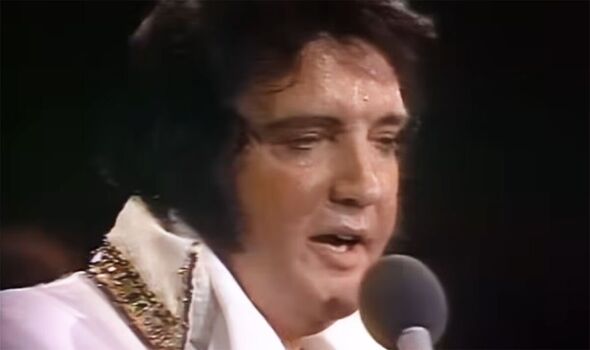
The Elvis in Concert special, which aired on October 3, 1977, two months after his death, included footage from concerts held in Nebraska and South Dakota on June 19 and 21. Although moments from the show displayed Presley’s enduring talent, his physical state was concerning. Presley Enterprises later stated, “Because of the severity of Elvis’ health problems at the time the special was shot, Elvis was far from his best in the way he looked and the way he performed.”
In the 2017 documentary The King, Jerry Schilling, a member of Presley’s inner circle, expressed his dismay over the special, stating, “How could you let him be filmed looking like that?” Thompson echoed his sentiments, recalling her shock at seeing someone so different from the man she had known just months earlier.
The performances, while painful to witness, showcased the raw power of Presley’s talent. Thompson highlighted a poignant moment during his rendition of “Unchained Melody,” calling it “gut-wrenching.” Tony Brown, Presley’s pianist, noted that the song seemed to evoke deep emotions for Presley, marking it as one of his greatest performances despite his struggles.
Legacy of a Troubled Icon
Presley’s last shows were marred by his declining health, as described by his ex-wife, Priscilla Presley, in the documentary Elvis: The Searcher. She stated that “sometimes he didn’t get through a song” and suggested that it might have been better to cancel some performances rather than subject audiences to his deteriorated state.
Rock and roll writer Nik Cohn also reflected on the toll of Presley’s lifestyle, noting, “Night by night it became harder for him to carry on being Elvis.” Despite this, the adoration from fans provided Presley with a sense of fulfillment, allowing him to connect with audiences even in pain.
Tragically, Presley’s life was cut short when he suffered a heart attack at his home in Graceland. His legacy, marked by both extraordinary talent and personal turmoil, continues to resonate with fans worldwide, illustrating the complex nature of fame and its consequences.