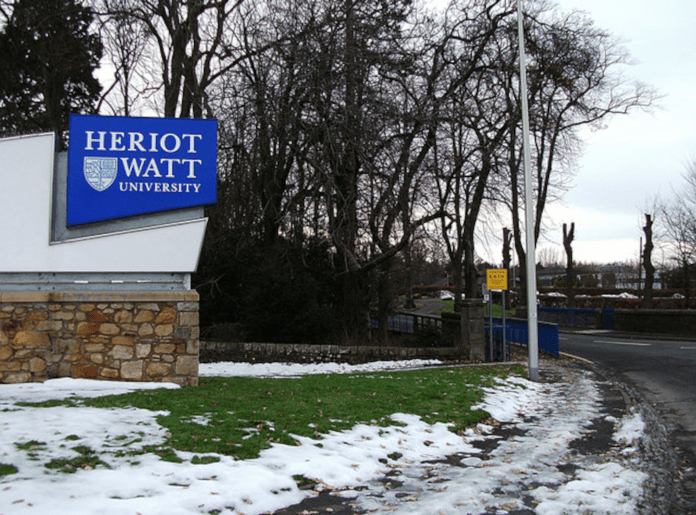
Staff at Heriot-Watt University in Edinburgh have voted in favor of industrial action due to a dispute over proposed job cuts and compulsory redundancies. In a recent ballot, 74% of participating staff endorsed full strike action, indicating a strong opposition to management’s plans. While a specific timetable for potential strikes has not yet been established, members of the University and College Union (UCU) are currently deliberating on their next steps.
The decision comes after the university announced plans to eliminate more than 40 jobs in Scotland and an additional 10 jobs in Malaysia. UCU members expressed their concerns that university management has not ruled out the possibility of compulsory redundancies. Additionally, the proposed cuts include the termination of a long-standing online learning platform that has been in operation for over 25 years.
Heriot-Watt staff’s decision to consider strike action follows similar votes at both Strathclyde and Aberdeen Universities, where UCU members have also shown support for industrial action. The potential for coordinated strikes at multiple institutions appears likely as UCU members from each university decide on their course of action.
Concerns Over Research and Job Security
University management has characterized the job cuts as a “right-sizing” exercise, expressing disappointment over the prospect of strikes. They have highlighted that their voluntary redundancy program has garnered “significant interest,” which they believe could mitigate the need for compulsory redundancies. Nonetheless, UCU representatives have raised alarms about how the proposed cuts could impact the university’s reputation and hinder the development of important research initiatives.
In a statement, Kate Sang, president of the Heriot-Watt UCU, remarked, “Today’s vote shows the strength of feeling against these cuts and the jobs that senior managers want to lose.” She emphasized that the university’s refusal to protect research time is unacceptable, noting that such cuts would not only damage the institution’s credibility but also impede advancements in critical knowledge necessary for addressing major societal challenges.
UCU General Secretary Jo Grady echoed these sentiments, stating that members have demonstrated a readiness to take action to defend their jobs. “To avoid this dispute escalating and the possibility of strikes at this busy time of year, the principal needs to listen to them, sit down to talks, and rule out the use of compulsory redundancies,” she urged.
Wider Context of University Cuts
This situation at Heriot-Watt University surfaces amid ongoing discussions about similar financial pressures at other institutions. Recently, Edinburgh Napier University has also faced scrutiny for not ruling out compulsory redundancies in its restructuring efforts. The landscape at universities across the region has been tense, particularly in light of a successful negotiation last year between the University of Edinburgh and UCU, which resulted in the university committing to avoiding compulsory redundancies.
As the situation develops, Heriot-Watt University has been contacted for comment. The outcome of the UCU’s deliberations and the potential for strike action could significantly impact the academic community and student services at the university, as staff prepare to advocate for job security and the preservation of vital educational resources.