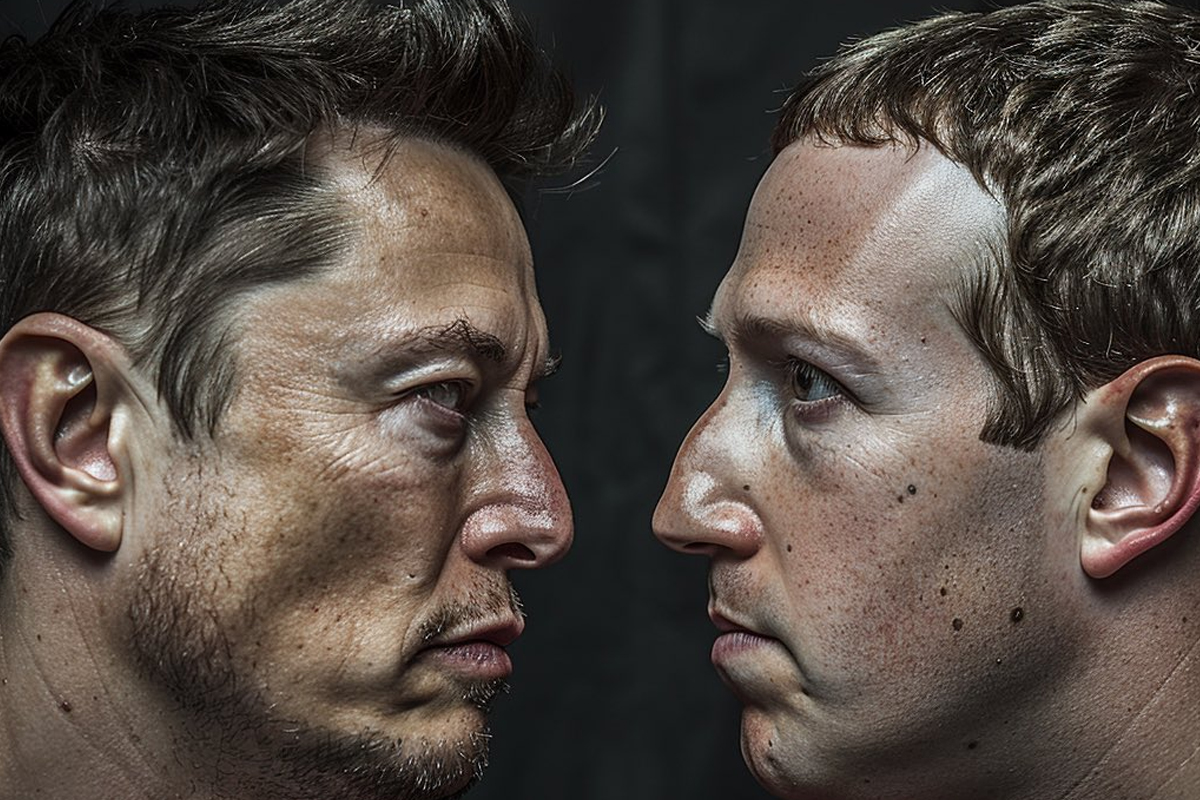
Newly released documents from the US Justice Department have revealed a photograph that appears to show Elon Musk and Mark Zuckerberg dining with convicted sex offender Jeffrey Epstein in 2015. The image was part of a collection of materials linked to Epstein’s controversial associations, raising questions about the extent of his connections with high-profile individuals.
The photograph, dated August 3, 2015, was sent by Epstein to himself in an email, as part of a series of communications that included references to a “wild” dinner with Musk and Zuckerberg. This particular email has drawn significant attention due to the ongoing scrutiny surrounding Epstein’s past and the powerful people who associated with him.
Epstein’s Email Revelations
Within the newly uncovered emails, Epstein described the dinner with Zuckerberg and Musk as “wild.” The day prior to sending the photo, he communicated with celebrity doctor Peter Attia, indicating plans for dinner that evening. In another email dated August 20, 2015, he mentioned the same dinner to Tom Pritzker, Hyatt executive chairman, using casual language that seemed to normalize his connections with billionaires.
This casual tone raises a significant question: why, after Epstein’s 2008 conviction for sex offenses, did influential figures like Musk and Zuckerberg feel comfortable being seen with him? Zuckerberg has publicly acknowledged the dinner but has maintained it was incidental, with a spokesperson stating that he met Epstein “in passing, one time at a dinner honoring scientists that was not organized by Epstein.” Musk, conversely, has not confirmed his attendance in the same manner, complicating his narrative surrounding his interactions with Epstein.
Conflicting Narratives and Implications
In contrast to Zuckerberg’s acknowledgment, Musk has publicly claimed that Epstein “repeatedly” attempted to invite him to his private island, a proposition Musk declined. Yet, emails from 2012 and 2013 suggest otherwise. Reports indicate that Musk inquired about “the wildest party” at Epstein’s island and exchanged messages regarding helicopter transport to the location.
While these communications do not imply any criminal wrongdoing, they challenge the sanitized version of Musk’s narrative, replacing it with more complex aspects of human behavior: curiosity, ambition, and the potential moral blindness that can accompany power and influence. Musk has acknowledged the authenticity of the emails and expressed a strong desire for the Epstein files to be released, stating on social media that he “pushed hard” for their disclosure.
This ongoing saga highlights the intricate web of connections that Epstein maintained with some of the world’s most influential figures. As the investigation into Epstein’s network continues, the implications for those involved remain significant. Questions about accountability and ethical considerations in their associations linger, particularly in light of Epstein’s criminal history.
As more details emerge from the Justice Department’s files, the public is left to ponder the consequences of these connections and what they reveal about the intersections of power, privilege, and accountability in contemporary society.