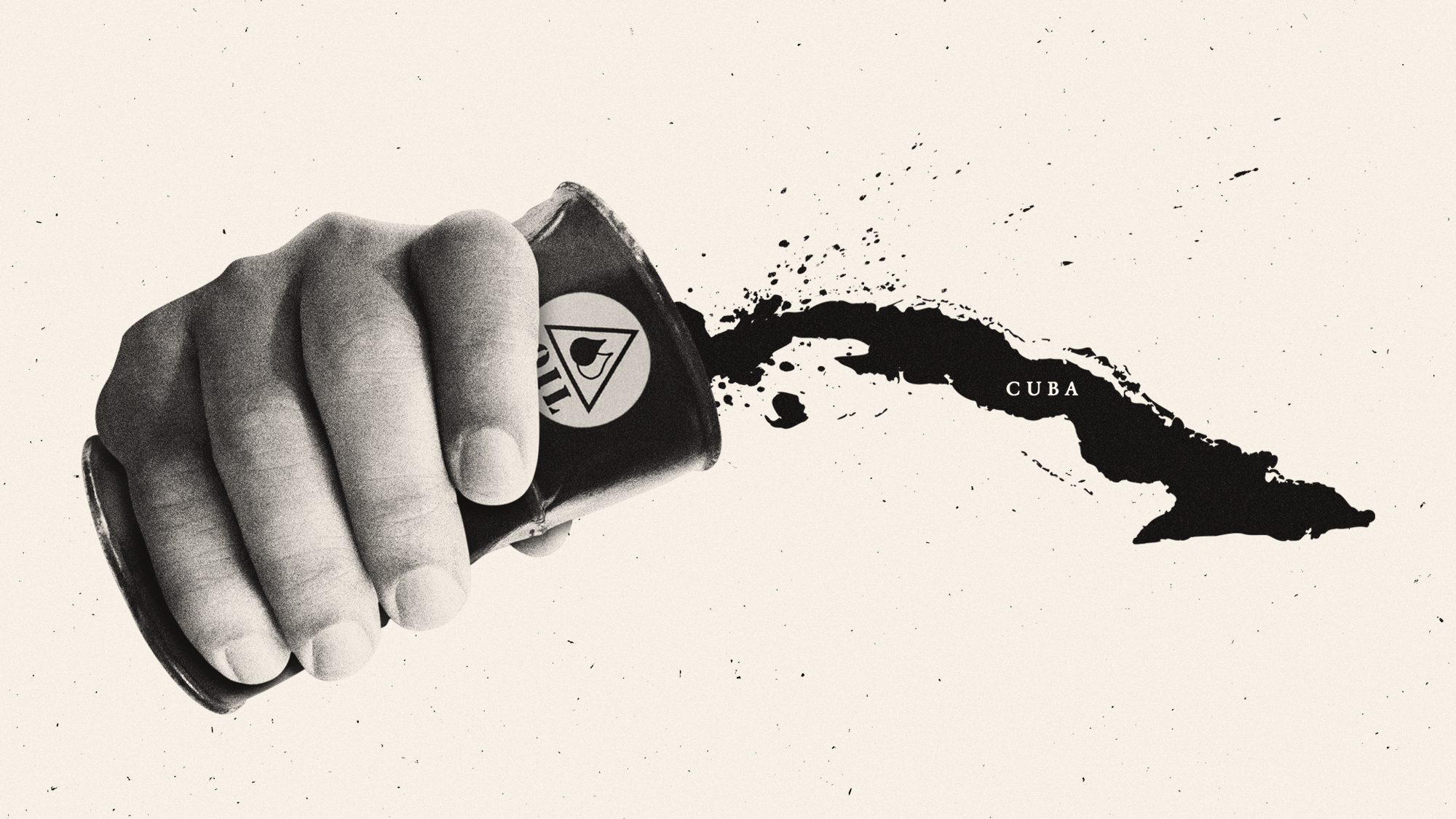
President Donald Trump has taken a significant step in his administration’s efforts to destabilize the Cuban Communist regime by signing an executive order that introduces new tariffs on any country exporting oil to Cuba. This move comes in response to what Trump describes as a critical energy crisis faced by the island nation. The president’s directive aims to restrict Havana’s access to vital oil supplies, which he believes will contribute to the regime’s downfall.
The executive order, announced on March 15, 2024, is perceived by some as a calculated attempt to expedite regime change in Cuba. According to The Wall Street Journal, U.S. officials are “actively seeking regime change in Cuba by the end of the year.” This objective is fueled by the belief that Cuba’s economy is “close to collapse,” particularly following the ousting of Venezuelan leader Nicolás Maduro, a key ally of Cuba.
Cuban President Miguel Diaz-Canel responded sharply to the new tariffs, describing the U.S. government’s actions as revealing its “fascist, criminal, and genocidal nature.” The response underscores the tension between the two nations, with Cuba facing dwindling oil supplies, which analysts estimate may last less than three weeks. As a result, vital sectors such as transportation and agriculture could face severe disruptions if fuel supplies run out.
Trump’s administration is positioning the oil embargo as a means of pressuring Cuba’s leaders to negotiate. “They have no money. They have no oil,” Trump stated during a recent press conference. He expressed hope that the economic pressure would encourage Cuban officials to approach the U.S. for a deal, citing a long history of failed attempts by American presidents to remove the Cuban Communist government.
Despite the aggressive approach, experts warn that external pressures may not lead to the desired outcome. Carlos Gimenez, a Republican representative from Florida, argues that “sometimes the cure is painful,” suggesting that the U.S. must remain steadfast in its efforts to confront the regime. However, analysts caution that similar strategies have failed in the past.
Historical context is essential in understanding the dynamics at play. Since the Cuban Revolution in 1959, various U.S. administrations have attempted to undermine the government, from President John F. Kennedy‘s backing of the Bay of Pigs invasion to the long-standing economic embargo. Yet none have succeeded in achieving a regime change.
According to a recent analysis by the CIA, the impact of the deteriorating Cuban economy on the government’s stability remains uncertain. The island has faced considerable economic challenges, exacerbated by a decline in tourism due to the pandemic and the emigration of many young people seeking better opportunities abroad.
Ricardo Torres, a political analyst, emphasizes that the root causes of Cuba’s struggles are internal. “The remedy for Cuba will be Cuban,” he stated, arguing that external forces cannot determine the country’s future. While some believe that increased pressure may create opportunities for change, others fear it could reinforce hardline elements within the regime.
As the U.S. intensifies its economic measures against Cuba, the international community will be watching closely to see how this new strategy unfolds. The implications of Trump’s oil embargo could have far-reaching consequences not only for Cuba’s government but also for its citizens, who are already grappling with the impact of fuel shortages and economic instability.