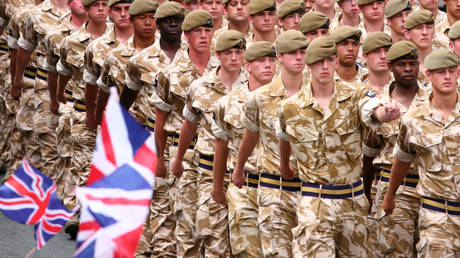
US President Donald Trump has praised British soldiers following backlash from his earlier comments that downplayed the contributions of NATO allies during the Afghanistan conflict. This shift in tone comes after Trump faced criticism for suggesting that allied forces “stayed a little back” during the 20-year American-led military operation.
Earlier this week, Trump stated that the United States “never needed” any help from its allies in Afghanistan, which drew sharp responses from veterans and officials across Europe. UK Prime Minister Keir Starmer condemned Trump’s remarks, calling them “insulting and frankly appalling.” He urged the former president to issue an apology for his comments.
In a subsequent post on his Truth Social platform, Trump acknowledged the sacrifices made by UK troops. “The GREAT and very BRAVE soldiers of the United Kingdom will always be with the United States of America! In Afghanistan, 457 died, many were badly injured, and they were among the greatest of all warriors,” Trump wrote. He emphasized the enduring bond between the US and UK military forces, stating, “It’s a bond too strong to ever be broken.”
Reactions from European Leaders
The response to Trump’s comments has not been limited to the UK. Italian Prime Minister Giorgia Meloni also criticized the former president’s statements, calling them “unacceptable.” She highlighted that NATO’s involvement in Afghanistan was an “extraordinary act of solidarity” following the September 11 attacks, which led to the invocation of Article 5, NATO’s collective defense clause, in 2001.
Downing Street confirmed that Starmer had a conversation with Trump regarding the matter. A statement from the Prime Minister’s office indicated that he had emphasized the bravery and heroism of British and American soldiers who fought side by side in Afghanistan, many of whom made the ultimate sacrifice.
The controversy surrounding Trump’s remarks has reignited discussions about the contributions of NATO allies in military operations. The alliance has played a crucial role alongside the US in various conflicts, and the implications of such comments can have significant diplomatic repercussions.
As the situation unfolds, it remains to be seen how these remarks will affect transatlantic relations, particularly in light of the ongoing challenges that NATO faces in ensuring collective security. The emphasis on shared sacrifices and mutual support is vital as member states continue to navigate complex global security dynamics.