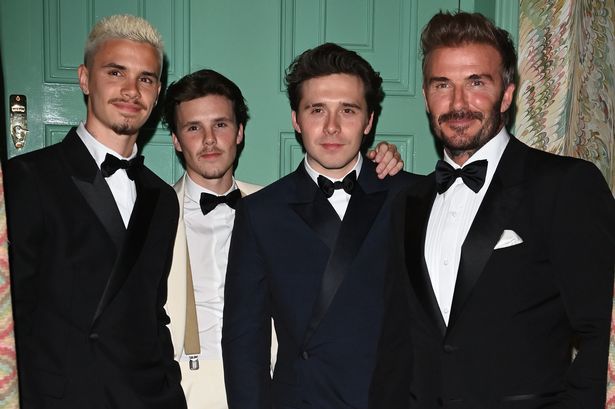
Former football star David Beckham has found himself in the spotlight following remarks made by his son, Brooklyn Beckham, which hint at underlying family tensions. On March 18, 2023, Brooklyn took to social media to address what he described as “some of the lies” surrounding his family, stating that his parents and their team have continued to engage with the press, leaving him no choice but to speak out.
Brooklyn’s comments have sparked a variety of reactions, with some supporting his stance. Notably, former Manchester United teammate John O’Kane has publicly backed Brooklyn. O’Kane, who previously lived with David, shared on social media that David “likes to be in TOTAL CONTROL and was OBSESSIVE on PERFECTION.” He emphasized that the well-being of children should come before any public persona, stating, “Brand Beckham should not come before your kids no matter what has happened!”
As the conversation continues, David Beckham has also opened up about his personal struggles, specifically his experience with obsessive-compulsive disorder (OCD). In a Netflix documentary released in 2023, he discussed how his condition affects his daily life. He explained his tendencies to clean and organize the family home after everyone else has gone to bed, revealing, “I hate coming down in the morning and there’s cups and plates and, you know, bowls.”
David has previously spoken about his OCD in a 2006 ITV interview, where he detailed his compulsion for everything to be perfectly aligned. He described how he arranges items in pairs and ensures his belongings, such as drinks in the fridge, are meticulously organized. “I’ve got this obsessive-compulsive disorder where I have to have everything in a straight line,” he said.
The recent revelations have prompted discussions around the portrayal of OCD in the media. The charity OCD-UK has called for enhanced understanding of the condition, criticizing media coverage that fails to capture the full impact of OCD on individuals. They noted that many reports neglect the debilitating intrusive thoughts and fears that accompany a formal diagnosis of clinical OCD. “Such reporting perpetuates the myths of OCD and stigmatises the suffering that people go through,” the organization stated.
While the Beckham family has often been portrayed as a model of success and unity, the latest developments highlight the complexities of their personal lives. Both David and Brooklyn Beckham’s candidness about their struggles reflects a broader conversation about mental health, particularly the challenges faced by those living with OCD. As public figures, their experiences may encourage greater empathy and understanding towards others in similar situations.
The unfolding narrative serves as a reminder that even the most seemingly perfect families face their own challenges. As the Beckham family navigates these issues, their story continues to resonate with fans and the public alike, prompting discussions about the balance between personal struggles and public life.