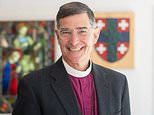
A bishop from New Hampshire has sparked national debate after urging his clergy to prepare their wills and get their affairs in order during a vigil honoring a woman killed by an Immigration and Customs Enforcement (ICE) officer. On January 9, Bishop Rob Hirschfield of the Episcopal Church of New Hampshire referred to Renee Good as a “martyr” following her fatal shooting in Minneapolis, Minnesota, earlier this month.
The incident occurred when ICE officer Jonathan Ross fired upon Good as she drove her SUV away from the scene where she was allegedly acting as a legal observer during an ICE operation. While Ross defended his actions as self-defense, officials such as Minneapolis Mayor Jacob Frey and Minnesota Governor Tim Walz have criticized this explanation, citing available footage that raises questions about the confrontation.
During his remarks at the New Hampshire State House, Hirschfield articulated a troubling vision for the future. He stated, “We are now engaged in a horrible battle that is eternal,” referencing the historical corruption of the church since its alliance with the Roman Empire in the fourth century. He expressed concern that the church has lost its voice in advocating for love and compassion, particularly for the marginalized.
Hirschfield further emphasized the need for preparedness among his clergy, stating, “I have told the clergy of the Episcopal diocese of New Hampshire that we may be entering into that same witness.” He urged them to finalize their wills, suggesting that the time for passive statements has passed and that action is now necessary to protect the vulnerable.
In his passionate discourse, Hirschfield declared, “The life that God wants for us is stronger than what we see, the cruelty, the injustice, the horror that we saw unleashed in Minneapolis.” He drew parallels to the death of George Floyd, another Black man killed by police in 2020, reinforcing his call for Christians to rise against systemic injustices.
Hirschfield concluded his address with a prayer, expressing hope for a new era of compassion and justice. “There is a new day ahead,” he asserted. “It is coming. We can smell it. It is on its way.”
The White House responded to Hirschfield’s statements, with spokesperson Abigail Jackson cautioning against any advice that could be seen as encouraging criminal behavior. “No one should follow advice encouraging them to commit crimes,” she remarked, emphasizing that interference with federal law enforcement operations carries serious consequences.
In contrast, Hirschfield clarified his position, stating he does not advocate for violence but rather for “peaceful, non-violent resistance.” He affirmed that his message has long been one of love and non-violence as a means to address societal challenges.
Surveillance footage from the incident shows Good’s SUV appearing to block the road for approximately four minutes before the shooting occurred. Witnesses report that Good and her wife, Rebecca Good, were documenting the ICE operation when the confrontation escalated.
The tragic event has prompted responses from numerous religious leaders who are calling for solidarity and action in light of increased immigration enforcement under the current administration. Most Rev. Sean W. Rowe, the presiding bishop of the Episcopal Church, emphasized the church’s commitment to supporting immigrants and refugees, stating, “We keep resisting, advocating, bearing witness and repairing the breach.”
In Minnesota, Rt. Rev. Craig Loya encouraged communities to respond to hatred with love, asserting, “We are going to make like our ancient ancestors, and turn the world upside down by mobilizing for love.”
As the focus on Good’s death continues to unfold, the call for justice and protection of the vulnerable resonates powerfully among faith leaders and activists alike. Hirschfield’s remarks have renewed conversations about the role of the church in advocating for social justice, highlighting the need for courage and preparedness in the face of ongoing societal challenges.