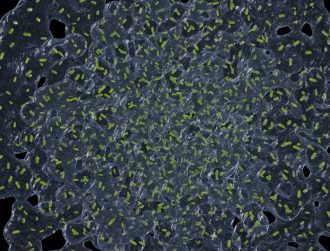
Research indicates that frozen hydrogen cyanide could play a pivotal role in unraveling the origins of life on Earth. A study published in ACS Central Science highlights how hydrogen cyanide, a substance toxic to humans, forms crystals at low temperatures. These crystals exhibit highly reactive facets that may facilitate chemical reactions otherwise impossible under such conditions.
The significance of this research lies in the potential for these reactions to initiate a series of chemical processes, which could have led to the formation of essential building blocks for life. This finding opens up new avenues in our understanding of how life might have emerged on our planet.
Crystalline Structure and Chemical Potential
At low temperatures, hydrogen cyanide crystallizes into structures that possess unique properties. According to the researchers, the geometry of these crystals allows for enhanced reactivity. This means that even in the cold, where chemical reactions typically slow down, certain facets of the hydrogen cyanide crystals can drive reactions that contribute to the synthesis of life’s fundamental components.
The study employed advanced computer models to simulate the behavior of these crystals, revealing the intricate ways in which hydrogen cyanide could interact with other molecules. This interaction is crucial, as it could give rise to amino acids and nucleotides, which are essential for forming proteins and genetic material, respectively.
Implications for Astrobiology
The implications of this research extend beyond Earth. Understanding the chemical reactions facilitated by frozen hydrogen cyanide crystals may shed light on the processes occurring in similar environments elsewhere in the universe. Such insights could help scientists identify potential biosignatures on other planets or moons, thereby enhancing the search for extraterrestrial life.
The study emphasizes the importance of examining unusual substances and conditions that may have played a role in the genesis of life. As researchers continue to explore the pathways that led to life on Earth, findings such as these underscore the complexity and diversity of chemical processes that could contribute to life’s origins.
This research not only enriches our comprehension of biochemical evolution but also inspires new inquiries into the conditions under which life may arise elsewhere in the cosmos. As the quest for understanding our origins continues, frozen hydrogen cyanide crystals may hold answers to questions that have long fascinated humanity.