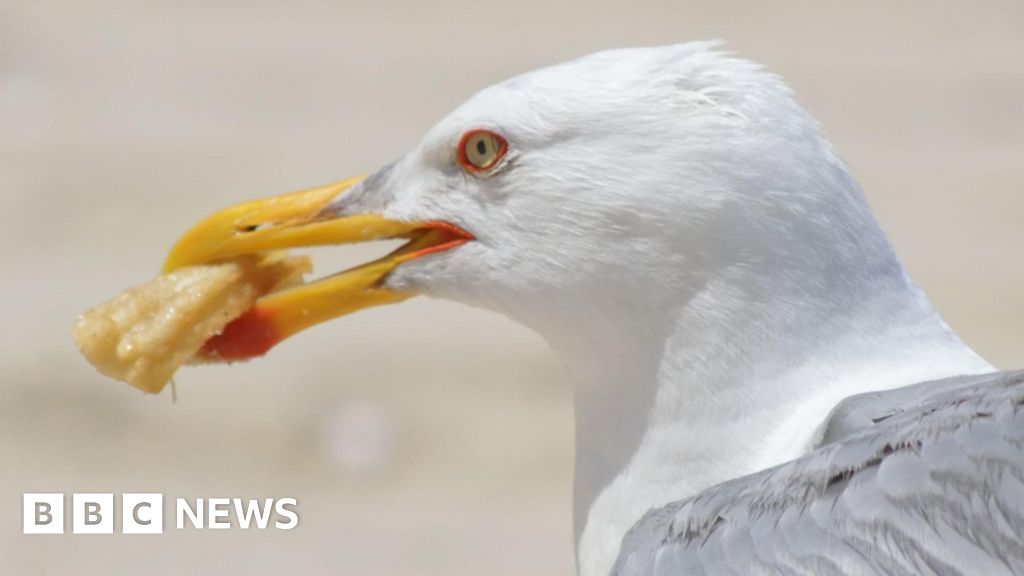
UPDATE: Scotland is poised to introduce its first-ever by-law banning the feeding of gulls, amidst a surge in aggressive bird attacks on residents, particularly in Eyemouth. Community leaders are acting swiftly in response to alarming incidents, including multiple attacks on children over the summer of 2024.
Authorities have confirmed that a series of meetings with the nature agency, NatureScot, have led to the formulation of this crucial legislation. Eyemouth, along with nearby coastal villages, has witnessed a troubling increase in gull-related attacks, prompting urgent calls for action. Berwickshire councillor James Anderson stated, “This is a proportionate, lawful, and evidence-based step, and the public will have full opportunity to comment through a formal consultation.”
The escalating gull population is linked to changing coastal habitats and a dwindling natural food supply, forcing more gulls into urban areas where they find safer nesting sites and easy access to discarded human food. Despite a national decline of over 40% in herring gulls in the past two decades, attacks on people continue to rise. In just one month last summer, as many as seven children were attacked outside a single food outlet in Eyemouth.
Anderson emphasized the seriousness of the problem, stating that both residents and businesses along the coast are deeply concerned. “NatureScot has been clear that the most effective action we can take is to remove food at source,” he added. Currently, local councils lack enforcement powers to prevent deliberate feeding, which has exacerbated the issue.
Communities across the UK have already implemented similar by-laws to combat this growing concern. Areas in East Devon, North Yorkshire, and Suffolk have successfully criminalized the feeding of gulls. While Scotland has yet to pass such legislation, proactive communities, like the St Andrew’s Community Council in Fife, are adopting action plans to limit food availability for gulls.
A nationwide forum, the People and Gulls initiative, is also in the works to establish best practices for managing gull populations. Earlier this month, community leaders met with NatureScot and other groups, including the RSPB, to discuss strategies for mitigating the issue in Eyemouth.
Despite efforts to control gull populations through measures like oiling eggs—previously used in Eyemouth but halted before the Covid pandemic—the local authority dismissed reintroducing this licensed practice last year. The Scottish Borders Council will now evaluate the proposed by-law along with other solutions recommended by NatureScot.
A spokesperson from NatureScot remarked, “Feeding gulls is a significant issue in Eyemouth, and anything that can be done to tackle that is helpful.” The agency is launching a public awareness campaign to discourage gull feeding and is supportive of local initiatives aimed at addressing the problem.
The proposed by-law marks a pivotal moment for Eyemouth and surrounding communities, as officials work to regain control over the gull population and protect residents from further incidents. The council is expected to conduct significant consultations with community partners and stakeholders before moving forward with the by-law.
As discussions continue, the local community is urged to engage in the consultation process, as the clock ticks on a solution to this pressing issue.