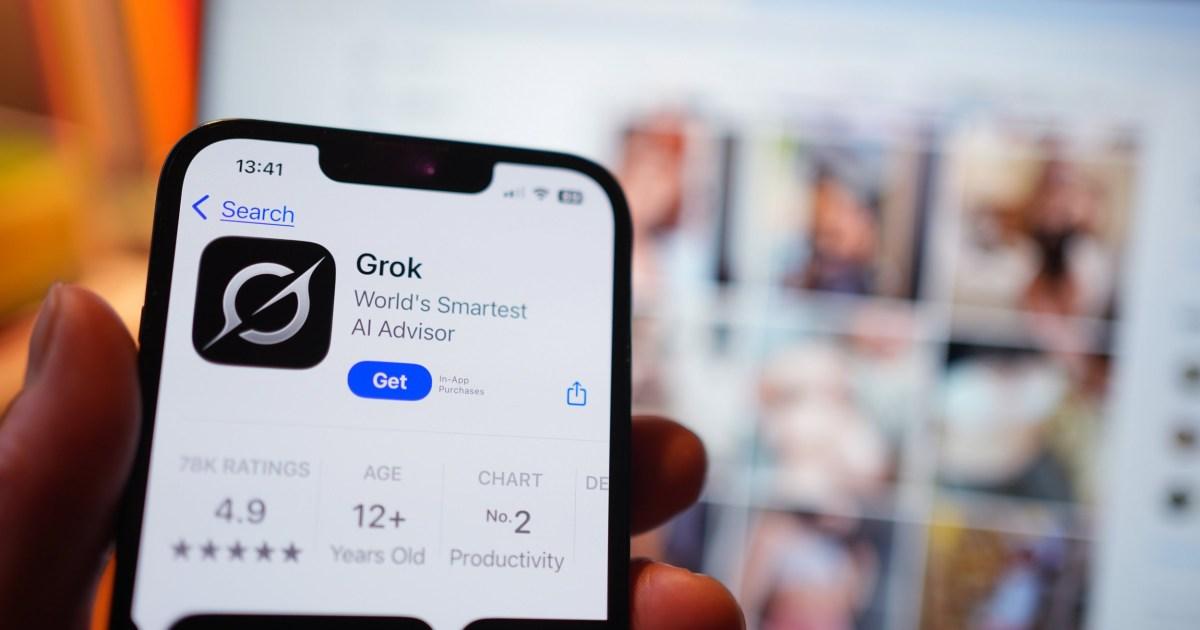
Generating sexual images of individuals without their consent, particularly through artificial intelligence, will soon be a criminal offense in the United Kingdom. This announcement was made by Liz Kendall, the Secretary of State for Science and Technology, following public outrage over the misuse of Grok AI, a chatbot developed by Elon Musk. The new law will come into effect this week and is part of the broader Data (Use and Access) Act passed by Parliament in 2022.
The controversy erupted when users of Musk’s social media platform, X, began employing the AI to produce images that depicted individuals, including women and children, in compromising situations. The situation escalated to the point where even two cabinet ministers reportedly became victims of this troubling trend. In response, Musk implemented restrictions that limited the generation of deepfake images to verified users, whose identities are linked to their accounts. Despite this, he trivialized the issue by creating a mock image of Prime Minister Sir Keir Starmer in a bikini, claiming that the restrictions represented an attack on free speech.
In a session in the House of Commons, Kendall confirmed that the new criminal offense would be enforced this week, though she did not specify the exact date. This legislation aims to address the growing problem of non-consensual image creation and distribution, which has raised significant ethical and legal concerns.
Legislative Action and Wider Implications
The upcoming legal framework will also include provisions to ban so-called “nudification” applications, which facilitate the creation of non-consensual images. The flagship Crime and Policing Bill, currently progressing through parliamentary channels, seeks to prevent companies from providing the tools necessary for such violations. Kendall emphasized that these measures are designed to tackle the issue “at its source.”
During the debates, Sir Keir Starmer indicated that if X cannot effectively regulate its platform, the government would intervene. He stated, “If X cannot control Grok, we will – and we’ll do it fast because if you profit from harm and abuse, you lose the right to self-regulate.”
On a related note, the UK communications regulator, Ofcom, has initiated an investigation to determine whether X has violated legal obligations regarding the protection of users from illegal content. The regulator has received alarming reports regarding the Grok AI chatbot being utilized to produce and disseminate images that could be classified as intimate image abuse or even child sexual abuse material.
The urgency of these legislative changes underlines the societal need to address the rampant misuse of technology in creating harmful content. As the UK prepares to implement these important protections, advocacy groups continue to call attention to the broader implications of such technologies in the fight against violence and abuse.
As the situation develops, it remains critical for policymakers to ensure that technological advancements do not outpace legal protections, safeguarding individuals’ rights in an increasingly digital world.