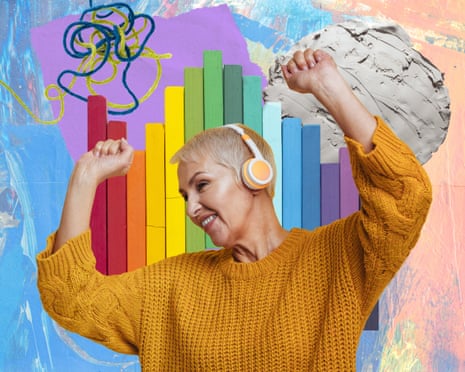
BREAKING: A new study confirms that engaging in the arts can significantly improve mental and physical health, offering a fresh perspective on well-being as we head into 2026. With 95% of US adults reporting no active engagement in the arts recently, experts urge everyone to reconsider the powerful effects of creativity on our lives.
As we approach the new year, many are looking for ways to reinvent themselves. Traditional methods like running and yoga have been tried and tested, but latest research suggests that creativity might be the key to happier, healthier living. Engaging in activities such as music, dance, and visual arts not only brings joy but also fosters emotional resilience and cognitive health.
Recent findings indicate that regular participation in the arts can lead to a nearly 50% reduction in the risk of developing depression. This is not solely due to socio-economic advantages; the scientific evidence shows that arts engagement directly activates pleasure and reward centers in the brain, similar to food, sex, and drugs. As a result, individuals experience a boost in mood and mental clarity.
According to the research led by Dr. Daisy Fancourt, many studies highlight the mental health benefits of creative activities. For instance, combining music therapy with standard treatments can nearly double improvements in depressive symptoms. This evidence reveals that arts participation can serve as a potent preventive measure against mental health issues.
Furthermore, the benefits extend beyond the mind. Engaging in the arts impacts all physiological systems. Singing enhances respiratory strength, while dancing lowers blood pressure and glucose levels more effectively than traditional exercise. Initial studies even suggest that arts engagement may influence gene expression, leading to improved health outcomes.
The implications are profound. As we gear up for 2026, it’s vital to prioritize arts engagement. Dr. Fancourt emphasizes that dedicating just 30 to 60 minutes a week can yield noticeable improvements in well-being within six weeks. Simple actions like swapping morning alarms for uplifting songs or choosing novels over social media during commutes can create a transformative daily routine.
Experts recommend exploring various artistic pursuits tailored to individual psychological needs. If feeling overwhelmed, activities like drawing or creative writing can provide a sense of control and mastery. Even failures in crafting can foster resilience, building a foundation for emotional strength.
Art exhibitions also offer a unique opportunity to connect with creativity. Rather than rushing through, taking the time to engage deeply with just a few pieces can enhance the emotional experience, with studies indicating that we generally spend less than 30 seconds on average per artwork.
Moreover, music can be a powerful tool for enhancing physical activity. Engaging with motivational tunes while exercising can lead to 20% more output in workouts, effectively acting as a legal performance-enhancer.
As we prepare for the new year, it’s essential to embrace the arts as a necessary part of our health regimen. Dr. Fancourt’s upcoming book, Art Cure: The Science of How the Arts Transform Our Health, published by Cornerstone Press, will delve deeper into these findings.
The message is clear: engaging with the arts is not a luxury; it’s a necessity. As we move into 2026, let’s commit to incorporating creativity into our lives for better mental and physical health. With a growing body of evidence supporting these claims, the time to act is now.
Join the conversation and share your experiences with the arts using the hashtag #ArtCure2026. Your creative journey could inspire others to transform their lives!