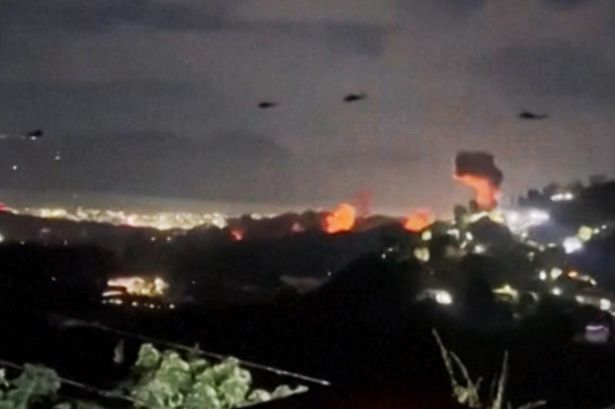
The US Army successfully captured Nicolás Maduro, the president of Venezuela, during a significant military operation. This raid was described by President Donald Trump as “large scale” and hailed as a major victory against the Venezuelan government. Following the capture, both Maduro and his wife, Cilia Flores, were indicted in a New York court for their alleged involvement in drug trafficking.
Details surrounding the operation reveal that it took place on April 15, 2024, in an undisclosed location in Venezuela. US forces executed the raid in coordination with intelligence gathered over several months. The operation aimed to dismantle Maduro’s regime, which has faced international condemnation for its authoritarian practices and human rights violations.
The indictment issued by the New York court accuses Maduro of overseeing a drug trafficking organization that has been responsible for the distribution of significant quantities of cocaine into the United States. The court documents allege that Maduro and Flores played crucial roles in this operation, which has had devastating effects on public health and safety in the US and beyond.
In a statement following the operation, President Trump emphasized the importance of the US’s commitment to combatting drug trafficking and restoring democracy in Venezuela. “Today marks a turning point,” he said. “We are sending a clear message that we will not tolerate drug trafficking and corruption.”
The operation has sparked mixed reactions both domestically and internationally. Supporters of the raid view it as a necessary action to hold Maduro accountable for his government’s actions. Critics, however, express concern over the potential for increased violence in Venezuela as a result of the operation and the possibility of retaliatory actions from Maduro’s supporters.
Following the raid, there are questions regarding the future of Venezuela’s political landscape. The capture of Maduro opens the door for a potential transition of power, but the situation remains complex. Various opposition factions may vie for control, complicating the prospect of a peaceful resolution.
As the international community watches closely, the US government’s actions will likely influence diplomatic relations with other countries in the region. Nations such as Colombia and Brazil, which share borders with Venezuela, are particularly concerned about the implications of this military intervention.
The situation inside Venezuela remains fluid. Reports indicate that protests have erupted in cities across the country as supporters of Maduro gather to express their outrage over his capture. The US government has urged Venezuelans to support a transition towards democracy, emphasizing the need for free and fair elections.
The implications of this military operation extend beyond Venezuela’s borders. Analysts predict that the fallout could affect drug trafficking routes throughout South America and contribute to shifts in power dynamics within the region.
As this story develops, the focus will remain on the legal proceedings against Maduro and Flores, as well as the broader ramifications of the US’s military involvement in Venezuela. The world will be watching closely as events unfold in the coming weeks and months.