Dyson’s latest vacuum cleaner, the V16 Piston Animal, showcases the company’s commitment to innovation and design. In a recent discussion with Steph Parker, an engineer at Dyson, insights were shared regarding the design principles that guide the development of their vacuum cleaners, particularly in addressing weight and user comfort.
The V16 Piston Animal, released in 2023, maintains a weight of 7.5 lbs (3.4 kg) when equipped with its wand and main floorhead. This weight is comparable to its predecessor, the Gen5detect, which is a notable achievement given the increasing focus on lightweight cordless models in the market. Parker emphasized that minimizing weight was a “key focus” during the design process. She explained, “One way we did it was by switching the motor around, which allowed us to compress the overall size of the product. And that’s allowed us to reduce its weight.”
To further enhance weight reduction, Dyson employed advanced material simulations, enabling adjustments such as reducing wall thicknesses. Despite these efforts, the V16 remains heavier than many competitors. The V15 Detect, for instance, weighs 6.8 lbs (3 kg) and is currently considered the most lightweight model in Dyson’s lineup.
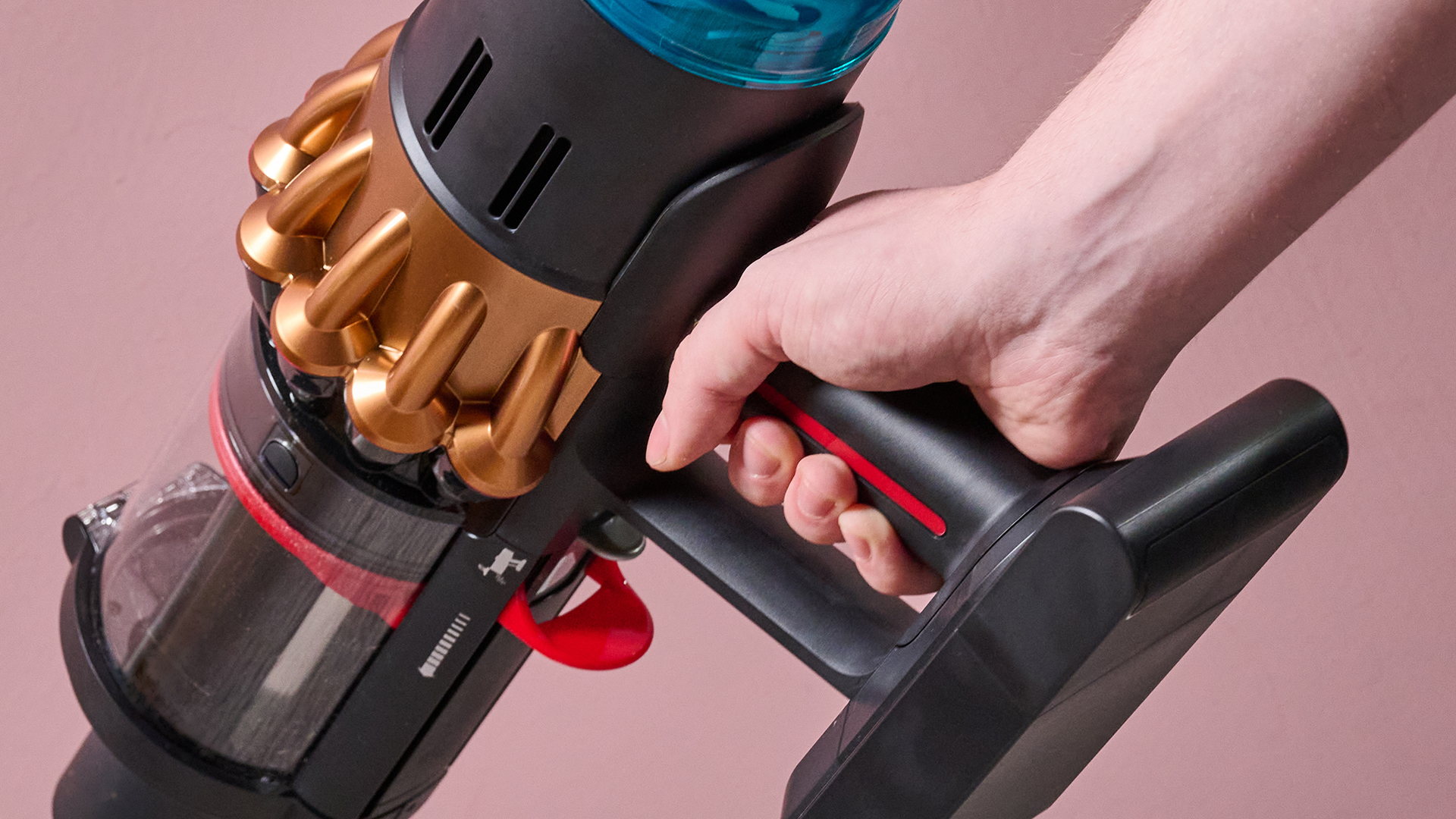
While Dyson has made strides in comfort with the addition of a cushioning pad above the handle, which alleviates pressure on the hand, many users still find room for improvement. Parker noted, “It’s designed so that it’s comforting the top of your hand because that’s where the most of the weight is going.” Nonetheless, some users have expressed a desire for similar features on less expensive models that, while lighter, can still cause discomfort during prolonged use.
Addressing Ergonomics and Design Choices
Another point of discussion was the design of the vacuum handles. Unlike some competitors that offer ergonomically shaped handles, Dyson’s options feature straight edges. This design choice can make the heavier models feel unwieldy, especially when used in handheld mode. Parker explained that Dyson focuses on ensuring the handle is suitable for a wide range of users, stating, “We fine-tune the sizes of that handle depending on our 95 percentile [so 95 percent of hand sizes can hold the handle comfortably].”
When asked whether the design approach was influenced by aesthetics, Parker clarified that durability and structural integrity take precedence. “It’s probably mostly focused on structural [aspects] and just making sure the products are as robust as they can be while being comfortable to most of our users,” she said. This commitment to structural soundness aligns with Dyson’s reputation for producing high-quality, long-lasting appliances.
As consumers continue to demand both performance and comfort in their cleaning devices, Dyson’s design philosophy illustrates the challenges and trade-offs involved in meeting these expectations. While the V16 Piston Animal offers impressive features and innovative technology, comfort remains an area ripe for future development. For now, buyers seeking the latest in vacuum technology may need to balance cutting-edge design with ergonomic considerations.