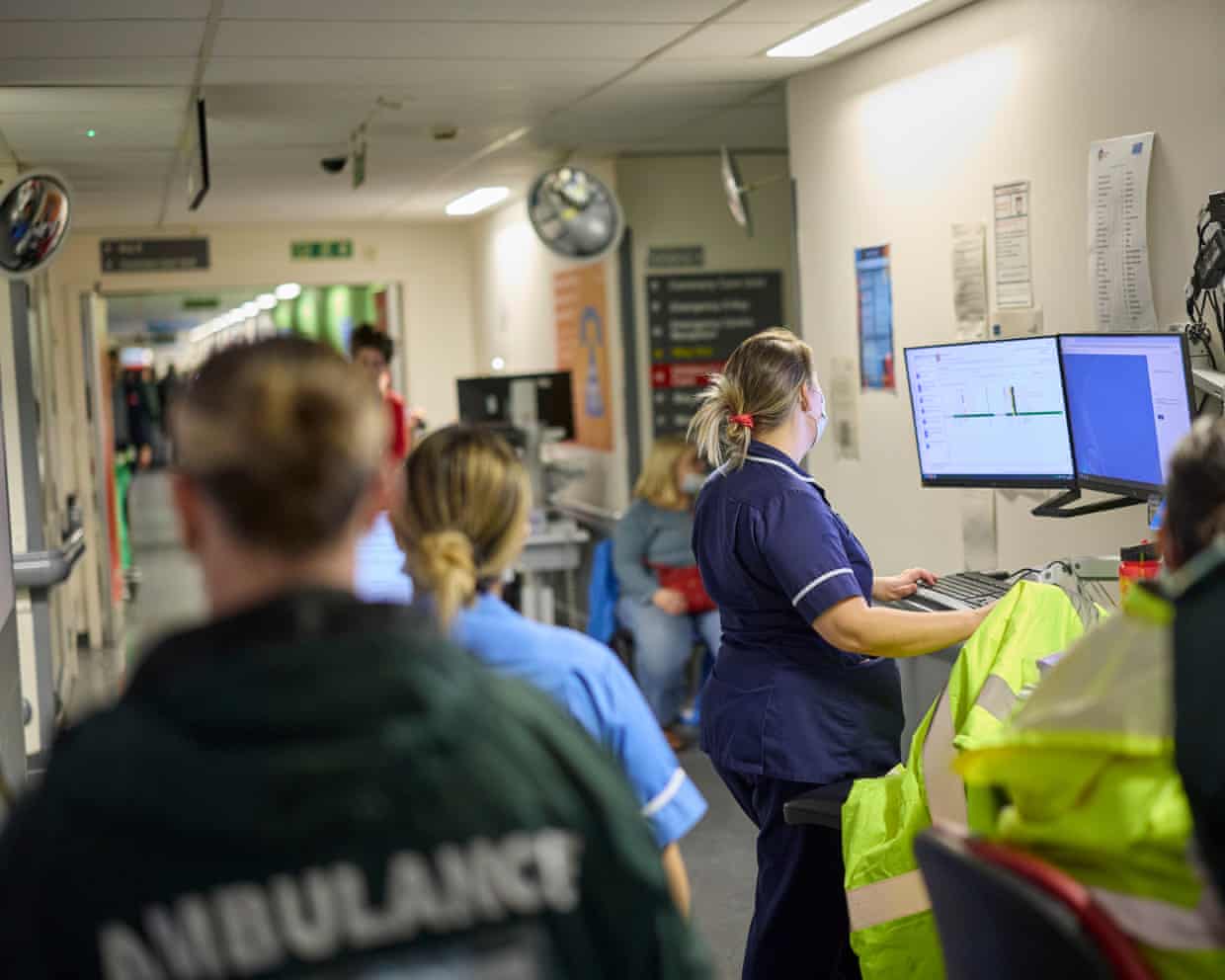
Hospitals across England are utilizing artificial intelligence to address long waiting times in emergency departments this winter. An innovative A&E forecasting tool has been introduced, designed to predict peak demand periods. This advancement allows hospital trusts to optimize staffing and bed capacity based on anticipated patient inflow.
The forecasting algorithm leverages historical data, including factors like weather trends, school holidays, and infection rates of flu and Covid-19. By analyzing this information, healthcare providers can estimate the number of patients likely to visit A&E, thereby enhancing their operational planning.
Ian Murray, the Minister for Digital Government and Data, emphasized the importance of this technology, stating that it enables healthcare professionals to focus on their expertise rather than administrative tasks. He noted, “The front door of the NHS is the A&E department. You’ve no idea how many people will come through the door, although you can have some analytical evidence that Saturday nights might be busier than a Tuesday night.”
Impact of AI on Hospital Operations
The forecasting tool assists hospitals in preparing for busy periods by predicting A&E department activity with greater accuracy. Murray elaborated on the benefits, saying that it allows for strategic deployment of resources. “If you put that into context and see seasonal trends, along with how busy days are going to be, you can then put your resources in the right place,” he explained.
With this information, hospitals can allocate more consultants in specific specialties or increase nursing staff in areas projected to experience higher patient volumes. Additionally, the tool could facilitate faster patient discharges, thereby freeing up beds for incoming patients.
The A&E forecasting tool is accessible to all NHS trusts in England, with approximately 50 organizations already reporting positive outcomes from its implementation. According to Murray, these trusts are “seeing great results” from the technology.
Modernizing the NHS with Advanced Technology
The introduction of this AI tool is part of a broader initiative under the AI Exemplars programme, championed by Labour leader Keir Starmer. Earlier this year, the Prime Minister stated that artificial intelligence would “drive incredible change” within the country.
Prof. Julian Redhead, the national clinical director for urgent and emergency care at NHS England, highlighted the significance of proactive planning during peak periods, particularly in winter. He stated, “Early and efficient planning is key to managing busy periods like winter, and new tech like the AI tool has the potential to make a real difference to the way we manage care for patients.”
As England’s healthcare system braces for increased demand this winter, the strategic integration of artificial intelligence promises to enhance the efficiency of emergency services. This modernization effort aims to not only improve patient care but also streamline operations within the National Health Service.