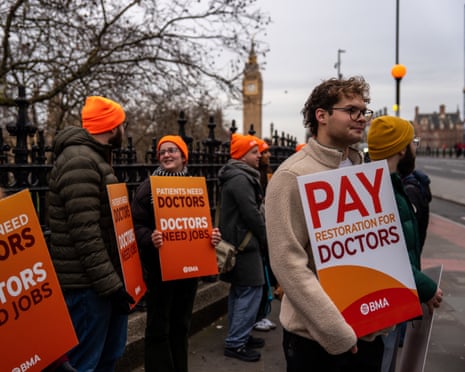
Resident doctors in England are preparing to resume negotiations with the government to prevent further industrial action in the upcoming year. Their recent five-day strike concluded on Monday morning, with the British Medical Association (BMA) urging Health Secretary Wes Streeting to engage in talks with a collaborative mindset. The BMA noted that the tone of discussions leading up to the strike was encouraging but ultimately too late to avert the walkout.
Streeting expressed his commitment to re-engage in discussions, stating, “I do not want to see a single day of industrial action in the NHS in 2026” and pledged to “do everything I can to make this a reality.” He emphasized that his door remains open for dialogue with the BMA to address ongoing issues affecting the healthcare system.
The Prime Minister, Keir Starmer, has taken a firm stance against the strike, labeling it “beyond belief” given the current pressures faced by the National Health Service (NHS) during a challenging flu season. The incoming general secretary of Unison, Andrea Egan, criticized Streeting for describing the strike as “morally reprehensible,” while Streeting has previously accused the BMA of behaving like a cartel.
Despite the tensions, a more conciliatory tone emerged as the strike ended. Negotiations between the government and the BMA have faced significant challenges in recent months, primarily due to Streeting’s reluctance to reopen discussions on pay. Doctors are advocating for “pay restoration” to levels equivalent to those in 2008, adjusted for inflation, highlighting a significant gap in their compensation over the years.
In response to the doctors’ demands, Streeting proposed creating additional training positions to address the shortage of qualified doctors. This offer was met with resistance from BMA resident doctors, who opted to proceed with the strike from last Wednesday until 7:00 AM on Monday.
Jack Fletcher, chair of the resident doctors committee, underscored the need for constructive solutions. He remarked, “What we need is a proper fix to this jobs crisis and a credible path towards restoring the lost value of the profession.” Fletcher called for genuine job creation and a multi-year strategy for restoring doctors’ pay, emphasizing that these solutions are feasible and within the government’s reach.
Reflecting on the past year, Fletcher expressed frustration, stating there were multiple opportunities to avert strikes, but government actions often came too late. He noted, “The tone of the conversations we had at the 11th hour before these strikes were cause for optimism that the government is finally understanding the frustrations of resident doctors in England.” As they enter the new year, resident doctors are adopting a renewed “can-do spirit,” hopeful that Streeting will share this approach.
Streeting acknowledged the strain that the strike placed on the NHS during a critical period, stating that the combination of strike action and flu cases posed a significant threat to the health service. He commended the dedication of NHS staff who managed to maintain services during this challenging month, asserting, “To everyone who played a role in keeping NHS services running through this exceptionally challenging month, thank you for the real difference you have made.”
As discussions resume in 2026, both parties will need to navigate the complexities of restoring workforce stability and addressing the pressing needs of the NHS while fostering a collaborative environment to prevent future disruptions.