Ukrainian children are reportedly being abducted by Russian forces and sent to North Korea, where they are subjected to indoctrination against Japan. This alarming claim was made by legal expert Kateryna Rashevska during a recent U.S. congressional hearing focused on the mass abduction of Ukrainian children amid the ongoing conflict in Ukraine.
According to Rashevska, at least two children, identified as Misha, aged 12, and Liza, aged 16, have been forcibly taken from eastern Ukraine and transported over 9,000 kilometers to the Songdowon camp in North Korea. There, they reportedly learn to “destroy Japanese militarists” and interact with veterans connected to past military actions against the United States.
The testimony adds to a growing body of evidence regarding Russia’s extensive efforts to forcibly relocate Ukrainian children. Since the onset of the invasion in February 2022, nearly 20,000 Ukrainian minors have been abducted and sent to various facilities in Russia and occupied territories. Research conducted by the Yale School of Public Health’s Humanitarian Research Lab indicates that these facilities include summer camps, sanatoriums, military bases, and even monasteries.
Russia’s Expanding Relationship with North Korea
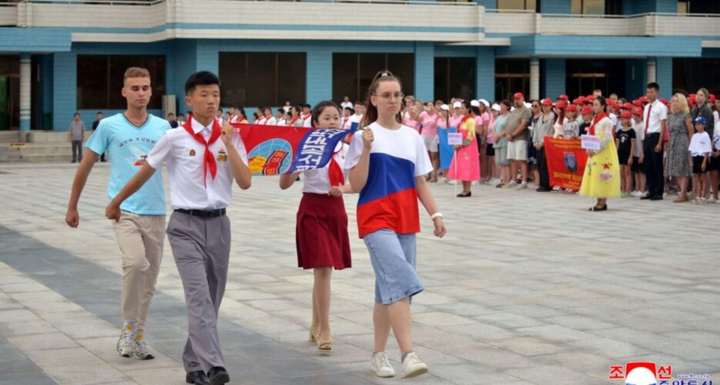
Rashevska’s assertions highlight the deepening ties between Russia and North Korea, particularly as North Korea has emerged as a significant supplier of military support to Russia in its ongoing conflict with Ukraine. Reports indicate that North Korea has deployed tens of thousands of troops to assist Russian forces. This summer, more than 100 Russian schoolchildren visited the Songdowon camp, further symbolizing the collaboration between the two regimes.
The systematic abduction and indoctrination of Ukrainian children are not new phenomena. According to Rashevska, the Regional Center for Human Rights has documented 165 re-education camps where Ukrainian children are subjected to militarization and Russification. These camps are located not only in occupied territories but also in Russia, Belarus, and North Korea.
The scale of these operations has significantly expanded since 2014 when Russia first began its campaign in Crimea. As of now, approximately 35,000 children remain in Russian custody, with some allegedly forced to fight against their own country. Estimates from Ukrainian authorities suggest that the number of abducted children could be as high as 300,000.
International Response and Ukrainian Efforts for Repatriation
The situation has garnered international attention, leading to arrest warrants issued by the International Criminal Court for Vladimir Putin and his aide Maria Lvova-Belova, who holds the title of “Russia’s Commissioner for Children’s Rights.” The Russian government has dismissed these warrants, calling them “outrageous and unacceptable.”
Ukrainian President Volodymyr Zelensky has reported that only 1,859 of the stolen children have been successfully returned as of December 2023. Some children have been temporarily held before being returned, while others remain in captivity indefinitely. Many of those who do return face significant psychological and social challenges, necessitating extensive support to address the trauma of their experiences.
The plight of abducted children has been highlighted through personal accounts, such as that of Nastya, a teenager who was taken from Kherson Oblast in March 2022. After being placed in a home where she experienced abuse, she eventually managed to contact her mother, who sought assistance to bring her back to Ukraine.
This ongoing crisis not only underscores the human cost of the conflict but also raises serious concerns regarding international laws on the protection of children in armed conflict. As the situation develops, the global community watches closely, urging accountability and humanitarian support for affected families.