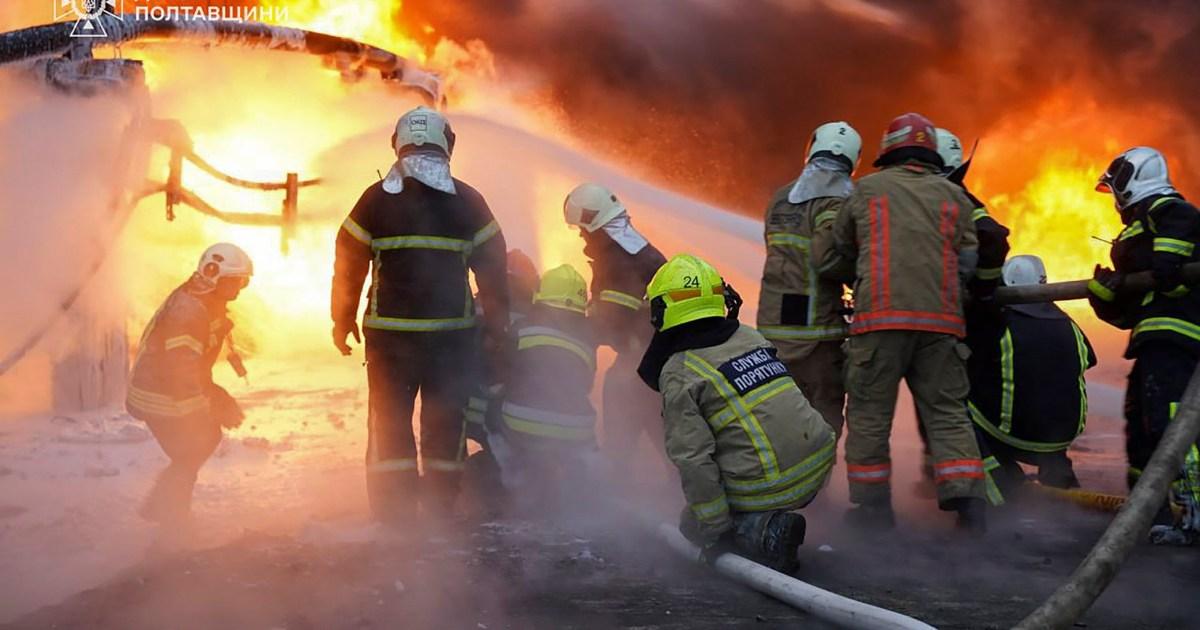
Ukrainian President Volodymyr Zelensky has announced a new peace proposal, reducing its framework from 28 to 20 points, following his firm rejection of any territorial concessions to Vladimir Putin. The revised plan comes as Ukraine grapples with the ongoing impacts of recent Russian missile and drone strikes, particularly in the Poltava region on December 7, 2025.
Zelensky emphasized that Ukraine would not surrender any land, stating, “We have no legal right – under Ukrainian law, under our constitution, under international law. Honestly, we have no moral right, either.” This firm stance contrasts sharply with suggestions from former U.S. President Donald Trump, who has argued that land concessions are essential for a lasting peace agreement.
The previous proposal included contentious points that would have recognized areas such as Crimea, Luhansk, and Donetsk as Russian territories. Zelensky’s latest announcement follows discussions with European allies, including British Prime Minister Keir Starmer, French President Emmanuel Macron, and German Chancellor Friedrich Merz, who expressed their strong support for Ukraine at a meeting in London.
Support from European Leaders
During the meeting at 10 Downing Street, the leaders underscored the urgency of maintaining economic pressure on Russia while continuing to bolster military support for Ukraine. Starmer’s office released a statement highlighting the critical moment and the importance of ongoing discussions. His spokesperson, Tom Wells, noted that this progress marks “the furthest we’ve got in four years,” reflecting an optimistic outlook for future negotiations.
Macron’s office reiterated the commitment of the four leaders to coordinate closely with Ukraine and to enhance the U.S. peace plan with European contributions. As the situation evolves, Zelensky indicated that “intensive work” would continue in the coming days, although he acknowledged that “there are still outstanding issues” to resolve.
Ongoing Conflict and Human Impact
The backdrop to these diplomatic efforts is the continued violence in Ukraine. The recent strikes in Poltava serve as a stark reminder of the conflict’s toll on civilians. As rescue operations proceed, the humanitarian crisis remains a pressing concern, with thousands displaced and in need of assistance.
The international community is closely monitoring these developments, with many calling for a swift resolution to what has been described as a “barbaric war.” The revised peace plan, free of previous anti-Ukrainian elements, may signal a shift towards a more favorable negotiating position for Ukraine.
As the discussions progress, the focus remains on ensuring that any potential peace agreement respects Ukraine’s sovereignty and territorial integrity. The coming weeks will be critical in shaping the future of Ukraine and its relations with both European allies and Russia.