Tensions between Russia and Europe have escalated sharply as the Kremlin issues bold threats of military action against European capitals. Russian President Vladimir Putin has suggested that Moscow could respond decisively to any perceived aggression from NATO. According to Western intelligence agencies, the Kremlin is reportedly intensifying its hybrid warfare tactics against Europe, raising fears of a potential conflict that could begin as early as 2029.
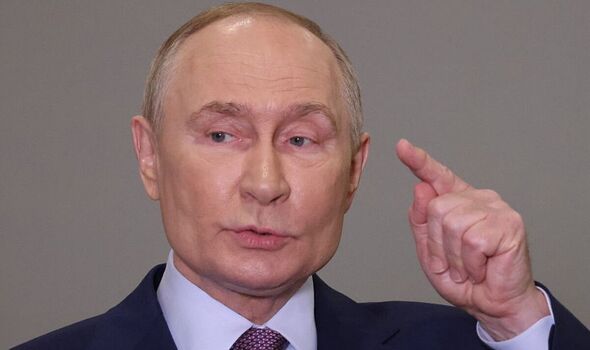
In a recent statement, Putin responded to comments made by Hungarian Foreign Minister Peter Szijjarto, who claimed that Europe is preparing for war against Russia. The Russian leader cautioned European nations that any military confrontation would lead to swift and severe consequences. “If Europe suddenly wants to start a war with us and starts it, then it would end so swiftly for Europe that Russia would have no one left to negotiate with,” he warned.
The Kremlin’s rhetoric has become increasingly aggressive, with prominent state media figures amplifying these threats. Vladimir Solovyov, a leading Russian propagandist, has been vocal in his confrontational stance toward Western leaders. In a recent broadcast, he made alarming statements about the potential for military action, saying, “Once again we will have to destroy Berlin, and enter this godforsaken city. Once again we will have to enter Paris. Once again we will have to liberate Vienna.”
Solovyov’s comments reflect a broader narrative within Russian state media, which often frames the conflict with the West as a defensive struggle. He continued, “It doesn’t mean that we want this. But one of the principles postulated by our supreme commander-in-chief is when we are forced to act then we act.” His remarks highlight the Kremlin’s intention to project strength and resolve in the face of perceived threats.
In a peculiar publicity stunt, Solovyov was recently filmed in military fatigues, holding a Russian flag in the city of Pokrovsk, which has been a focal point of conflict. The imagery was designed to reinforce the narrative of Russian military readiness, even as Putin’s forces struggle to secure full control of the area.
The international community remains on high alert as the situation develops. NATO has issued warnings regarding Russia’s increased military posturing, prompting discussions among member states about collective defense strategies. Diplomatic channels are being tested as leaders seek to navigate the rising tensions without escalating into open conflict.
As the geopolitical landscape shifts, the specter of a larger confrontation looms over Europe. The implications of these threats extend beyond military concerns, affecting global stability and economic conditions. The coming months will be crucial in determining whether dialogue can prevail over aggression, or if the rhetoric will translate into action on the ground.