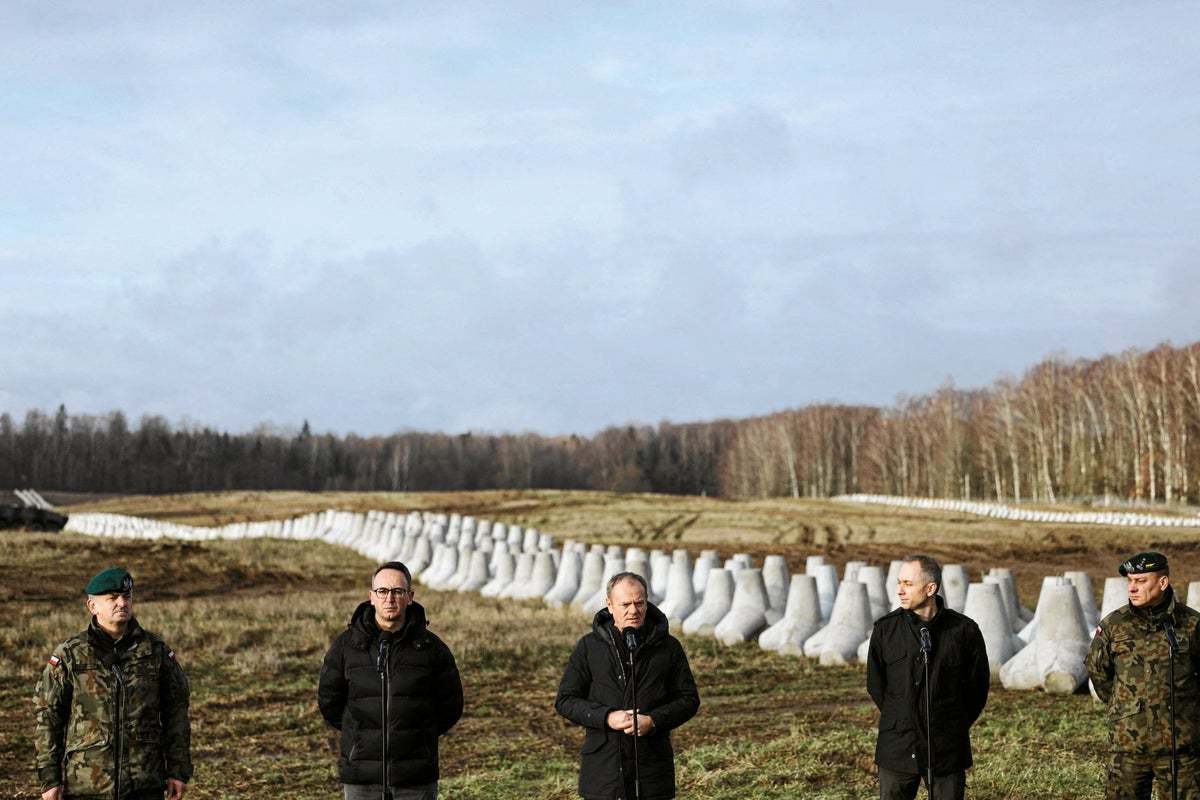
Poland has announced plans to resume the production of anti-personnel mines, marking a significant shift in its defense strategy. This decision, which has not been seen since the Cold War, aims to bolster security along Poland’s eastern border with Belarus and the Russian enclave of Kaliningrad. According to Deputy Defence Minister Pawel Zalewski, the production could also extend to potential exports for Ukraine, as the country seeks to enhance its military capabilities in response to ongoing threats.
Withdrawal from Treaty and Production Outlook
Poland’s move to revive anti-personnel mine production aligns with a broader trend among European nations bordering Russia, most of which have expressed intentions to withdraw from the global treaty prohibiting such weapons. Zalewski confirmed to Reuters that Poland is eager to produce “large quantities as soon as possible” as part of the ‘East Shield’ defensive initiative. The country began the withdrawal process from the Ottawa Convention in August 2023, and production could commence following the completion of a six-month withdrawal period, set to end on February 20, 2026.
While Poland had previously indicated that it could initiate production if necessary, this is the first official confirmation that it will proceed. The Landmine and Cluster Munitions Monitor noted that Poland had stopped producing anti-personnel mines in the mid-1980s and had ceased their export by 1995.
Production Capacity and Regional Demand
The state-owned company Belma, which currently supplies various munitions to the Polish armed forces, stated that Poland aims to be equipped with millions of mines under the East Shield initiative to secure its 800-km (500-mile) eastern border. Jaroslaw Zakrzewski, Belma’s CEO, indicated that the company could produce up to 1.2 million mines of various types, including anti-personnel mines, within the next year. Currently, Belma produces around 100,000 mines annually.
While the immediate focus is on meeting Poland’s own defense needs, Zalewski highlighted the possibility of supplying Ukraine, stating, “Our starting point is our own needs. But for us, Ukraine is absolutely a priority because the European and Polish security line is on the Russia-Ukraine front.” Zakrzewski echoed this sentiment, noting that NATO countries bordering Russia, including the Baltic states, have expressed interest in procuring anti-personnel mines.
Concerns surrounding security have prompted other Baltic nations, such as Lithuania and Finland, to announce plans to begin their own production of anti-personnel mines next year. Latvia and Estonia have also indicated their intentions to withdraw from the Ottawa Convention, with officials in Riga stating that they could quickly initiate manufacturing if necessary.
The increasing militarization in the region follows Russia’s full-scale invasion of Ukraine in 2022, which has significantly raised security concerns across Europe. The recent developments reflect a shift in defense strategies as countries adapt to perceived threats.
As Poland prepares to ramp up its production capabilities, it is clear that the landscape of regional security is evolving. The implications of these decisions extend beyond national borders, potentially influencing military dynamics in Eastern Europe and beyond.