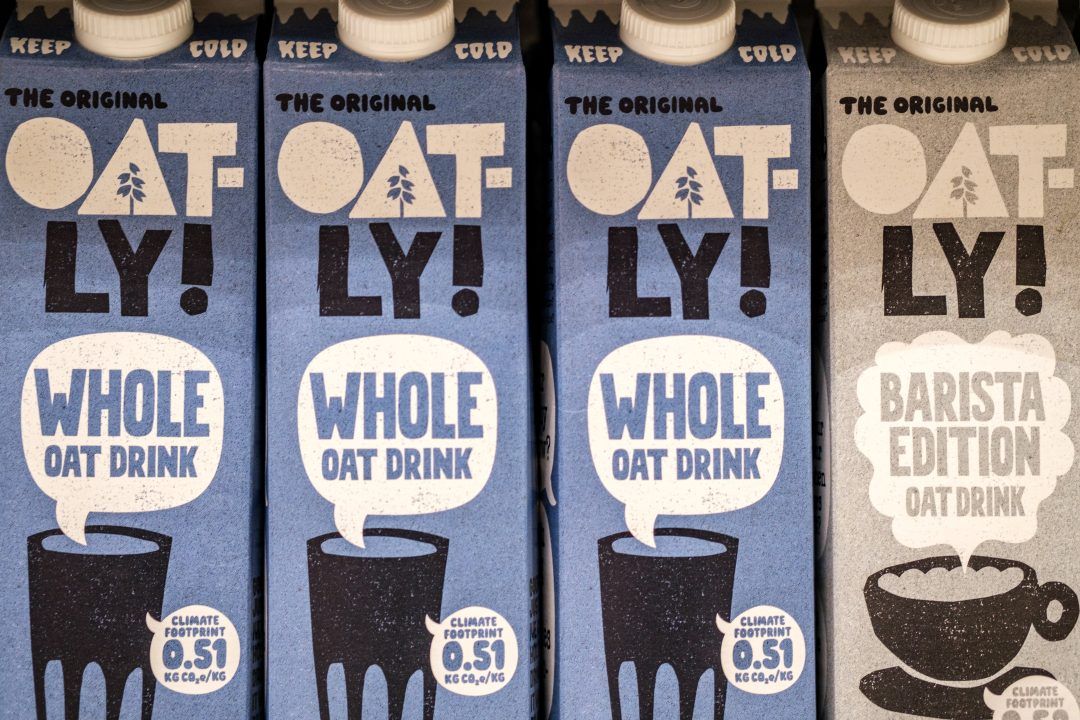
Oatly, the Swedish company known for its oat-based products, has faced a setback in its legal battle regarding the use of the term “milk.” The UK Supreme Court ruled unanimously that Oatly cannot trademark the phrase “Post Milk Generation” to describe its offerings, which include oat milk and other dairy alternatives. This decision concludes a protracted legal dispute with Dairy UK, the trade association representing the UK dairy industry.
The controversy began when Oatly sought to trademark the phrase “Post Milk Generation” in 2019 for use on various products, including milk substitutes and merchandise. Initially, Oatly’s trademark application was approved by the Intellectual Property Office (IPO) in April 2021. However, Dairy UK contested the validity of the trademark, leading to a series of court rulings that ultimately culminated in the Supreme Court’s decision.
Legal Journey and Court Rulings
In January 2023, the IPO ruled the trademark invalid, prompting Oatly to appeal the decision in the High Court. In December 2023, Mr Justice Richard Smith allowed Oatly’s appeal, asserting that the phrase did not market the products as any specific category, including milk. This ruling was overturned by the Court of Appeal in November 2024, which found that the trademark did not describe a characteristic quality of the products clearly.
The Court of Appeal’s ruling, led by Lord Justice Arnold, stated that while the phrase might suggest a non-dairy nature, it failed to explicitly convey that characteristic. The Supreme Court, in its recent ruling, reinforced this stance, asserting that even if “post milk generation” referred to the absence of milk, it did not do so clearly.
Impact on Plant-Based Products
The Supreme Court’s decision has significant implications for Oatly and the broader plant-based market in the UK. Following the ruling, Bryan Carroll, general manager for Oatly UK & Ireland, expressed disappointment, stating that the ruling “creates unnecessary confusion and an uneven playing field for plant-based products.” He argued that preventing the trademarking of “Post Milk Generation” could hinder competition and is not in the best interests of consumers.
Oatly’s struggle highlights ongoing tensions between traditional dairy producers and the rapidly growing plant-based sector. As consumer preferences shift towards non-dairy alternatives, the legal landscape surrounding the terminology used in marketing these products is becoming increasingly complex. The ruling raises questions about how plant-based companies can effectively communicate their offerings without infringing on established dairy terminology.
The Supreme Court’s decision marks a pivotal moment for Oatly and could serve as a benchmark for future cases involving plant-based product branding in the UK. As the industry evolves, the need for clear regulations and definitions surrounding food products will likely become even more pressing.