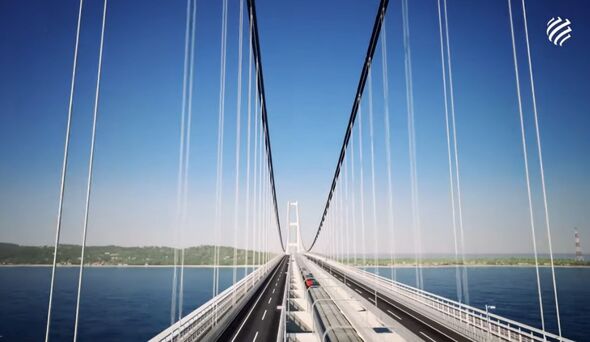
Plans to construct the world’s longest suspension bridge, connecting Sicily to mainland Italy, have hit significant hurdles as Italy’s ambitious vision faces fierce opposition and regulatory challenges. The proposed bridge, spanning the Strait of Messina, is estimated to cost around £11.9 billion and has reignited a long-standing debate about its feasibility, safety, and overall necessity.
The initiative is being promoted by Italy’s right-wing government as a transformative project that could revitalize the economy of the country’s southern regions. Proponents claim the bridge will significantly reduce travel times, create thousands of new jobs, and represent a bold return to major infrastructure developments in Italy. The project has been awarded to a consortium led by the Italian infrastructure firm Webuild. CEO Pietro Salini described the bridge as a “huge technological challenge,” emphasizing its potential to connect Italy with historical and cultural significance.
If constructed, the bridge is projected to stretch nearly 2.3 miles, featuring a single suspended span that would surpass any existing structure globally. Matteo Salvini, Italy’s Deputy Prime Minister and Minister of Transport, outlined the bridge’s specifications during a recent press conference in Rome. He stated that the bridge would include three traffic lanes in each direction, alongside a double-track railway, allowing it to accommodate up to 6,000 vehicles per hour and approximately 200 trains daily. Salvini noted that the project would cut ferry crossing times across the strait from about twenty minutes to just ten minutes by car.
Despite the economic promises, the project has sparked intense opposition from environmental advocates, local campaigners, and political opponents. Critics argue that it poses a significant threat to fragile coastal and marine ecosystems. Moreover, there are concerns regarding the allocation of such substantial funds to a single mega-project when southern Italy faces pressing issues like outdated infrastructure, slow rail connections, and underfunded public services.
Adding to the project’s challenges, Italy’s Court of Auditors has recently intervened, blocking progress on the bridge. The court ruled that essential procurement and environmental requirements had not been adequately addressed, casting doubt on the timeline for construction and potentially delaying the project for years. Salvini had previously expressed intentions to commence work on the bridge before the end of 2025.
This ruling represents a considerable setback for the government led by Prime Minister Giorgia Meloni, which has positioned the bridge as a key emblem of its economic agenda. In response, government officials reacted with frustration, accusing the court of overreaching its authority. They have signaled plans to pursue appeals or explore special measures to keep the project on track.
As the debate continues, the fate of this iconic infrastructure project remains uncertain, reflecting broader questions about Italy’s investment priorities and the balance between economic development and environmental stewardship. The next steps will be crucial in determining whether the dream of the world’s longest suspension bridge can become a reality or if it will succumb to the challenges that have plagued similar initiatives in the past.