Residents in Cooper’s Edge, Gloucestershire, are voicing their frustration over prolonged delays in repairing broken street lights, prompting renewed calls for action against what they term “fleeceholds.” Homeowner Tarran Wilson highlighted that the issue has persisted for months, raising concerns about the management of communal areas and the financial burden imposed on residents by private estate management companies.
The term “fleecehold” refers to arrangements where homeowners are obligated to pay management fees to private entities for the upkeep of shared spaces, including roads and parks. Many residents feel this practice acts as a second tax, with little transparency and limited rights to challenge the fees. In a statement, Wilson expressed his discontent, saying, “We’re paying, in effect, double council tax with no end in sight for when any residents can actually become directors and regain control over it.”
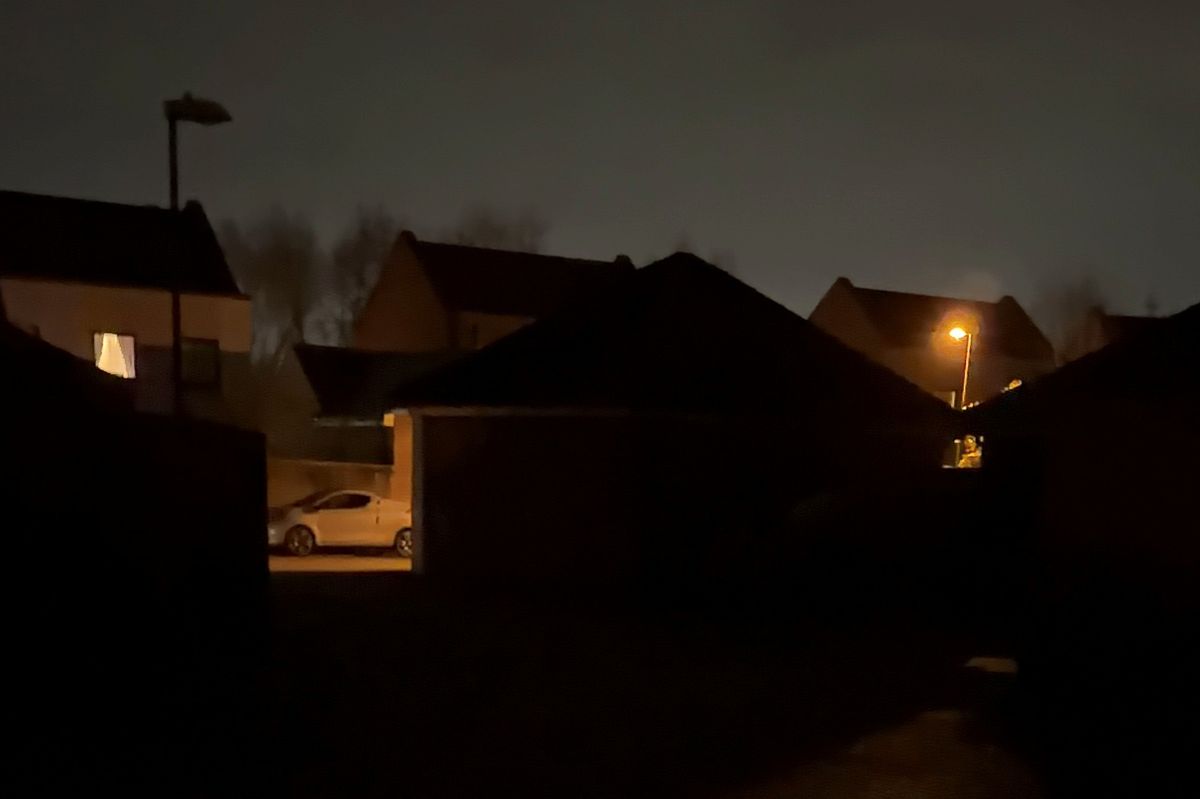
Wilson’s grievances are particularly directed at Gateway, the estate management company overseeing his development. He mentioned that he has been waiting weeks for street lighting repairs, stating, “The fact that it takes nearly eight weeks to get one street light repaired is extremely frustrating.” Residents have reported insufficient oversight from Gateway, with instances of contractors appearing to do little more than take photographs before leaving the site.
In response, a spokesperson for Gateway stated that they manage the development under the obligations set forth by the governing documentation of the residents’ management company. They acknowledged the concerns regarding street lighting and explained that issues were reported to their estate management team in December 2023. The spokesperson noted that repairs were delayed due to the festive period, contractor availability, and adverse weather conditions.
While the first lighting column was restored in February 2024, the second column was later found to lack an incoming power supply, which has been referred to the relevant utility provider for investigation. The spokesperson assured that updates were provided to residents throughout the process.
County councillor Paul Hodgkinson, representing Bourton-on-the-Water and Northleach, has amplified his campaign to address the unfair nature of “fleecehold” estate charges. He has received numerous complaints from residents in Cooper’s Edge and surrounding areas about the high fees associated with inadequate services. Hodgkinson criticized the Government’s proposed Leasehold and Freehold Reform Act, arguing that it does not adequately address the core problems facing freeholders.
“Residents are angry and frustrated,” Hodgkinson stated. “They’re paying significant sums to companies they can’t challenge, with no effective way to hold them to account when services fall short.” He further criticized the notion that homeowners should bear the costs of maintaining public spaces while only a small number of residents are responsible for those payments.
The proposed reforms suggest a form of right to manage for freeholders, yet Hodgkinson labels this as fundamentally flawed. The process would require residents to establish and operate a company, an unrealistic expectation for many homeowners. Furthermore, he pointed out that developers are under no obligation to transfer control of the land to residents, leaving many communities in limbo.
The Government has pledged to address these issues, with two consultations currently underway, set to close on March 12, 2024. One consultation focuses on enhancing protections for homeowners on freehold estates, while the other seeks to reduce the prevalence of private estate management arrangements.
A spokesperson from the Ministry of Housing, Communities and Local Government reiterated the commitment to ending the injustice of “fleecehold,” stating, “We encourage everyone with experience of these issues to have their say.”
As discussions continue, residents of Cooper’s Edge remain hopeful for reform that could alleviate their financial burdens and improve the management of their communal spaces.