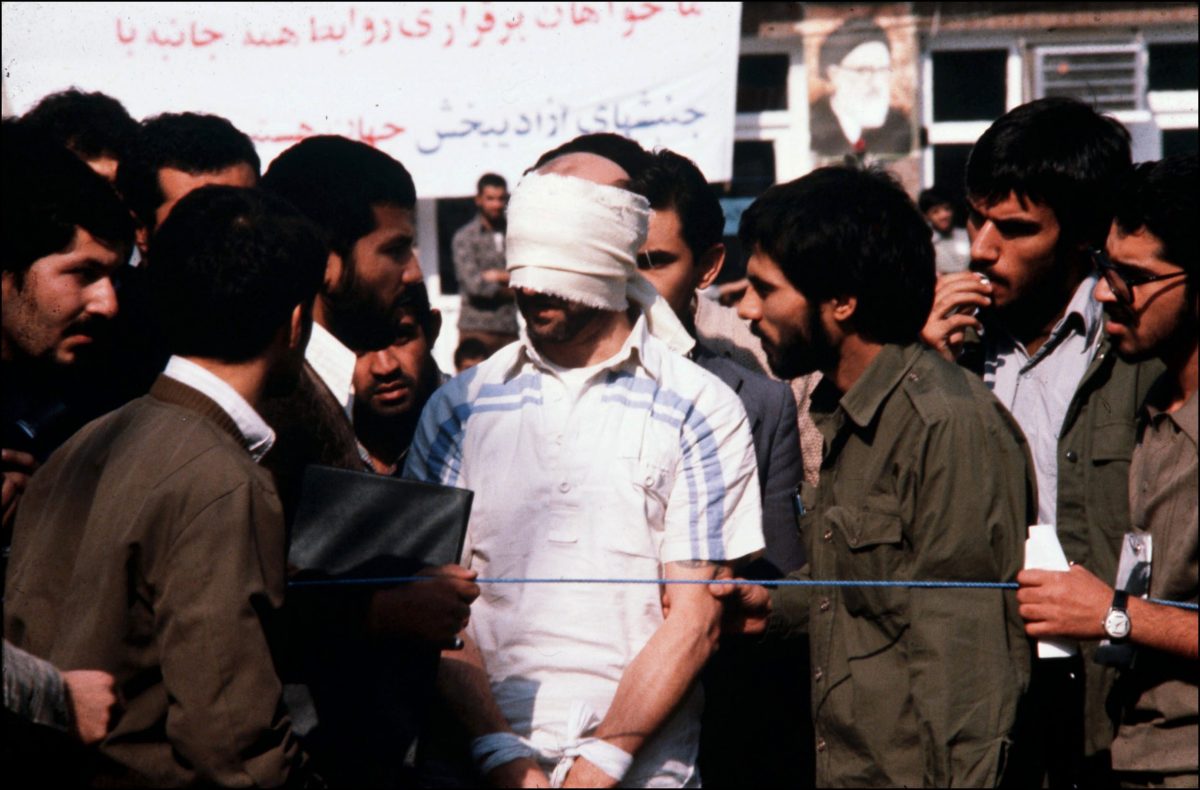
On September 20, 2023, the news of Iran’s Supreme Leader Ali Khamenei being killed reverberated across the globe. Among those who experienced the terrors of Iranian captivity during the 1979-1981 hostage crisis, former hostages John Limbert and Barry Rosen have mixed feelings about this significant event. They were part of the 52 Americans held at the U.S. embassy in Tehran for a harrowing 444 days, an experience that left lasting scars on many of the captives.
Now at the age of 82, Limbert and Rosen maintain a diplomatic perspective regarding Khamenei’s assassination. While both acknowledge Khamenei’s negative impact, they refrain from celebrating his death. Rosen candidly remarked, “I was certainly not unhappy concerning his death,” while Limbert noted with a hint of irony, “He’s not my favorite character; I’m not terribly sorry to see him gone.” Yet, when discussing the recent military actions suggested by Donald Trump against Iran, they swiftly abandon their diplomatic tone.
Concerns About Military Actions
Both Limbert and Rosen believe that Trump’s approach towards Iran is misguided and potentially dangerous. Rosen, a press attaché during the hostage crisis and a co-founder of Hostage Aid Worldwide, described the idea of bombing Iran as “absolutely insane.” He expressed his disdain for the Iranian regime, not only for his own suffering but also for the oppression it inflicts on the Iranian people. “I don’t know how Iranians live every day… Life is miserable,” he lamented.
Rosen criticized Trump’s encouragement for the Iranian populace to rise against their government, labeling it “absolutely moronic,” particularly after recent violent crackdowns on protests that resulted in many deaths. He doubts that the military or the Islamic Revolutionary Guard Corps would turn against the ruling clerics, explaining, “They are living off this regime; they totally control the economy.” He believes the current regime is resilient enough to withstand external attacks.
Limbert, who continued to serve as a U.S. diplomat until 2007, shared a vision of a humane Iran where citizens are treated with dignity and respect. He expressed skepticism that military action could bring about meaningful change, stating that the chances of achieving democracy through air raids are “pretty damn remote.” Both men agree that the situation in Iran is complex, with deep-rooted issues that cannot be resolved through force.
A History of Resilience and Trauma
Limbert and Rosen’s connection to Iran began in the 1960s when both served as community volunteers. Limbert’s Iranian heritage deepened through his marriage, while Rosen named his daughter Ariana, reflecting their affection for the country. However, the U.S. involvement in Iran’s political affairs has left a lingering bitterness among many Iranians, especially following the CIA-backed coup in 1953 that overthrew their democratically elected prime minister, Mohammad Mosaddegh.
The crisis escalated in 1979 when the American-backed Shah was ousted, leading to widespread protests. On November 4, 1979, a group of protesters seized the U.S. embassy, leading to the hostage situation. Limbert attempted to defuse tensions but was taken captive, along with his colleagues. The initial hope for a swift resolution dissipated as the regime saw strategic value in holding the hostages.
During their captivity, the hostages faced severe conditions, including physical and psychological abuse. They were often locked in dark rooms, stripped of their dignity, and subjected to violent interrogations. Rosen recalls the constant fear of execution, a reality that haunted him and his fellow captives throughout their ordeal.
The eventual release of the hostages came on January 20, 1981, coinciding with Ronald Reagan’s inauguration. Limbert described having to rebuild his life post-captivity, stating, “The trauma of that time is part of my DNA.” Rosen echoed similar sentiments, noting that the memories of their experience continue to affect him deeply.
As both men reflect on the current geopolitical climate, they express concerns about the potential for further violence and instability in Iran, should the regime collapse. Limbert warns against creating a power vacuum that could lead to chaos, drawing parallels to his experiences in Iraq post-2003. He stated, “Do you want to turn Iran into another Libya?”
The legacy of their captivity and the ongoing struggles faced by the Iranian people remain at the forefront of Limbert and Rosen’s thoughts. Both hope for a future where Iran can emerge as a nation that treats its citizens with respect, yet they recognize the complexity of the situation and the challenges ahead.