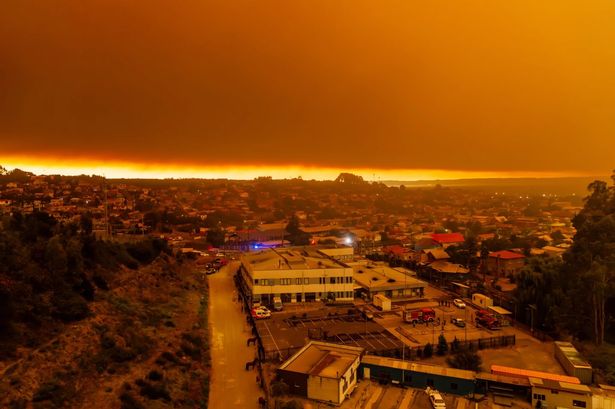
Wildfires in central and southern Chile have resulted in at least 18 fatalities as firefighters struggle against extreme weather conditions. The blazes erupted on January 18, 2024, devastating approximately 8,500 hectares (21,000 acres) of land. Intense heat, with temperatures exceeding 38°C, combined with strong winds, has severely hampered firefighting efforts.
The situation has prompted Chilean President Gabriel Boric to declare a state of catastrophe in the affected regions, specifically in Biobío and Ñuble, located around 500 kilometers (300 miles) south of the capital, Santiago. This declaration allows for the suspension of constitutional rights and facilitates military assistance in combating the wildfires.
Interior Minister Álvaro Elizalde emphasized the dire weather forecast, stating, “Weather conditions for coming hours are not good and indicate extreme temperatures.” The country has already been grappling with a prolonged drought, exacerbating the fire risk.
As the fires rage, local authorities reported widespread destruction, with initial estimates indicating that over 300 houses have been destroyed, and the total number of affected homes in the Biobío region is expected to exceed 1,000. President Boric acknowledged the gravity of the situation in a recent press conference, noting, “The first priority… is always to fight and extinguish the fire. But we cannot forget… that there are human tragedies here, families who are suffering.”
The wildfires have forced approximately 50,000 people to evacuate their homes. Many residents were caught off guard by the rapid spread of the flames. “Many people didn’t evacuate. They stayed in their houses because they thought the fire would stop at the edge of the forest,” said local resident John Guzmán, reflecting on the chaos that unfolded.
In a heartfelt plea, Rodrigo Vera, the mayor of the coastal town of Penco, expressed frustration over the lack of immediate government support during the crisis. He stated on a local radio station, “A community is burning and there is no (government) presence.”
Survivors shared harrowing accounts of their escapes. “We fled running, with the kids, in the dark,” recounted Juan Lagos, who described the panic as the fire advanced. As the devastation becomes clearer, the community is left to mourn those lost, with local resident Víctor Burboa lamenting, “From what we can see, there are people who died… and we knew them well.”
Wildfires are a recurring challenge for central and southern Chile during the summer months, typically peaking in February. The current crisis marks a significant escalation in the severity of these events. In 2024 alone, wildfires along Chile’s central coastline led to the loss of at least 130 lives, making it one of the deadliest natural disasters in the country since a major earthquake in 2010.
As firefighters continue to battle the flames, the government faces increasing pressure to provide effective support and resources to those affected by this catastrophic event.