A former British soldier, Hayden William Davies, has been sentenced to 13 years in prison by a court in the Russian-controlled Donetsk People’s Republic. Davies, aged 30, was captured while fighting alongside Ukrainian forces and has been labelled a ‘mercenary’ by the authorities.
The court established that in August 2024, Davies arrived in Ternopil, Ukraine. He signed a contract with the International Legion of Defence of Ukraine and underwent military training, where he learned the necessary skills for armed conflict. After receiving a personal firearm, he participated in hostilities against the Armed Forces of the Russian Federation. His capture occurred in Teretsk, located in the Donetsk region, during the winter months.
During the trial, Davies pleaded guilty to the charges, responding simply with “Yes” when asked. Reports indicate he has developed a growth on his left eyelid, which has not been treated by Russian medical personnel since his capture. Initially reported to have been moved to Moscow after his arrest, the trial itself was conducted in secret in Donetsk.
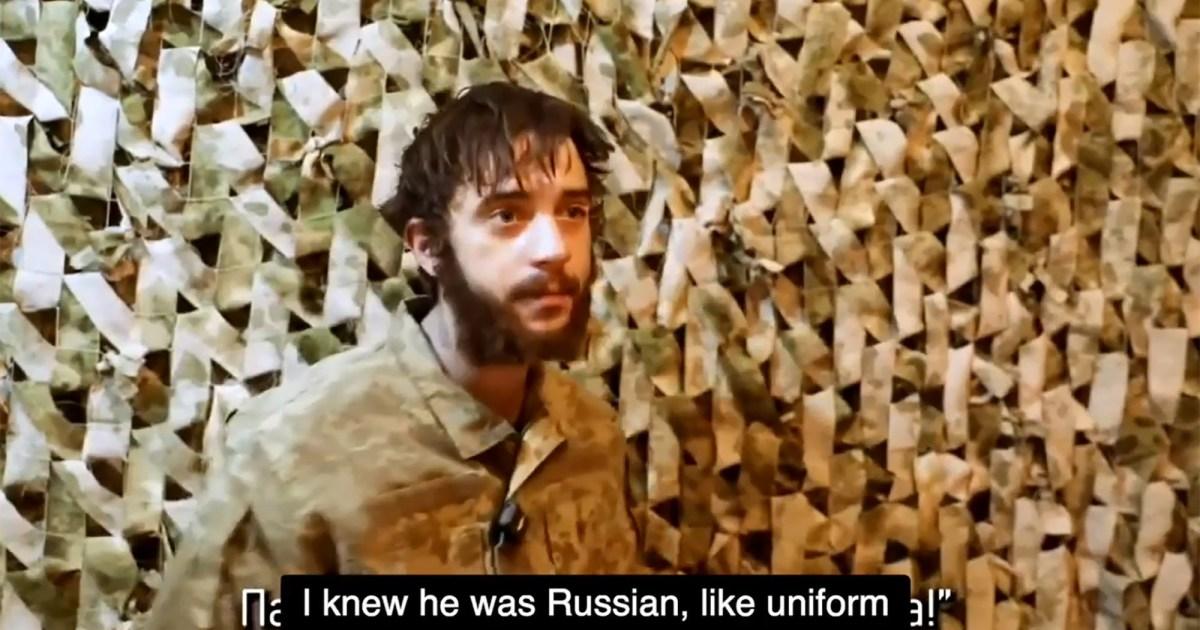
In a video released after his capture, Davies claimed he was dismissed from the British Army in 2023 due to drug use, specifically for “smoking marijuana.” Following this, he decided to fight for Ukraine. According to the Russian state news agency TASS, he was transferred to Moscow for unspecified investigative actions and forensic examinations.
The British government has accused Russia of using Davies and fellow POW James Anderson for “political and propaganda purposes.” Ankur Narayan, the UK Politico-Military Counsellor at the UK Delegation to the OSCE, stated that both men are not mercenaries, but rather Prisoners of War. He emphasized that they should receive the rights and protections afforded under the Geneva Conventions.
Davies has a background of 13 years in the British Army, during which he served in various locations, including Germany, Cyprus, Canada, and Afghanistan. He specialized as a Javelin man-portable anti-tank guided missile operator. Critics of the Russian government have pointed out that his portrayal as a mercenary serves propaganda purposes.
In the aftermath of his capture, pro-Putin channels have amplified the narrative surrounding Davies. One commentator, Vladimir Solovyov, remarked on his dismissal from the British Army, attributing it to his drug use, and speculated on his motivations for joining the conflict in Ukraine. Solovyov’s commentary included allegations that Davies accused Ukrainian commanders of negligence regarding war crimes, a claim often associated with Russian forces.
The case of Hayden William Davies highlights the complex and often perilous nature of international conflicts and the implications for those who choose to fight in them. As the situation evolves, it remains to be seen how these developments will impact diplomatic relations and the treatment of foreign fighters under international law.