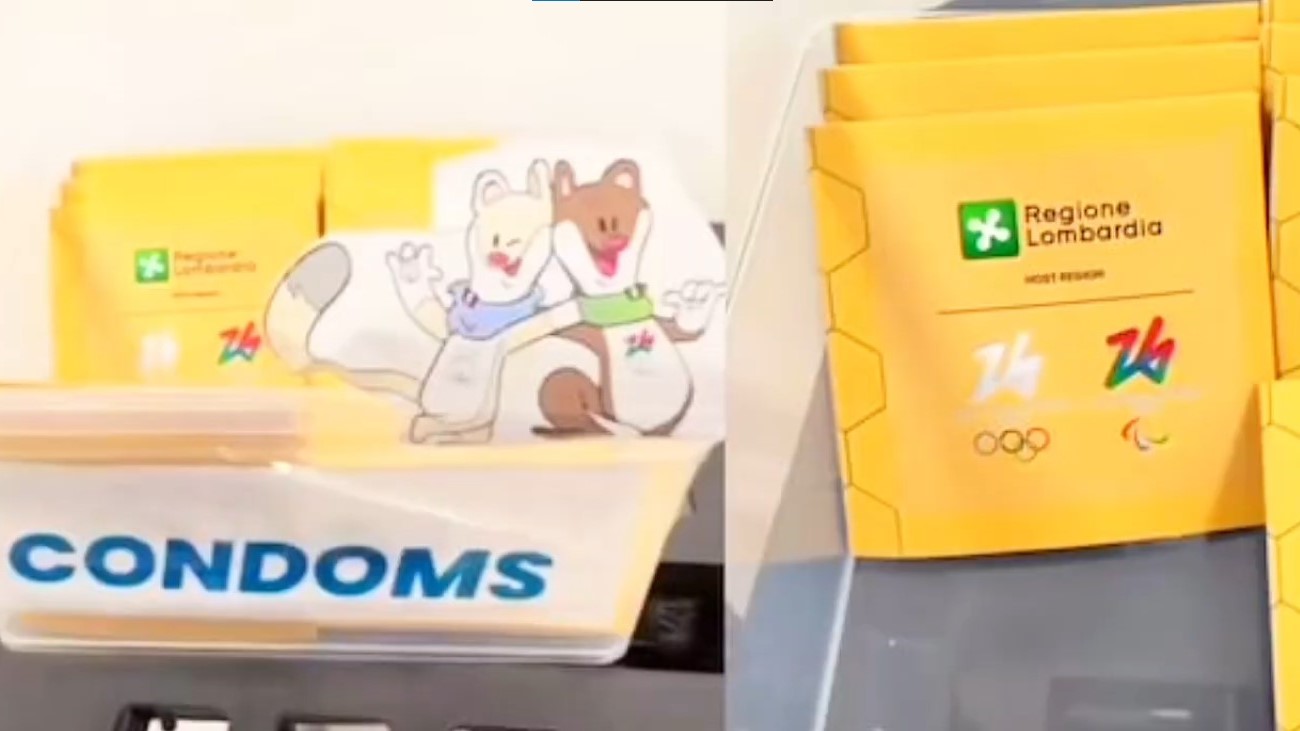
UPDATE: The 2026 Winter Olympics in Milan-Cortina are facing an unexpected logistical crisis as the athletes’ village has completely run out of free condoms just three days after the Games’ opening on February 6, 2026. Reports from the Italian daily La Stampa confirm that the initial stock of 10,000 condoms was depleted by the third day of competition, leaving athletes scrambling for supplies.
This rapid consumption has raised eyebrows and sparked both humor and concern among officials and athletes. The shortage comes as organizers scramble to arrange additional shipments, although no specific delivery schedule has been announced. An anonymous athlete shared their frustration with La Stampa: “The supplies ran out in just three days. They promised us more will arrive, but who knows when.”
The phenomenon of distributing free condoms at the Olympic Games dates back to the 1988 Seoul Olympics, aimed at promoting sexual health among athletes. However, the Milan-Cortina allocation was notably lower than previous events. For context, the 2024 Summer Olympics in Paris provided approximately 300,000 condoms for about 10,500 athletes, averaging two per athlete per day. In contrast, the current Winter Olympics allocation translates to about three condoms per athlete over the same time frame.
Attilio Fontana, the governor of Lombardy, defended the practice on social media, stating, “Yes, we provide free condoms to athletes in the Olympic Village. If this seems strange to some, they’re unaware of the established Olympic practice.” His comments were accompanied by footage of Spanish figure skater Olivia Smart promoting the Milan-branded condoms, underscoring how quickly the initial supply vanished.
The International Olympic Committee (IOC) first introduced the condom distribution as part of a public health strategy to combat sexually transmitted infections (STIs). The record for condom distribution was set during the 2016 Rio Games, where around 450,000 condoms were made available. Observers now question whether the supply estimates for the Winter Olympics accurately reflected demand, given the unique environment of the athlete village, where nearly 3,000 athletes and staff are residing in close quarters.
Although the situation has generated some lighthearted discussions on social media, it highlights a significant logistical issue for organizers. The athlete village in Cortina boasts various recreational amenities, but these do not replace the need for reliable access to safe sex resources. As officials work to secure additional supplies, the challenge remains to manage distribution effectively in a high-density living environment.
The rapid depletion of condoms has sparked commentary on the need for better preparedness and logistical planning. Observers question whether the estimate formulas used for determining condom needs underestimated the actual demand, especially considering the cultural significance of these items among athletes.
As the Winter Games continue, the spotlight remains on how organizers will handle this urgent need. With the eyes of the world on them, the need for safe sexual health resources is more pressing than ever. The Olympic tradition of providing condoms is not only about health; it is part of a broader conversation about athletes’ well-being and responsibilities.
Stay tuned for further updates on this developing story as organizers work to rectify the situation and ensure that athletes have uninterrupted access to essential resources during the Games.