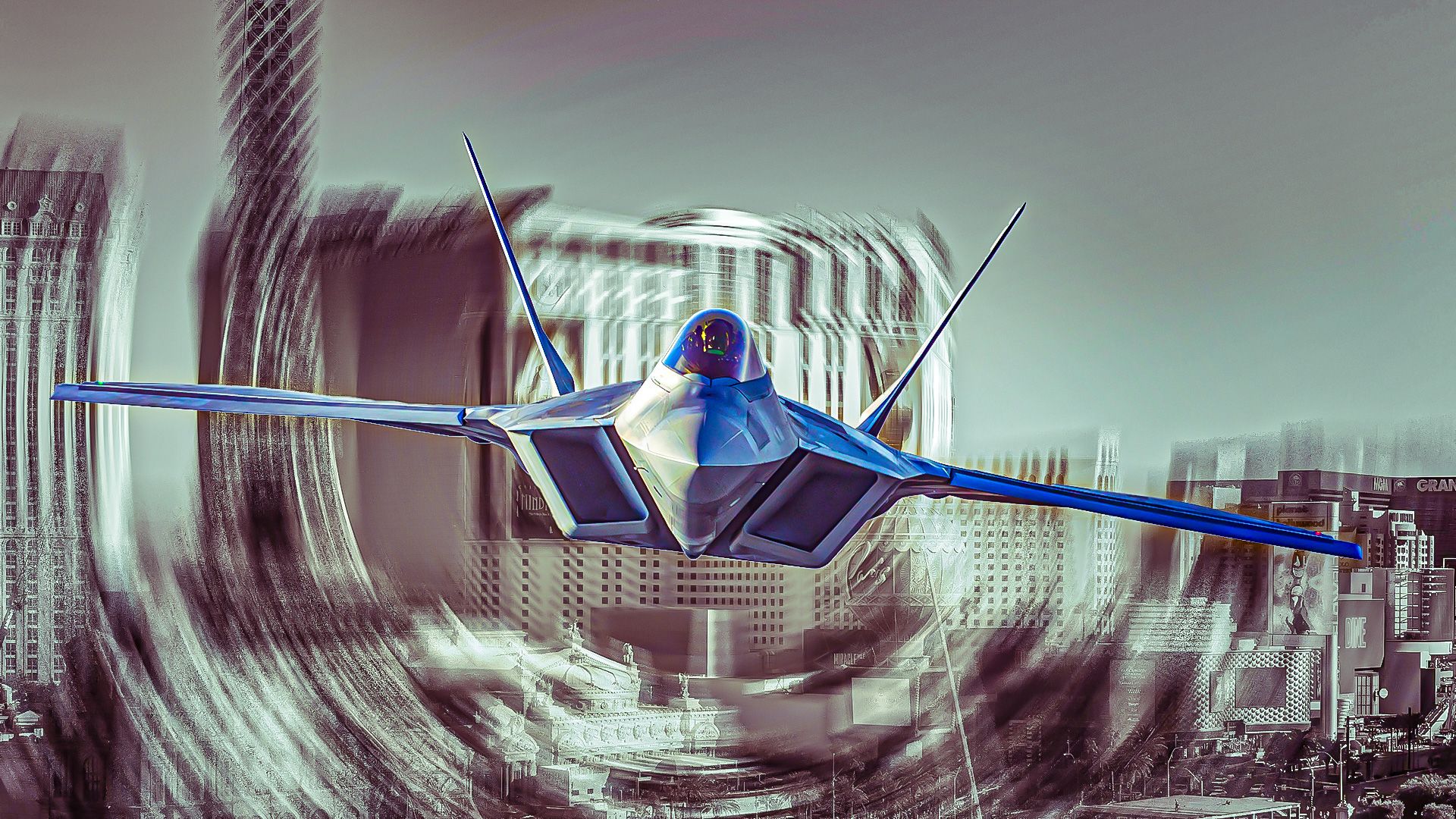
URGENT UPDATE: The latest data reveals that the U.S. Air Force currently has only 183 F-22 Raptors in operational status, significantly impacting air dominance capabilities amid increasing global tensions. This number comes as concerns grow over military readiness against rising adversaries like China’s Chengdu J-20 fighter jet.
Originally, the U.S. planned to procure 750 F-22 Raptors, but production was cut drastically, with only 195 units built. The last of these aircraft were delivered in 2011, and since then, the fleet has faced numerous challenges, including crashes and aging technology. This has raised alarms about the Air Force’s ability to maintain superiority in the skies.
The F-22, which first entered service in 2005, is hailed as the world’s first fifth-generation fighter jet. However, only 150 of the Raptors are combat-capable as the Air Force grapples with maintaining its fleet. Alarmingly, 32 Block 20 training variants are not expected to see combat without costly upgrades, despite ongoing requests from the Air Force to retire them.
In the past two decades, the geopolitical landscape has shifted dramatically. The U.S. has had to reassess its military strategies as peer adversaries like China emerge. The F-22 was initially developed in response to perceived threats from Soviet fighters during the Cold War. However, following the Soviet Union’s collapse, funding and production were slashed, and the F-22 program was nearly canceled multiple times.
The situation worsened after at least five F-22s were confirmed lost to accidents, with the last known write-off occurring in May 2020 near Eglin Air Force Base. Despite these losses, the Air Force’s total operational fleet stands at 178 F-22s, as reported in the 2025 review of world air forces by FlightGlobal.
As the U.S. seeks to maintain its edge, the Air Force is investing in a series of upgrades for the F-22 fleet. Enhancements include a new Infrared Defensive System (IRDS) and stealth drop tanks, aimed at extending the Raptor’s service life potentially into the 2040s. However, the financial burden of these upgrades is significant, especially with the development of the sixth-generation F-47 fighter jet already underway.
The looming question for the U.S. Air Force is how to balance the need for air dominance with the limited number of capable fighters. While the F-35 Lightning II has been positioned as a multirole fighter, the F-22 remains unmatched in air superiority. Thus, the Air Force’s reliance on this aging fleet raises concerns about future operational effectiveness against increasingly capable adversaries.
The implications of this situation extend beyond military strategy; they touch on national security and defense readiness. As tensions rise globally, the need for a robust and effective air force is more critical than ever.
What’s next? The Air Force is expected to continue its push for modernization while keeping a close eye on the evolving threat landscape. As discussions around the future of the F-22 and its upgrades intensify, military analysts and aviation enthusiasts alike will be watching closely to see how the U.S. adapts its air combat strategies.
Stay tuned for further updates on this developing story.