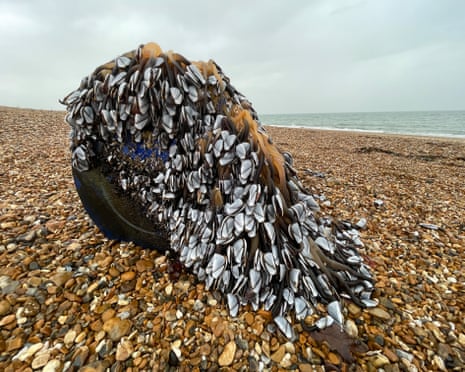
UPDATE: A startling discovery was made on a Hampshire beach earlier today as a stranded blue drum, surrounded by storm debris, revealed an unexpected living cargo: a large aggregation of common goose barnacles (Lepas anatifera). These marine castaways, typically found in tropical waters, are now facing dire circumstances on the shores of southern England.
Witnessing the scene, a local resident ventured out despite heavy rainfall to investigate. The blue drum, washed ashore and nestled among cuttlebones and single-use plastics, housed a significant number of these barnacles, which had clung to the drifting object during their journey. Most barnacles struggle to survive when stranded, and time is running out for this unusual group.
The common goose barnacle, known for its heart-shaped shell and striking orange tissues, can grow between 1cm and 8cm in size. Once a common sight in folklore, these creatures were once believed to hatch into barnacle geese. However, their presence on Hampshire’s coast is quite rare, making this sighting all the more significant.
As of this afternoon, many barnacles were seen attempting to feed with their delicate cirri, while others had closed their shells to conserve moisture. With the waves diminished and local volunteers unable to return the heavy drum to the sea, the future of these barnacles hangs in the balance.
Officials urge anyone in the area to report similar instances of marine life stranding. The situation highlights the ongoing impact of marine debris on wildlife, prompting discussions on environmental conservation and the immediate need for action. The latest developments in marine biology and conservation efforts are crucial as communities work together to address these urgent environmental challenges.
Stay tuned for further updates on this developing story, as local authorities and marine biologists engage in efforts to rescue the stranded barnacles and prevent similar occurrences in the future.