UPDATE: Serbian President Aleksandar Vucic has just issued a stark warning regarding the future of Montenegro’s administration, suggesting that Andrija Mandic could dismantle its functionality at any moment. This alarming statement comes in the context of ongoing discussions about the Western Balkans potentially joining the European Union simultaneously.
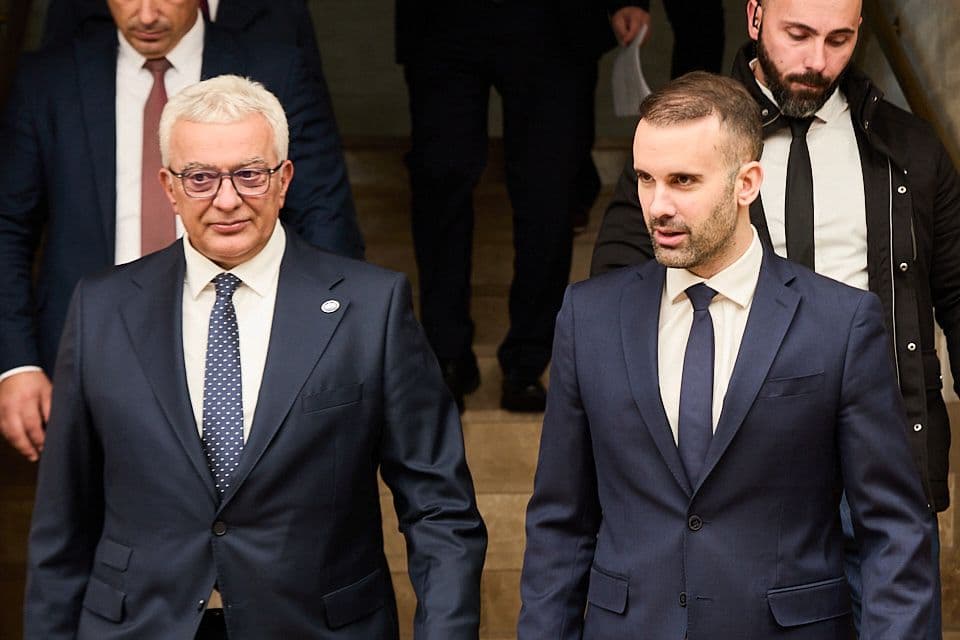
In a bold exchange, Vucic responded to Montenegrin Prime Minister Milojko Spajic’s proposal for synchronized EU membership, labeling it a typical “mafia threat.” Vucic stated, “First jump, then say ‘hop’,” indicating that Mandic holds significant power to disrupt the current government. Analysts are raising concerns about the implications of these comments, emphasizing the urgency surrounding the region’s political stability.
Just hours ago, Vucic reiterated a long-standing idea of collective EU entry for the Balkans during a meeting with top EU officials, including Ursula von der Leyen and Antonio Costa in Brussels. “If someone is left out, what will we do with those countries?” he asked, advocating for a unified entry strategy that he believes would benefit all, including Albanians and Bosnians.
Spajic, quick to react, expressed agreement on the EU as the ultimate goal for the Balkans but urged Vucic to accelerate the process, promising Montenegro’s readiness by 2028. He posted on social media, emphasizing the need for urgency and solidarity among regional candidates.
Vucic’s response to Spajic, however, was less conciliatory. He expressed frustration over Spajic’s focus on sensitive issues instead of addressing the collective EU path. “I haven’t heard him react to much more important matters,” Vucic stated, implying that the urgency of the EU topic should overshadow other regional grievances.
This exchange highlights the fraught dynamics between Serbia and Montenegro, with rising tensions as both nations navigate their EU aspirations. Following Vucic’s comments, Davor Đenero, a Croatian analyst, condemned the Serbian president’s remarks as a “mafia threat,” underscoring the precarious nature of political alliances in the region.
Political reactions are escalating. Miodrag Lakovic, a member of Spajic’s party, countered by asserting that Serbia will have to negotiate with Montenegro as an EU member in the future. Meanwhile, Ivan Vujovic, a leader of the Social Democratic Party, criticized Vucic’s call for simultaneous EU entry as a distraction from his own country’s failures in the accession process.
As the political landscape continues to shift, the stakes are higher than ever for Montenegro, with potential elections looming that could change the governing coalition. “The current administration must ensure a pro-European stance to avoid falling prey to Vucic’s threats,” Đenero added, emphasizing the need for political courage and integrity among Montenegrin leaders.
The situation remains fluid as regional leaders prepare for further discussions, with all eyes now on the implications of these interactions for the future of EU integration in the Balkans. With tensions mounting and alliances being tested, the next steps for both Serbia and Montenegro are crucial. What happens next could reshape the political landscape in the region for years to come.