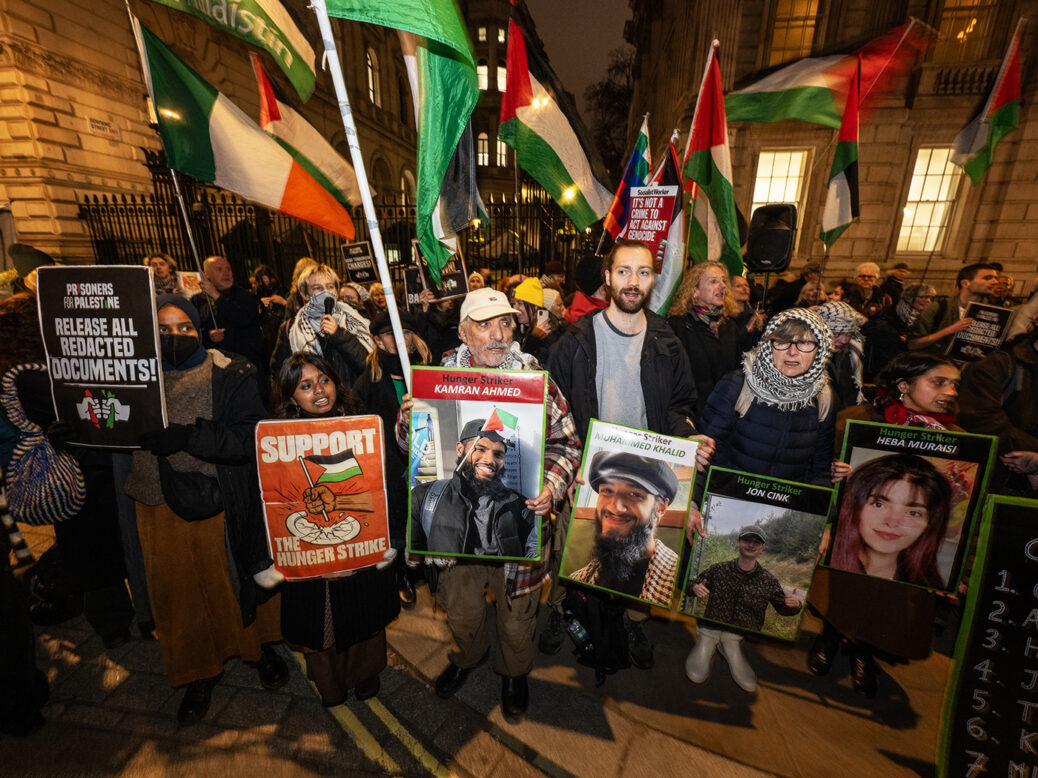
UPDATE: As of today, it has been over 50 days since Amu Gib and Qesser Zuhrah last ate, marking a critical moment in their hunger strike protesting their treatment in UK prisons. The two young men are part of the Prisoners for Palestine group, with their health rapidly deteriorating; both were hospitalized earlier today due to worsening conditions.
The hunger strike, which began on November 2, 2023, has seen participation grow to eight individuals, although two have since withdrawn. They are all being held on remand for alleged offenses related to breaking and entering at a UK factory operated by Israeli weapons manufacturer Elbit Systems. All prisoners deny the charges, insisting their actions were part of a protest against the company’s operations.
Supporters of the hunger strikers claim they are facing mistreatment in custody, a situation they believe is linked to their involvement with Palestine Action. They are urgently calling on Justice Secretary David Lammy to meet with them and discuss their demands: ending prison censorship, granting immediate bail, ensuring fair trial rights, de-proscribing Palestine Action, and shutting down Elbit Systems sites in the UK. Despite repeated requests, Lammy has refused to meet, citing constitutional concerns over ministerial involvement in remand decisions.
Prison Minister James Timpson stated, “Ministers will not meet with them… it would be entirely unconstitutional and inappropriate for ministers to intervene in ongoing legal cases.” He emphasized that the prison system has protocols to ensure the safety of hunger strikers, which have averaged over 200 incidents per year in the past five years.
As the situation intensifies, public concern is rising. Zarah Sultana, MP for Coventry South, demonstrated her support by arriving at HMP Bronzefield at 2 AM today, where Zuhrah was being held, and stayed until he was taken to the hospital. She was joined by Jenny Jones, a Green peer, highlighting a growing political momentum behind the hunger strikers’ cause.
Former Labour leader Jeremy Corbyn, who visited Gib on December 9, described the situation as “cruel and unusual punishment,” given that the trial dates for the hunger strikers are not set until January 2027. In response, Corbyn, along with 50 other MPs, coordinated an open letter on December 15, urging Lammy to engage with the strikers’ legal representatives.
The government’s refusal to engage with the hunger strikers raises significant concerns, especially as their condition becomes increasingly critical. Experts warn that once a hunger strike extends beyond 35 days, the risk of severe health complications, or even fatalities, dramatically increases.
While public support may still be developing, left-wing politicians are rallying to advocate for the hunger strikers. Their plight has sparked discussions about the broader implications of their demands and the treatment of individuals involved in direct action related to Palestine.
As this situation unfolds, the urgency for dialogue and resolution is palpable. The hunger strikers and their supporters are determined to keep their demands in the spotlight, emphasizing the need for immediate government action.
What happens next could determine not only the fate of these young men but also set a precedent for how hunger strikes are addressed within the UK prison system.