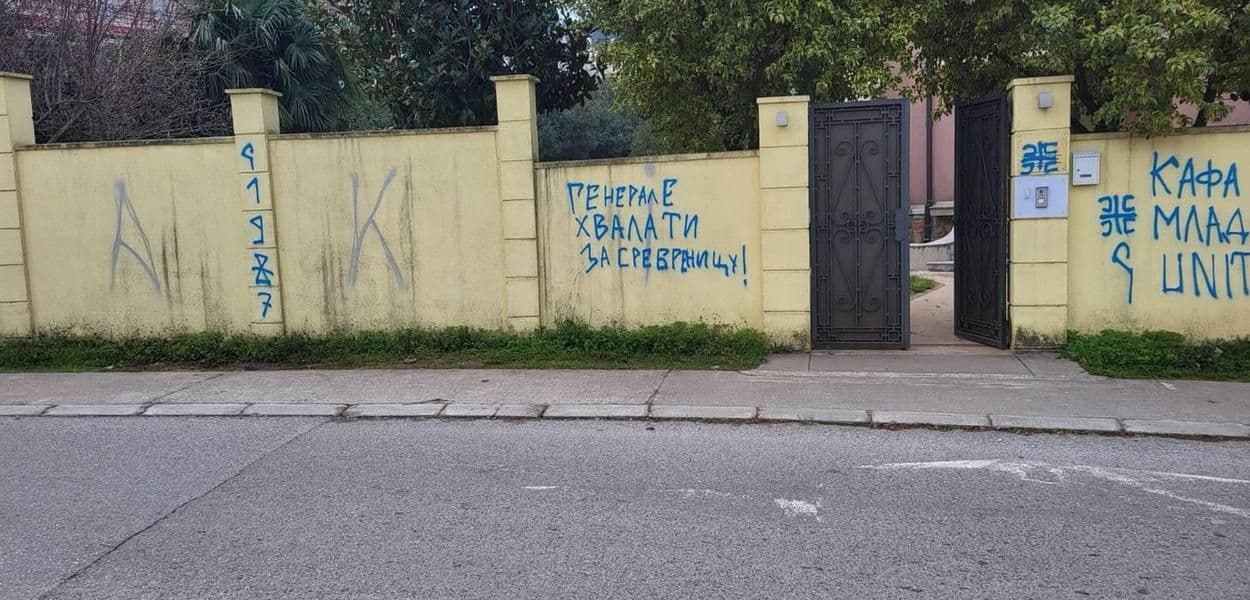
UPDATE: Numerous hate messages have emerged at the Embassy of Bosnia and Herzegovina in Podgorica, Montenegro, prompting swift condemnation from officials. The graffiti includes a disturbing message, “Generale, hvala ti za Srebrenicu” (“General, thank you for Srebrenica”), discovered yesterday, coinciding with the 30-year commemoration of the Srebrenica genocide, where over 8,000 victims were brutally murdered.
The graffiti was painted in a prominent blue color, mirroring signs that also appeared on a menorah during Hanukkah celebrations at Argentinian Square. Messages included a swastika and an acronym linked to the United Force, a group notorious for its extreme right-wing views in Serbia.
In response to this shocking incident, Branimir Jukić, the Bosnian ambassador in Montenegro, expressed gratitude for the rapid reaction from Montenegrin authorities. He confirmed receiving immediate calls from the Ministry of Foreign Affairs and Minister Ervin Ibrahimović after the incident gained media attention. The Ministry promptly issued a statement condemning the messages, emphasizing solidarity with Bosnia and Herzegovina.
“This vandalism not only attacks a diplomatic mission but also undermines fundamental civilizational values,” stated the Ministry. They called for urgent police action to identify and prosecute the perpetrators, emphasizing that glorifying genocide and war criminals is unacceptable.
The Ministry of Foreign Affairs reiterated Montenegro’s commitment to recognizing the Srebrenica genocide, highlighting that the country firmly rejects any attempts to deny or downplay these crimes. Montenegro’s parliament officially adopted a resolution on the Srebrenica genocide in 2021, marking a crucial step in acknowledging this tragic event.
Activist groups, including the Human Rights Action (HRA) and the Civil Alliance, are demanding immediate investigations into the graffiti. They warned that public endorsement of genocide could lead to severe legal consequences, including prison sentences of up to five years.
This incident occurs just days before December 19, a date symbolizing the anti-fascist struggle in Podgorica, raising alarms about the resurgence of extremist ideologies. STEGA, a human rights organization, condemned the act as a blatant provocation and a horrific insult to the victims and their families.
The public outcry against this incident highlights a growing intolerance for hate speech in Montenegro. Citizens and officials alike are rallying to ensure that such acts of vandalism do not go unpunished.
As authorities continue to investigate, the focus remains on fostering dialogue and promoting mutual respect among communities in the region. The international community watches closely, underscoring the importance of addressing hate speech and ensuring justice for past atrocities.