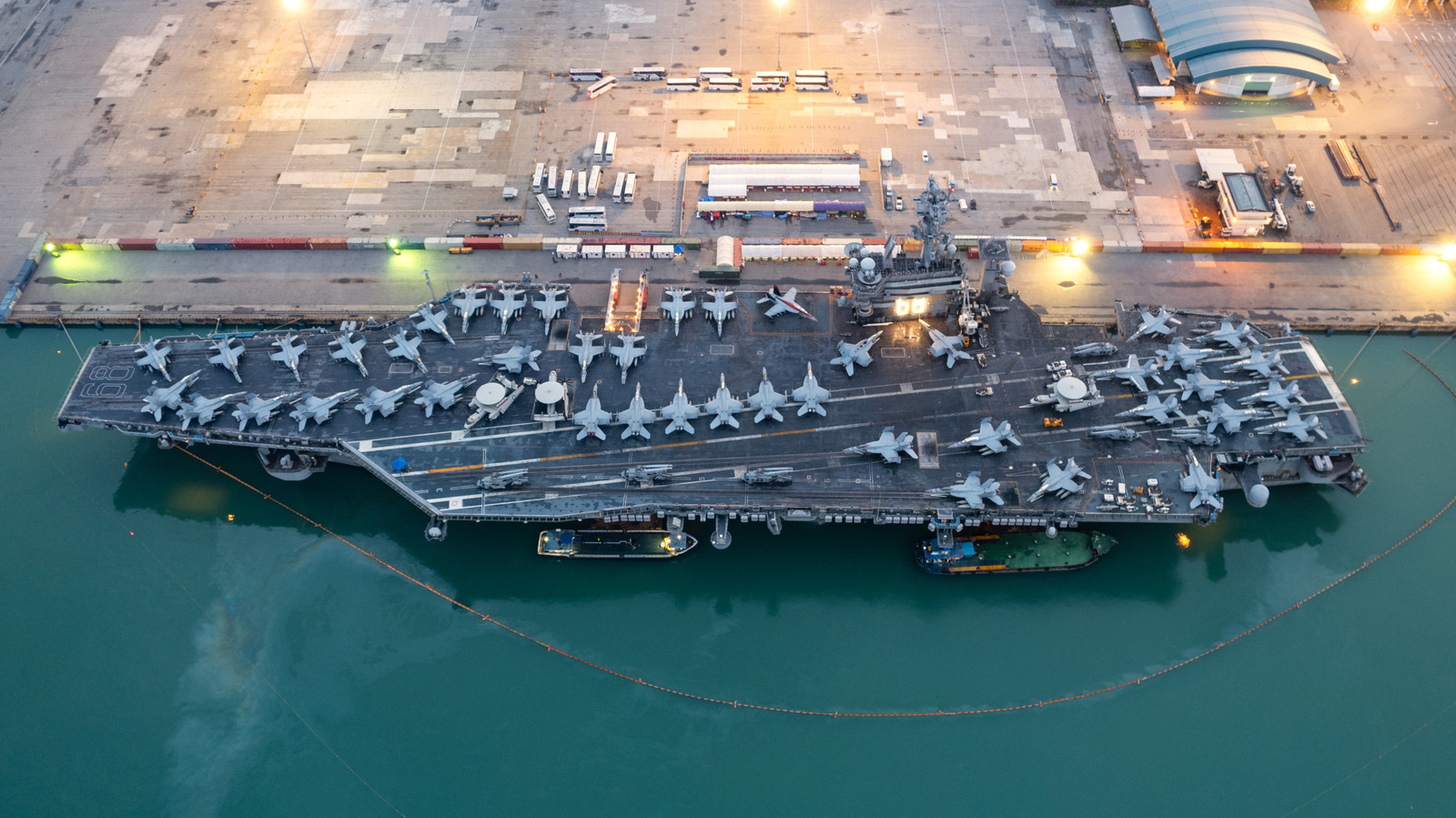
UPDATE: U.S. Navy pilots are revolutionizing aircraft carrier landings with the newly optimized Precision Landing Mode, dramatically enhancing safety and efficiency. This cutting-edge technology, designed to assist pilots during high-stakes landings, is making waves in naval aviation as of 2021, confirming its value during training exercises with newly qualified pilots.
The implementation of Precision Landing Mode, originally known as “Magic Carpet,” marks a significant evolution in how Navy jets, particularly the F/A-18E-F Super Hornet, approach carrier landings. The system allows pilots to reduce the number of critical control adjustments from approximately 300 to less than 10, offering a vital safety net in one of aviation’s most challenging environments.
Aircraft carrier landings are notorious for their complexity, demanding precision and quick decision-making from pilots. With vessels swaying in the water and limited runway space, the stakes are exceptionally high. Capt. Dan Catlin, commanding officer of Strike Fighter Squadron, reported that the use of Precision Landing Mode has led to “by far the smoothest evolution, best performance we’ve seen from our students ever.” This technology is not just an enhancement; it is reshaping the future of naval aviation.
Before its rollout, Precision Landing Mode faced various challenges, including software limitations that could render the system non-functional in certain scenarios. However, updates have addressed these issues, paving the way for integration into training regimens. The system is now live on both the F/A-18 and the F-35 Lightning II, ensuring that the latest generation of Navy aviators benefits from this crucial advancement.
Despite these technological strides, experts stress the importance of maintaining manual landing skills. Capt. Catlin emphasized that even experienced pilots must still practice manual landings to prepare for potential aircraft malfunctions. “We had to get what’s called a manual pass or an automatic pass at some point just to maintain that proficiency,” he said, underscoring the balance between human skill and automated assistance.
As the Navy continues to refine its approach to carrier operations, the introduction of Precision Landing Mode stands as a testament to the potential of technology to enhance pilot performance while ensuring safety. This breakthrough is not just a tool but a game-changer for the U.S. Navy, making the daunting task of landing on an aircraft carrier less perilous and more accessible for all pilots.
The world is watching as the U.S. Navy sets a new standard in aviation safety. Expect ongoing updates as this technology evolves and becomes integral to naval operations. Share this groundbreaking development to keep others informed about how technology is reshaping the future of military aviation.