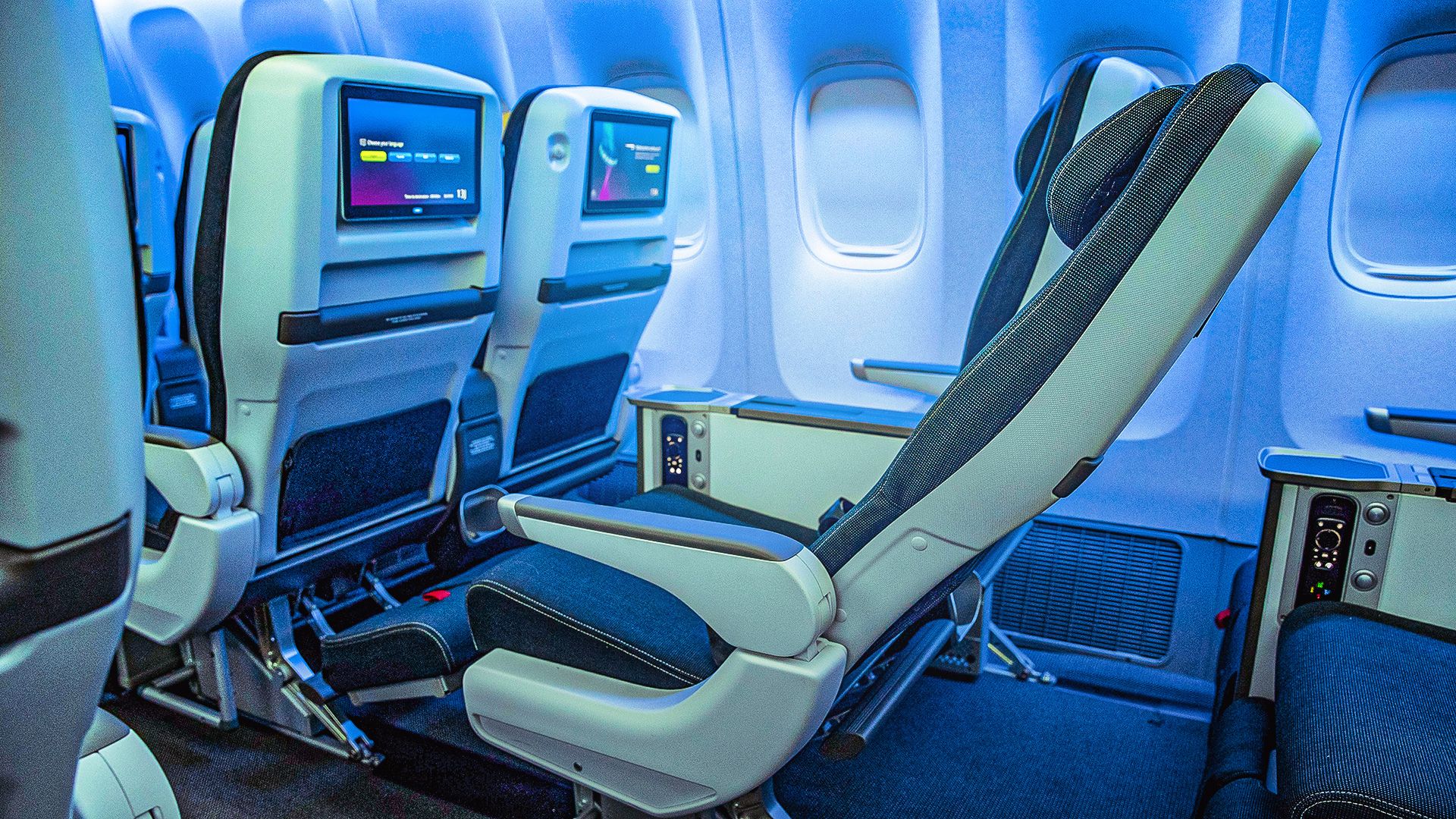
Airlines are increasingly focusing on the premium economy class as a viable upgrade option for long-haul travelers. This segment is designed to provide a balance between comfort and affordability, allowing passengers to enjoy greater space and enhanced services compared to standard economy seats. As of March 2025, the trend is evident, with many airlines retrofitting their aircraft to accommodate more premium economy seats, responding to evolving passenger preferences.
Understanding Seat Dimensions
When examining seat dimensions, there are clear distinctions between economy and premium economy classes. Most major airlines offer an average seat pitch of 30–31 inches (76–79 cm) in economy class, which can drop to 28 inches (71 cm) with low-cost carriers. In terms of width, economy seats typically measure between 17–18 inches (43–46 cm), with some premium carriers providing wider seats, averaging 19–19.5 inches (48–49.5 cm).
Premium economy seats generally feature a seat pitch of 38 inches (97 cm), with some airlines, such as Emirates and Cathay Pacific, offering up to 40 inches (102 cm). While premium economy seats often recline more significantly—7–8 inches further than their economy counterparts—they do not convert into lie-flat beds like those in business class.
Airline Configurations and Market Trends
Airlines have limited control over the width of economy seats since this is fundamentally determined by the aircraft’s design. Most aircraft configurations allow for a fixed number of seats across the cabin. Some airlines, like Japan Airlines, configure their Boeing 777-300ERs to seat nine-abreast instead of the standard ten, providing a more spacious environment for passengers.
The financial implications of premium economy fares are significant; they typically range from 50% to 100% more than economy class fares but remain substantially lower than business class prices. According to data from Skyscanner, premium economy fares are often 1.5 to 2.3 times the cost of economy fares in Europe, while remaining 2.5 to 3.5 times less expensive than business fares.
This shift in pricing and configuration reflects broader changes in passenger preferences. As first-class seating continues to decline, particularly among U.S.-based carriers, there is a growing demand for comfortable yet affordable travel options. Premium economy fills this gap, appealing to travelers who find standard economy inadequate but prefer not to pay for business class.
Beyond seat comfort, premium economy passengers typically enjoy enhanced services, including upgraded meal options served on porcelain dishware and metal cutlery, larger touchscreens for in-flight entertainment, and improved amenities such as noise-reducing headphones. Many airlines also offer priority boarding and dedicated check-in counters, adding to the overall travel experience.
The demand for premium economy seats is evident, with airlines like Delta Airlines reporting that revenue from this class surpassed that of economy for the first time in late 2025. With increasing competition and the need to maximize passenger satisfaction, airlines are likely to continue expanding and enhancing their premium economy offerings in the coming years.