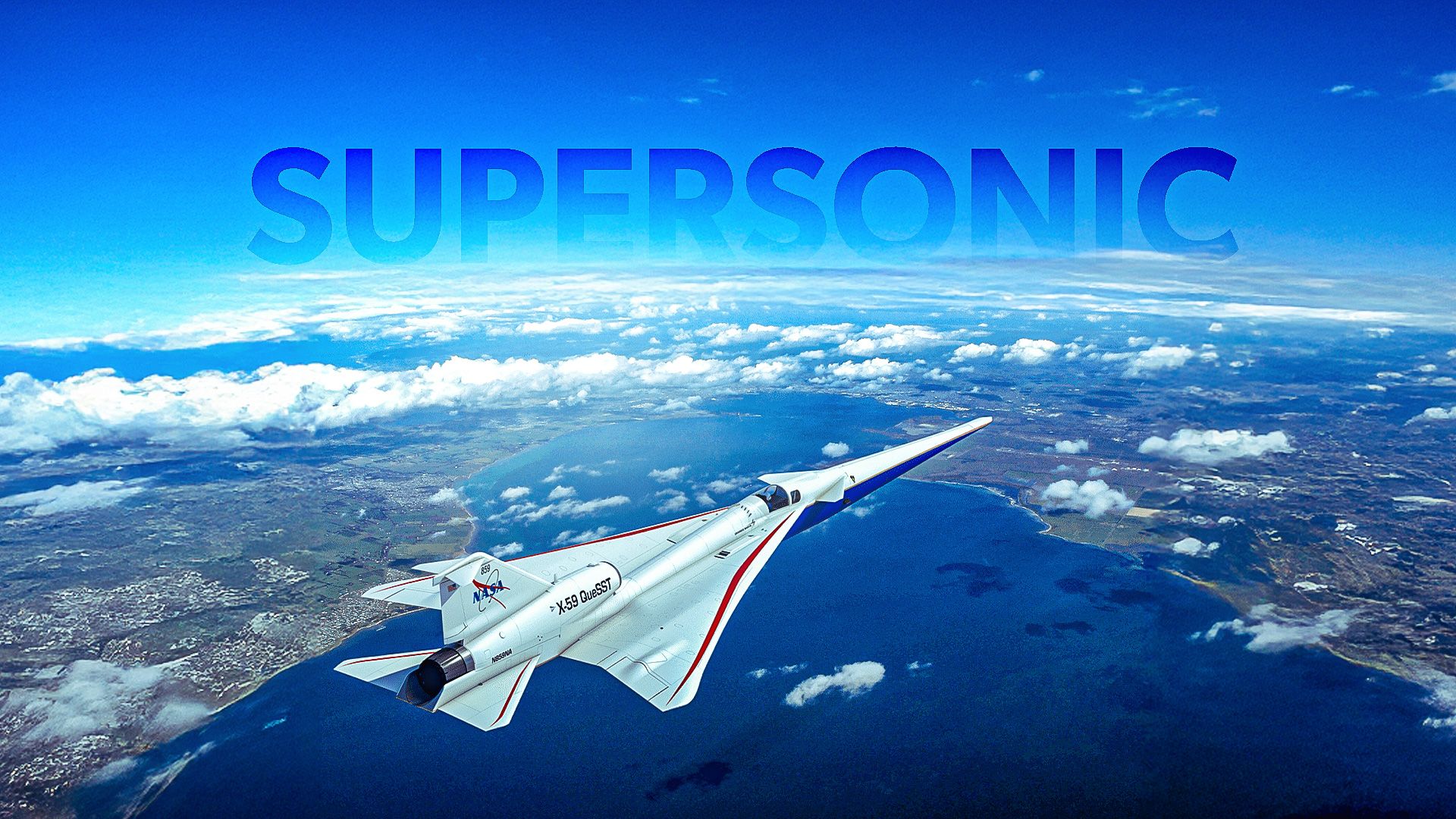
BREAKING: The NASA X-59 QueSST (Quiet SuperSonic Technology) has successfully completed its inaugural flight, marking a pivotal moment in aviation history. This groundbreaking aircraft aims to eliminate the disruptive sonic boom, a major barrier to commercial supersonic travel.
The aircraft took off from Palmdale, California, and landed near NASA’s Armstrong Flight Research Center at Edwards, California. Lockheed Martin Skunk Works announced that the X-59 flew “exactly as planned,” verifying essential performance metrics. This flight sets the stage for upcoming test flights aimed at reducing sonic booms to a mere “gentle thump” of around 75-85 PLdB, a significant drop from the 105-110 PLdB boom produced by the Concorde.
WHY THIS MATTERS NOW: With the potential to revolutionize air travel, the X-59 could enable passengers to travel at double the speed of current commercial flights. However, it faces formidable challenges, including regulatory hurdles both domestically and internationally. Even if the FAA approves supersonic flights, global acceptance remains uncertain.
NASA plans to conduct extensive tests from 2026 to 2027, collecting data on public reactions to the quieter sonic thumps. This data will be crucial for informing national and international regulators on new noise thresholds for supersonic flight over land.
WHAT’S NEXT: The X-59’s mission is part of a larger effort to redefine air travel. While the initial test flight is a success, the aircraft must demonstrate its capabilities at supersonic speeds to show that it can indeed produce a quieter sonic signature.
The X-59’s design focuses on creating S-Waves instead of N-Waves, which produce the disruptive sonic booms. By redistributing shockwaves through its unique aerodynamic structure, including a long nose and top-mounted engines, it aims to minimize the impact on communities below.
While the X-59 represents a leap forward, the challenges of scaling this technology for commercial use remain significant. The transition from a single-pilot demonstrator to a 50-100 seat commercial airliner involves complex aerodynamic modeling and the integration of larger engines.
Despite these hurdles, the excitement surrounding the X-59 is palpable. With a federal executive order signed in June 2025 urging the FAA to reconsider its ban on civil supersonic flights over land, the future of supersonic travel is closer than ever. However, as regulations evolve, it remains to be seen how quickly the industry can react.
Overall, the X-59 QueSST stands at the forefront of a new era in aviation, one that could reshape the skies and redefine travel for millions. The world is watching as NASA embarks on this ambitious journey to bring back supersonic flight—quietly.