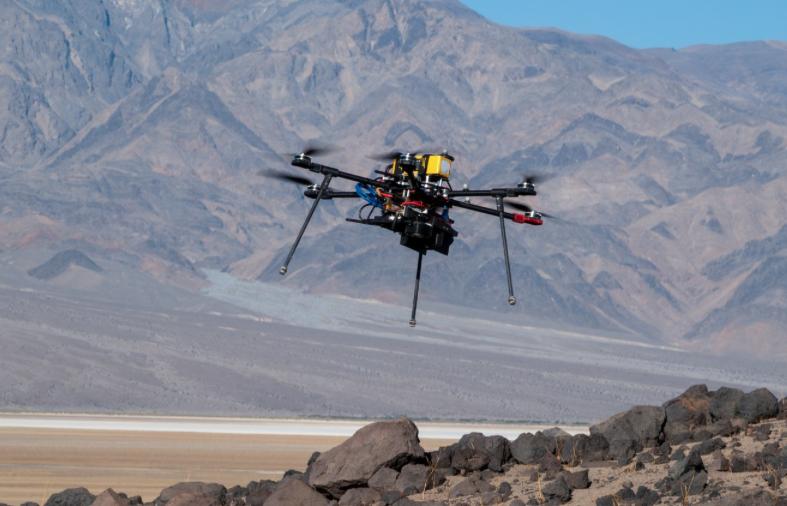
UPDATE: NASA has just launched a critical test involving three drones in Death Valley, California, aiming to prepare for future Mars missions. The urgent tests are designed to address significant issues encountered by the Ingenuity Space Helicopter, which faced a catastrophic crash during its last flight in January 2024.
This unprecedented initiative by NASA and its Jet Propulsion Laboratory (JPL) team is taking place under extreme conditions that mimic the harsh environment of Mars. The drones are currently navigating areas like Mars Hill and Mesquite Flats Sand in Death Valley, where temperatures can soar up to 113 degrees Fahrenheit (45 degrees Celsius).
The team is employing advanced techniques, including various camera filters and innovative algorithms, to enhance the drones’ ability to safely land, particularly in featureless terrains similar to those found on the Martian surface. Nathan Williams from JPL stated that these field tests provide “a much more comprehensive perspective,” essential for ensuring the success of future missions.
NASA’s primary goal is to overcome the challenges faced by the Ingenuity helicopter, which was initially intended for just five flights. Instead, it achieved an astonishing 72 flights before its tragic end, demonstrating the potential of aerial exploration on Mars. The helicopter’s final mission ended in a crash, as it could not accurately gauge its proximity to the Martian ground.
The insights gained from the Death Valley tests are crucial as NASA strives to develop drones capable of navigating and exploring Mars effectively. With the stakes higher than ever, these advancements could significantly impact humanity’s quest to explore the Red Planet.
As the tests continue, the scientific community and space enthusiasts alike are watching closely. The findings will not only shape future Mars missions but also enhance our understanding of aerial technology in extraterrestrial environments. Stay tuned for more updates on this developing story.