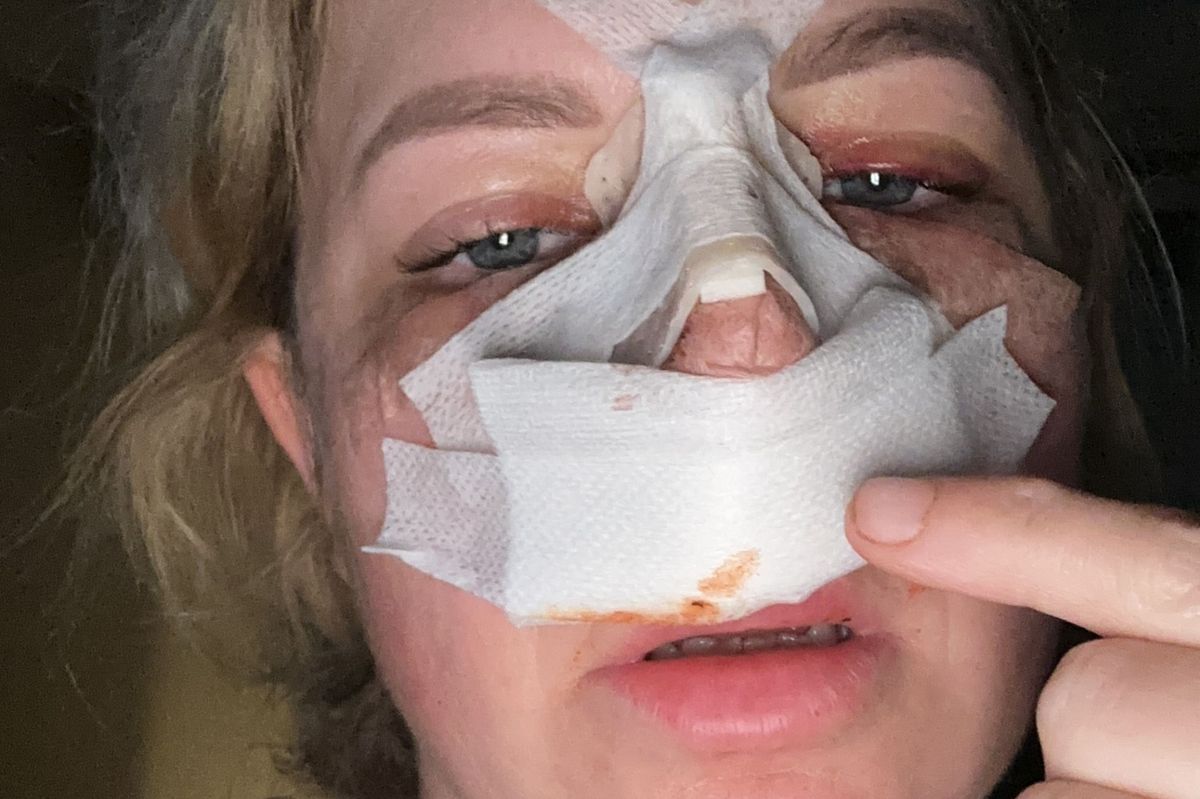
URGENT UPDATE: A mother from Swindon is raising alarms after a botched nose job in Turkey left her with a ‘piggified’ nose, rendering it non-functional. Kayleigh Mckenna, 35, underwent the £4,500 surgery in October 2024, seeking to correct a deviated septum and boost her confidence, but is now warning others against similar procedures abroad.
Mckenna initially felt secure after researching clinics online, believing she had made an informed choice. However, she reported that the operation took an agonizing ten hours instead of the estimated seven. Post-surgery, she was in extreme pain, and complications arose, including blood circulation issues that necessitated further intervention.
Days after returning to the UK, Mckenna discovered her septum was still deviated, forcing her to visit a local clinic in December 2024 to remove stitches that were causing painful sinus infections. Mckenna described feeling ‘devastated’ when informed by UK ENT surgeons that her nose was ‘non-functional’ and ‘collapsed.’
“I wanted my septum corrected and to change the look of my nose,” Mckenna shared. “Now, I feel like I have a collapsed and wonky nostril. I have to buy nasal spray every week just to breathe.”
The emotional toll is evident as Mckenna reflects on her experience. “It feels like they just did a quick fix. My nose looks different in pictures and is slightly wonky,” she added. “I never thought I would end up in this situation, crying every single day because of a decision that was supposed to boost my confidence.”
Mckenna’s ordeal began after a WhatsApp consultation led her to book surgeries in Turkey, where she sought to save money compared to UK prices. Despite the initial allure of affordability, she now expresses deep regret, urging potential patients to prioritize safety over cost.
Authorities from the Turkish clinic have reportedly refused to release her medical records, despite her request for them to be sent. Mckenna is now considering her options, including a potential private surgery in the UK that could cost upwards of £9,000. “I’m scared to go back to Turkey, and I certainly shouldn’t have to pay for anything further,” she said.
In light of her traumatic experience, Mckenna is committed to spreading awareness about the risks of overseas surgeries. “If you want something done, pay that extra and get it done in your own country,” she strongly advises.
As Mckenna navigates the aftermath of her surgery, she continues to face challenges with her breathing and the emotional impact of her altered appearance. “It’s affecting my mental health and confidence every time I look in the mirror,” she lamented.
Her story serves as a stark reminder of the potential pitfalls of medical tourism and the importance of thorough research and consideration before undergoing any surgical procedures abroad.